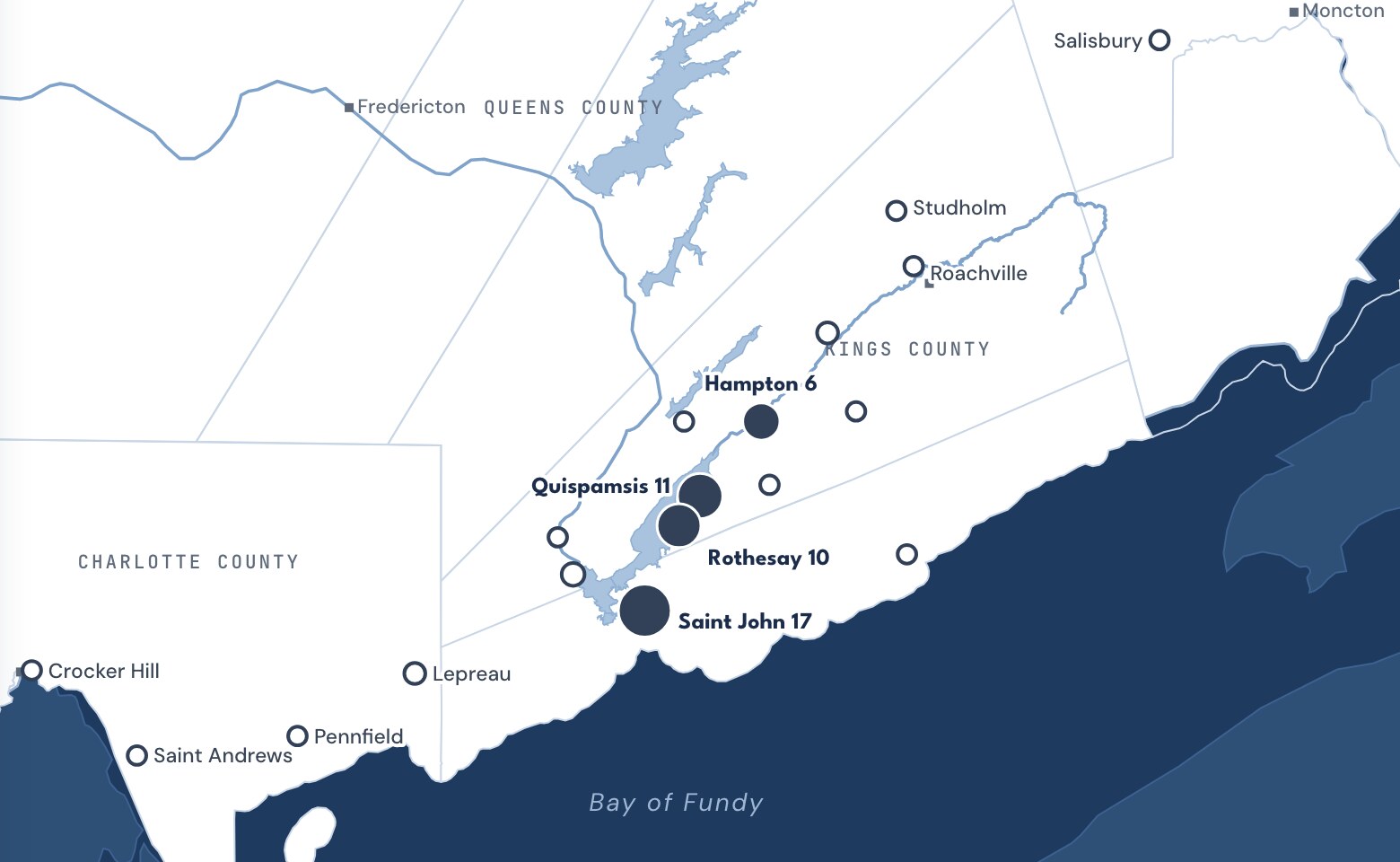
If you are buying a home in Southern New Brunswick this winter, its radon level is one thing only a test can tell you. This fall I put six years of my own radon tests on one map on my website: 62 tests from 2020 to 2026, across 18 communities in four counties, from Saint John and the Kennebecasis Valley out to Hampton and Charlotte County.
Here is what it shows. Nine of the 62 tests recorded 200 Bq/m³ or higher during the test, which is Health Canada's guideline, and the rest came in under it. The readings also vary from place to place, and homes close together can read very differently. That is the part I want every buyer and homeowner to take from it. A neighbour's result, or a whole town's, tells you nothing about your own house. The map is not a rating of any town, just where I have tested and what my monitor recorded.
A result above the guideline is not a reason to walk away from a house. It is a known fix, and the condition period or your first winter in the home is time enough to plan it. November is Radon Action Month in Canada, and with the windows shut and the heat on, it is a good month to start a long term test.
The inspection connection
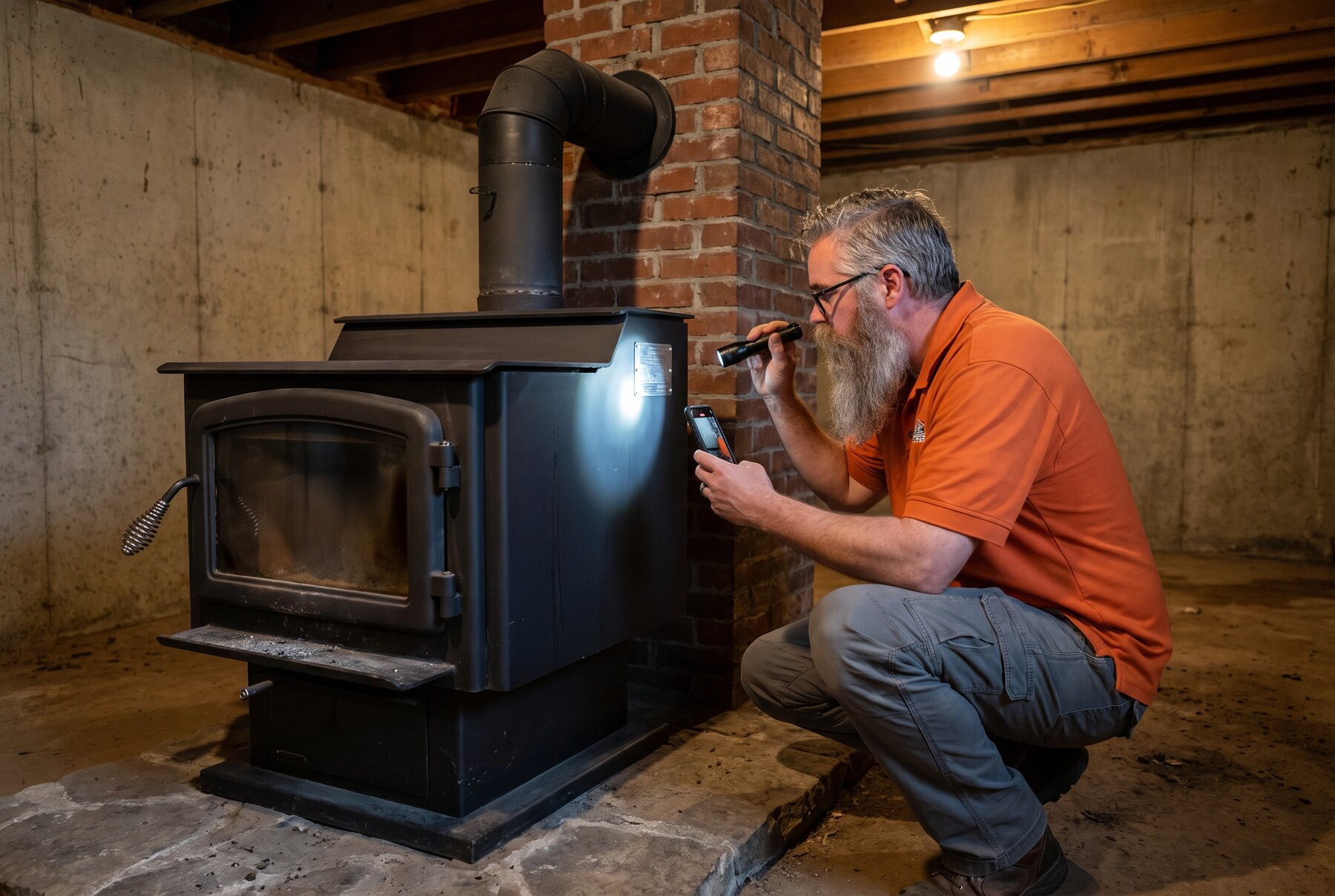
I test radon to the C-NRPP standard. During a sale, my clients typically run a five to ten day test inside the condition period, which gives a first look before closing. The decision test comes after possession: a long term test of at least 91 days, with as much of it as possible in the heating season, when readings tend to run highest. If a long term result comes back above 200 Bq/m³, Health Canada recommends lowering it within a year, and a C-NRPP certified mitigation professional can install an active soil depressurization system, a fan that draws soil gas from under the house and vents it outdoors. I recommend radon testing on every home in Southern New Brunswick.