
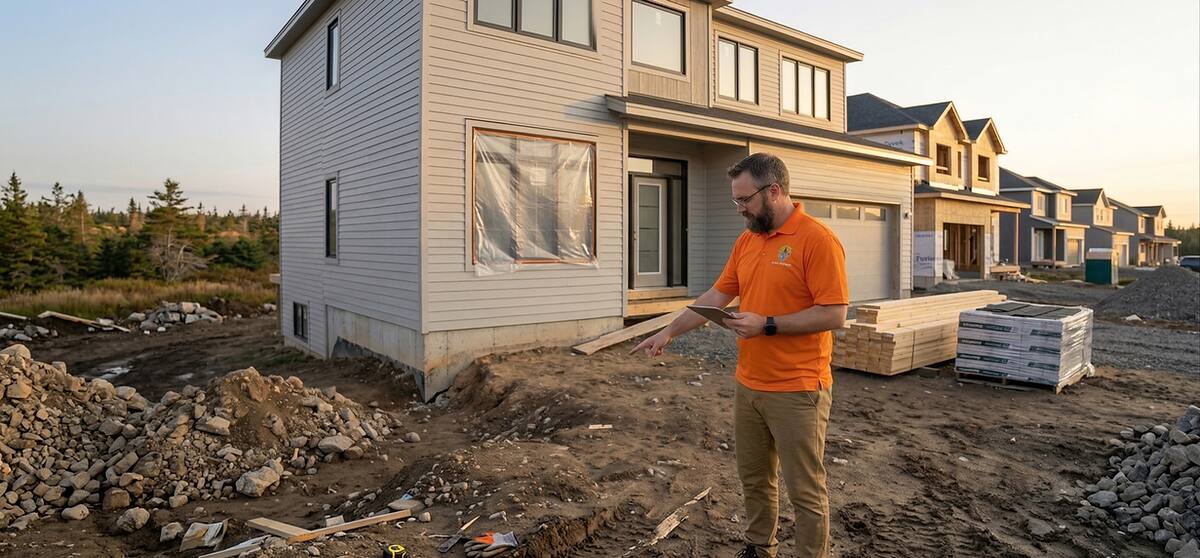
New builds in Southern New Brunswick are not flawless. From unfinished grading to missed egress windows, here is what a home inspector in Saint John with over 2,000 inspections wants every new home buyer to know before closing on new construction.
Why This Matters
In over 10 years inspecting homes across Southern New Brunswick, I have completed thousands of inspections in Saint John, Hampton, Rothesay, Quispamsis, Sussex, and Grand Bay-Westfield.
Here is what I see consistently: buyers who assume a new build does not need an inspection end up calling me six months later. The questions are still there, about the grading, the ventilation, the warranty. A new construction inspection answers all of them before you close, on your schedule, with no pressure attached.
This guide covers what a new construction inspection actually finds in Southern NB, how the building code change affects your home, what the Atlantic Home Warranty does and does not cover, and a pre closing checklist for new home buyers.
The Real Story: A New Construction Inspection in Southern New Brunswick
Last week I performed a new construction inspection for a young couple. Both professionals in the medical field. Their first home. These are two people who work long hours and do not have time to deal with surprises. Closing was Friday. The inspection was Wednesday. They had already dealt with one delay and one reschedule.
When I arrived, the finish work was not complete. Appliances were not installed. The tiling and grout were unfinished. The walkways, countertops, and kitchen island were still in progress. That means my inspection was limited. I could not test appliances that were not connected. I could not assess surfaces that were not finished. And these buyers were two days from owning this home.
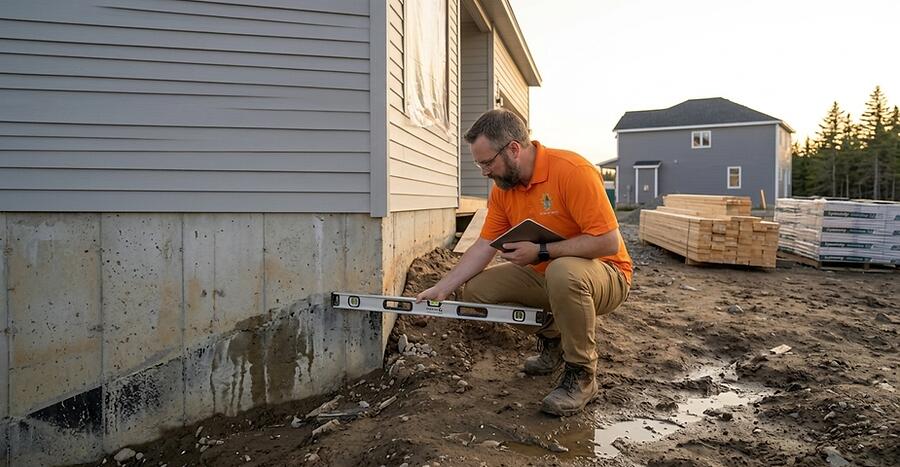
The grading issue was the biggest concern. The builder said the concrete walkway pad was going in this spring. But the final grading had not been completed. I had to explain to the buyers that they would also need 3 to 6 inches of topsoil for their lawn. Pouring that concrete pad before the final grading, without accounting for the topsoil and 2 to 3 inches of sod, is not going to work. The final grading has to take all of that into account while directing water efficiently away from the foundation.
Inside, three stair landings each had a raised first step. One inch higher than it should have been. That is a trip hazard. This typically happens when the stair cuts do not account for the thickness of the finished floor material. Construction finishes, and the first step is not flush with the landing.
One toilet was installed too close to the wall. Actually against the wall. The lid was not even securely seated. That is going to allow condensation between the tank and the wall, eventual mould growth, and a daily annoyance for the homeowner.
But the real issue was the pressure on the buyer. Two professionals buying their first home in New Brunswick, trusting the process, and the house was not ready for a proper inspection two days before closing. That is not a construction defect. That is a fairness problem. It required additional effort, explanation, and care to walk them through exactly what needed to happen during the final walkthrough with the builder.
This is the reality of buying a new build in Southern New Brunswick right now. And it is exactly why new homes need an independent home inspection before closing.
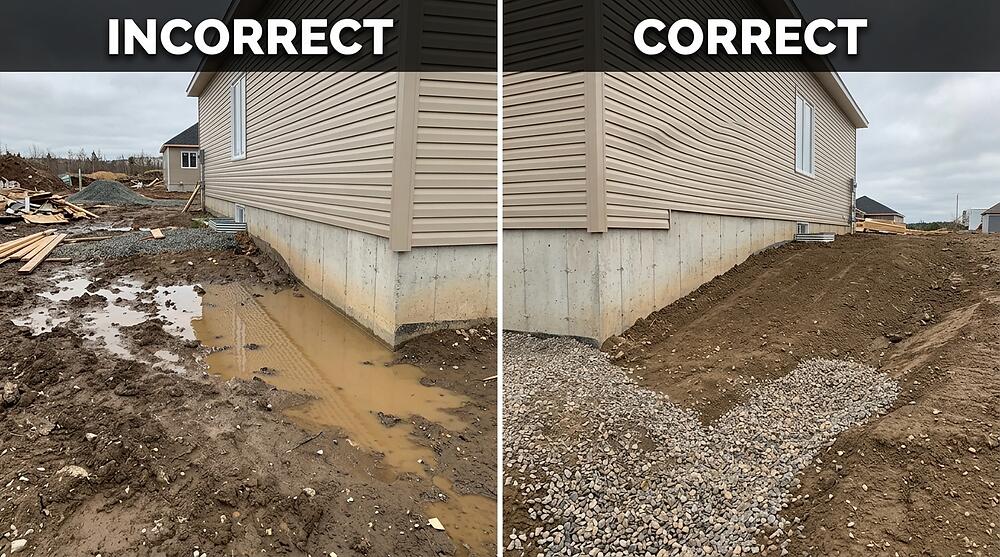
Grading errors are the most common issue I find in new builds. What looks minor in summer becomes a wet basement by spring.
Why New Builds in New Brunswick Are Not Flawless
I have completed over 2,000 home inspections in Southern New Brunswick since 2010. I have been inside new builds that were excellent and new builds that had significant issues on closing day. New construction is not automatically well built construction.
Across Canada, common new build deficiencies stem from rapid construction timelines, labour shortages, and material supply chain challenges. These pressures are not theoretical. They show up in Southern New Brunswick too. Here are the new construction deficiencies I see most often in this area:
Water Management and Grading
This is the most common and most consequential issue I find during a new home inspection in New Brunswick. Poor grading directs water toward the foundation instead of away from it. In Southern New Brunswick, where spring thaw raises the water table every year and clay heavy soils hold moisture, grading errors compound quickly. What looks like a minor slope issue in August becomes a wet basement by April.
Egress Windows
Building a basement bedroom without a proper egress window is a safety issue and a code issue. I have seen new builds where the window was undersized or positioned incorrectly because it interfered with the exterior design. I wrote a full guide on egress window requirements in New Brunswick that explains what buyers should look for.
Garage to Attic Separation
Unsealed openings between attached garages and attic spaces are a fire separation and air quality issue. Exhaust fumes, carbon monoxide, and fire can travel through unsealed penetrations. In a finished home, these openings are hidden behind drywall and insulation. You would not know they are there unless someone looks.
Building Envelope Failures
In a Maritime climate, inadequate sealing around windows and doors does not just cause drafts. It causes water infiltration, rot, and mould. Southern New Brunswick’s combination of ocean weather, freeze-thaw cycles, and high humidity means the building envelope has to perform. When it does not, the damage shows up within a few years. This is one of the reasons I use thermal imaging during inspections. It reveals moisture intrusion and insulation gaps that are invisible to the naked eye.
Insulation and Ventilation Deficiencies
Gaps in insulation, improperly installed batts, and insufficient attic ventilation lead to ice damming in winter, uneven temperatures, and condensation that promotes mould growth. If you are concerned about moisture or condensation in your attic, my attic condensation and mould checklist covers the warning signs.
What Changed with the Building Code in New Brunswick
I am not a code inspector and I do not reference code sections in my inspections. But if you are buying a new build in New Brunswick, this is worth understanding.
New Brunswick transitioned from the 2015 National Building Code to the 2020 edition. The deadline was March 31, 2025. Any building permit issued after that date must comply with the National Building Code of Canada 2020. You can review the current adoption status on the Government of New Brunswick building code page.
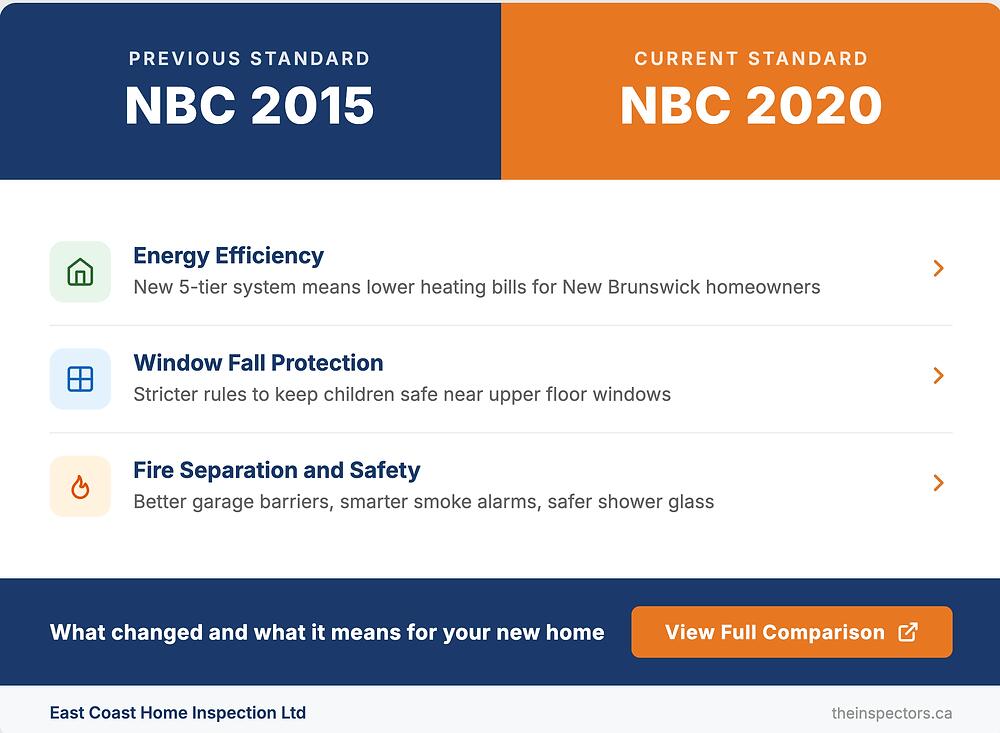
What does that actually mean for a home buyer in New Brunswick? The 2020 code raised the bar on several things that directly affect how your new home performs:
Higher Energy Efficiency Standards
Better insulation values, tighter building envelopes, and more efficient heating systems. In a province where heating costs are a real consideration for every homeowner, this matters.
Stricter Window Fall Protection
If you have young children, the 2020 code addressed how windows in upper storeys are designed to prevent falls. That is not a technical detail. That is a safety feature you will use every day.
Updated Fire Separation Requirements
Requirements between homes and attached garages were updated. The unsealed garage-to-attic openings I mentioned earlier are exactly the kind of issue the updated code is trying to address.
What the Atlantic Home Warranty Actually Covers
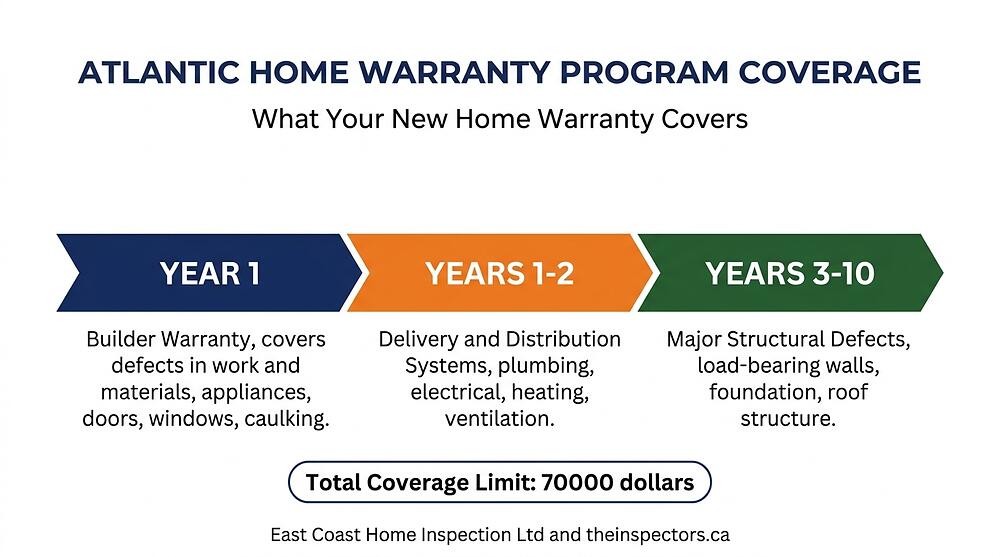
Every new home in New Brunswick is enrolled in the Atlantic Home Warranty Program. Most buyers assume the warranty covers everything. It does not.
Here is what AHWP provides:
Year 1: Builder’s Warranty
This covers defects in materials and labour. But here is the key detail: the builder handles this directly. AHWP provides conciliation if there is a dispute, but the builder is the one responsible for making the repairs. If your relationship with the builder is already strained because of closing delays or unfinished work, Year 1 can feel like a difficult process.
Years 1 to 2: Delivery and Distribution Systems
This covers defects in electrical and plumbing installation and materials. It also covers the building envelope, including water ingress through windows, doors, and exterior attachments, as well as water leakage through below grade foundation walls.
Years 3 to 10: Major Structural Defects
This covers significant failures in load-bearing components like foundations, load-bearing walls, and roof framing.
The total coverage limit is $70,000 per home, including engineering fees. There are no deductibles.
What AHWP Does Not Cover
Landscaping, driveways, detached garages, septic systems, or damage caused by improper homeowner maintenance. That grading issue I described at the beginning of this article? Landscaping related. The concrete walkway pad? Not covered.
The warranty is automatically transferable if the home is sold within the coverage period. That is a genuine benefit for resale value.
Your Pre-Closing Checklist for a New Build in New Brunswick
Every home is different, but certain patterns show up regularly, especially in Southern New Brunswick’s housing stock. Here are some examples from recent inspections that changed how the homeowner planned their first year of ownership.
-
Step 01
Book a new construction home inspection, even on a brand new home.
Your inspector is the only person in the transaction whose only interest is telling you what the house actually shows. Not what it is supposed to show. Not what someone hopes it will show.
-
Step 02
If the home is not finished, do not accept a limited inspection without understanding what that means.
Push for a final walkthrough after all work is complete. If closing is immovable, make sure your inspector documents what could not be assessed and build a plan for following up on those items after you move in.
-
Step 03
Walk the exterior carefully.
Check the grading around the foundation. Water should slope away from the house on all sides. If final grading has not been done, understand what needs to happen before hardscaping, topsoil, or sod goes in. This is the single most consequential detail for the long-term health of your foundation.
-
Step 04
Check every stair landing and transition.
Changes in floor height, even small ones, are trip hazards. These are easy to overlook in a new home because everything looks clean and finished.
-
Step 05
Open every door. Flush every toilet. Run every faucet. Turn on every switch.
New does not mean tested. These are items that sometimes get missed in the rush to close.
-
Step 06
Understand your warranty.
Know what the Atlantic Home Warranty covers, what it excludes, and how the Year 1 builder's warranty actually works. Do not assume coverage. Read the documentation.
-
Step 07
Keep your inspection report.
It is the most useful document you will have for the first two years of homeownership. When something comes up, and something always comes up, that report is your reference point.
For a broader overview of the home inspection process in New Brunswick, my expert guide to home inspections walks through what to expect from start to finish.
Making the Right Decision on Your New Home
I have been inside over 2,000 homes in Saint John, the Kennebecasis Valley, and across Southern New Brunswick. Some of the most important conversations I have had with buyers happened in brand new ones. Not because the homes were bad, but because the buyer finally had someone walk through with them who was not invested in the sale closing.
Someone who could explain what the grading actually needed to look like. Someone who could point out that the first step on three stairways was an inch too high and explain why. Someone who could tell them that the toilet against the wall was going to cause problems and here is what the builder needs to fix.
That is what an independent new construction inspection does. It is not about finding a reason to walk away. It is about making sure you walk into your new home understanding exactly what you have.
Frequently Asked Questions About New Construction Inspections
Do I really need a home inspection on a brand new house?
Yes. Over 90% of the new builds I inspect in Southern New Brunswick have reportable items. Municipal inspectors check for code compliance at specific stages, but they are not assessing overall quality or workmanship on the finished home. A home inspection looks at the completed house as a whole system. These are two different things.
Will the builder be upset if I get an inspection?
Quality builders typically welcome an independent inspection. It gives everyone a chance to identify and address items before you take possession. If a builder strongly discourages you from getting an inspection, that is worth asking about. Your inspection report gives the builder clear documentation of what needs attention, which actually makes the process easier for both sides.
What does the Atlantic Home Warranty Program cover?
AHWP covers defects in work and materials for Year 1, delivery and distribution systems (plumbing, electrical, heating) for Years 1 to 2, and major structural defects for Years 3 to 10. The total coverage limit is $70,000 per home. It does not cover landscaping, driveways, detached garages, or septic systems. Having an inspection report before closing gives you a documented baseline before the warranty clock starts.
What are the most common problems you find in new construction?
Grading and drainage issues top the list. Water directed toward the foundation instead of away from it is the most consequential deficiency I see. After that, I regularly find unsealed garage-to-attic penetrations, undersized egress windows, insulation gaps, and building envelope sealing failures. These are not unusual. They show up in new builds across Southern New Brunswick.
What happens if a home inspection finds egress window violations?
Buyers typically have four options: request the seller correct the issue before closing, negotiate a price reduction based on correction costs, accept the condition as-is and take responsibility for future corrections, or walk away from the purchase. Your real estate agent can help you navigate these negotiations.
When should I schedule a new construction inspection?
Ideally, as close to your closing date as possible, after all work is complete. If the home is not finished, push for a final walkthrough after the builder completes the remaining items. If closing is on a fixed date and work is still outstanding, your inspector can document what could not be assessed so you have a plan for following up after you move in.
My new home was built under NBC 2015. Is that a problem?
No. Both the 2015 and 2020 National Building Codes are valid standards. New Brunswick transitioned to NBC 2020 on March 31, 2025. A home permitted before that date was built to the 2015 standard. A home permitted after was built to the 2020 standard. The 2020 code raised the bar on energy efficiency, window fall protection, and fire separation. Neither is unsafe. But if you are comparing two new homes, knowing which code applies helps you understand the differences.