Aerial Images and Video
High resolution aerial images and video of all targeted exterior areas, providing comprehensive documentation of your property's condition.
Specialty · Drone Roof Inspection
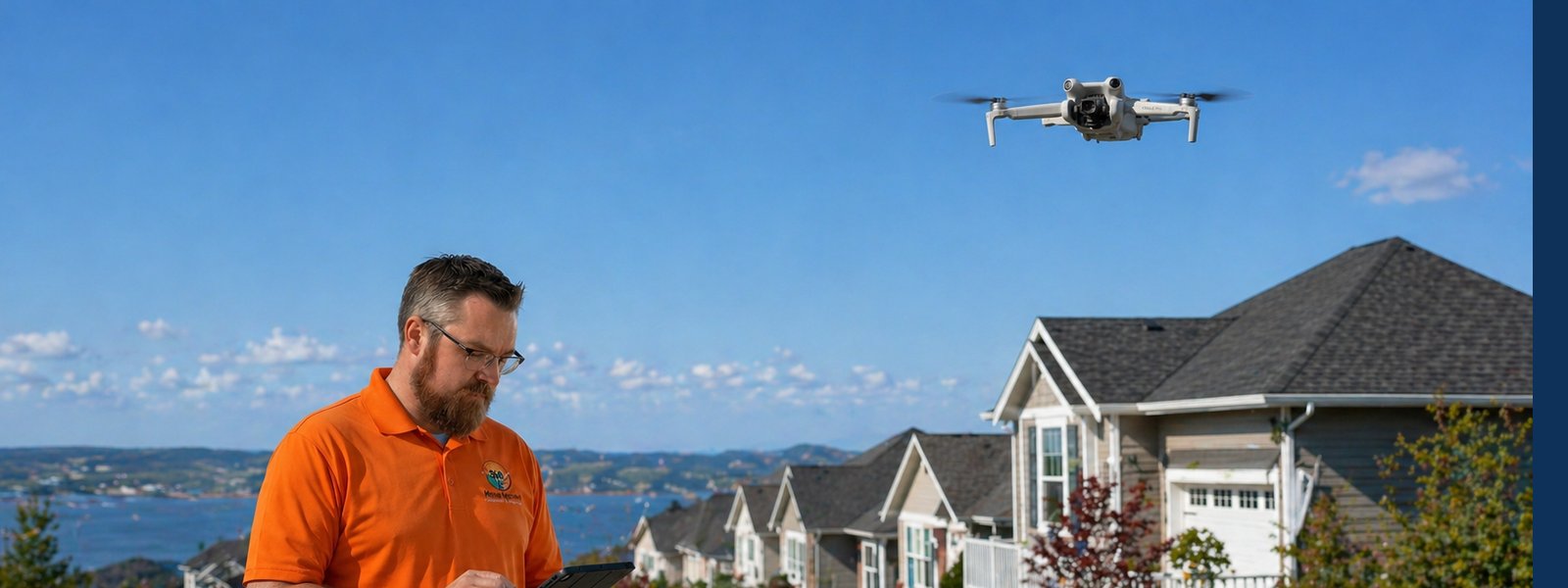
If your roof is too steep or high for a ladder, I don't just guess. I fly a drone up there to get high definition photos of every shingle and flashing, so you know exactly what condition it's in.
Video and Images · Private Online Storage · Included in Report
Aerial inspection
When ladders will not cut it, my drone captures every angle. Chimneys, valleys, second-storey siding, and the spots a homeowner can never see for themselves.
Steep or high roofs that are difficult to view from the ground or not safely accessible.
Chimneys, flashing, valleys, skylights, and roof penetrations.
Areas obstructed by landscaping or limited site access.
High-resolution imagery for homeowners, buyers, or sellers.
Southern New Brunswick weather puts roofs through a lot. Freeze-thaw cycles, ice damming, heavy snow loads, and coastal wind all take a toll over time. From the air, I can identify issues that are difficult or impossible to see from the ground.
These findings go into your report with high resolution images so you can see exactly what I see.
A drone inspection is not always necessary, and I will never recommend one if it is not needed. I use drone imaging when:
For most single-storey homes with a standard pitch, I inspect the roof on foot. The drone is a tool I bring out when conditions call for it.
High resolution aerial images and video of all targeted exterior areas, providing comprehensive documentation of your property's condition.
Private online storage with secure access so you can view, download, and share your files any time, from anywhere. Share with clients, contractors, insurers, and buyers.
Professional notes identifying visible concerns and areas that should be addressed. If issues are noted, qualified specialists are recommended.
Read reviews from clients I've helped with my Drone Inspections.
A Nice Touch
"Awesome to walk through with Jonathan through the inspection process, getting to pick his brain on what he sees. The drone to check the roof was a nice touch too."
A Game Changer
"Jonathan provided drone images that captured exterior shots of the property and the current roof condition. These images are a game changer, and allowed us to see all aspects of our potential new home, both inside and out."
Photos, Footage, and Insight
"Comprehensive report with detailed photos and drone footage. Jon was very thorough and invited me to accompany him, providing commentary, insight, and maintenance tips along the way."
Schedule your drone imaging service as a standalone appointment or add it as an upgrade to your home inspection.
Drone imaging is completed during your scheduled appointment, weather and site conditions permitting.
All images and video are uploaded to private online storage and shared with you for easy access and download.
Drone imaging is done on site as part of your inspection visit. There is no separate appointment needed.
I fly the property at the beginning of the inspection while conditions are right. The full flight takes 15 to 30 minutes depending on the size and layout of the roof. While the drone captures images overhead, I continue the ground-level inspection so there is no added wait time.
Weather is the one variable. High winds, heavy rain, or thick fog can ground a drone. If conditions are not flyable on your inspection day, I'll let you know in advance and we reschedule the flight at no extra charge.
I hear this one a lot, and it makes sense. From the driveway everything can look great. But most roof damage shows up on slopes, valleys, and areas you simply cannot see from ground level. Wind damage, lifted shingles, cracked vent boots, flashing that has pulled away. These things hide in plain sight from below. The drone gets me up close so I can evaluate as much of the roof as possible. If there is something developing up there, I would rather you know about it now than discover it later.
Absolutely. These are not wide-angle shots taken from way up in the sky. I fly close enough to pick up individual shingles, nail pops, granule loss, cracked boots, and gaps in the flashing. The level of detail is comparable to what I would see standing on the roof itself. Every image goes into your report so you can see exactly what I see and allow me to highlight any concerns I find.
It happens, especially here in New Brunswick. High winds, heavy rain, snow, and fog can all ground a drone. If conditions are not safe to fly, I reschedule the drone portion at no extra charge and come back as soon as the weather clears. The rest of your home inspection still goes ahead as planned so your timeline stays on track.
During a standard home inspection, I evaluate the roof from the safest vantage point I can reach. Sometimes that is ladder access and I can get a solid look. Other times the pitch is too steep, the roof is too high, or conditions make it unsafe to walk. That is where the drone changes things. It removes the limitations. I can evaluate steep slopes, ridges, and complex rooflines that would otherwise be off limits. The goal is to reduce limitations and give you the most thorough evaluation I can, and the drone helps me do that.
You will receive a detailed report with clear aerial images documenting the full condition of the roof. That gives you and your team solid information to work with. Your realtor is the expert in market analysis, has extensive knowledge navigating a competitive market, and can best inform you of your options when it comes to seller negotiations. You will have the documentation, and they will have the strategy.
All of the drone images are available online for you to review at any time. If I find any concerns during the aerial evaluation, those are included in your inspection report with detailed findings, what they could mean for the home, and recommended next steps. You get the full visual record and a clear explanation of anything that needs your attention.
Find My Package
Specialty services like this can be bundled with your home inspection or booked standalone. Answer four quick questions and I will recommend the package that fits your property.
4.9 rating from 550+ reviews
Free to use. No email needed to see your recommendation.
Aerial drone imaging for roofs that are too steep, too high, or too complex to walk safely. HD photos and video in your report.
