
C-NRPP Certified
Canadian National Radon Proficiency Program certified.
Service Areas · Rothesay
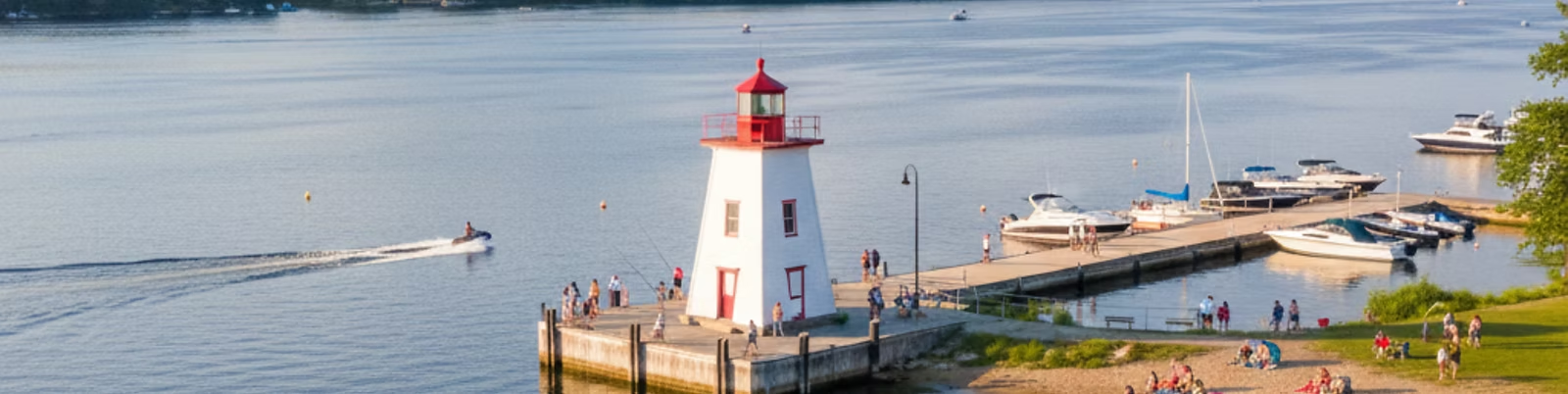
Established neighbourhoods and waterfront properties inspected with the detail they deserve.
Certified and Trusted in Rothesay

Proud member of the Saint John Regional Chamber of Commerce.

Registered Home Inspector, nationally recognised designation.

Wood Energy Technology Transfer certified inspector.
Canadian National Radon Proficiency Program certified.
Rothesay is one of the most popular suburbs near Saint John. The town has heritage estates, waterfront homes along the Kennebecasis River, and newer builds on larger lots. Many homes date to the post-war era, though some go back much further.
Some of the finest homes sit along Rothesay Common and Gondola Point Road, right by the water. Whether the home is 100 years old or brand new, it needs an inspector who knows what to look for in both historic and modern builds. That is what I do.
From heritage estates to mid-century family homes, here is a look at some of the properties I have recently inspected in Rothesay.
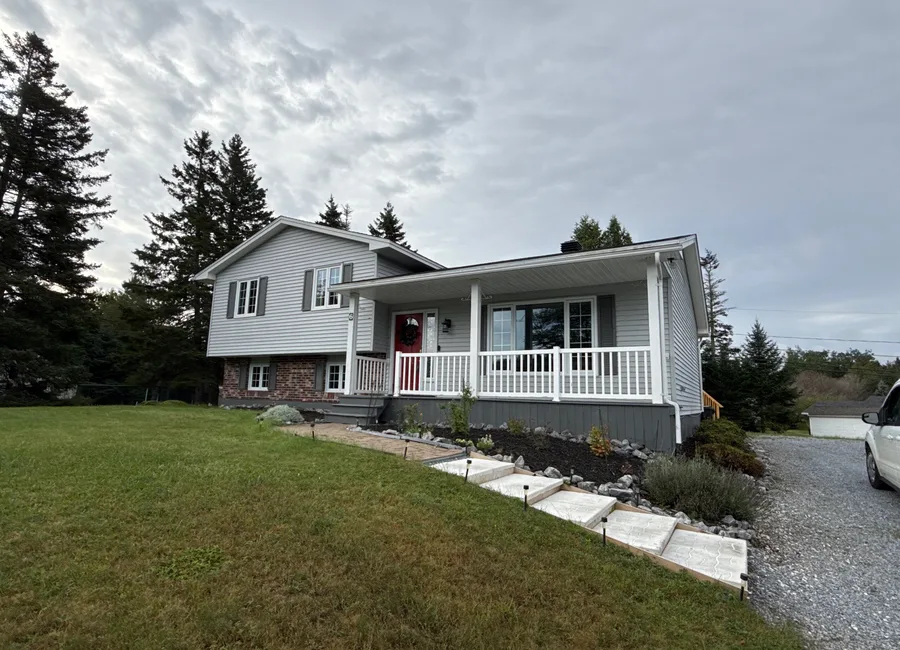
On a split level home I pay close attention to where the levels meet, since that is where settling shows up first. I check the foundation walls at the lower level, the brick and siding transitions, and the covered front porch where posts and railings meet the main wall. Inside, I look at the stairs between levels and how the basement rooms handle moisture. These homes are a familiar part of Rothesay's streets.
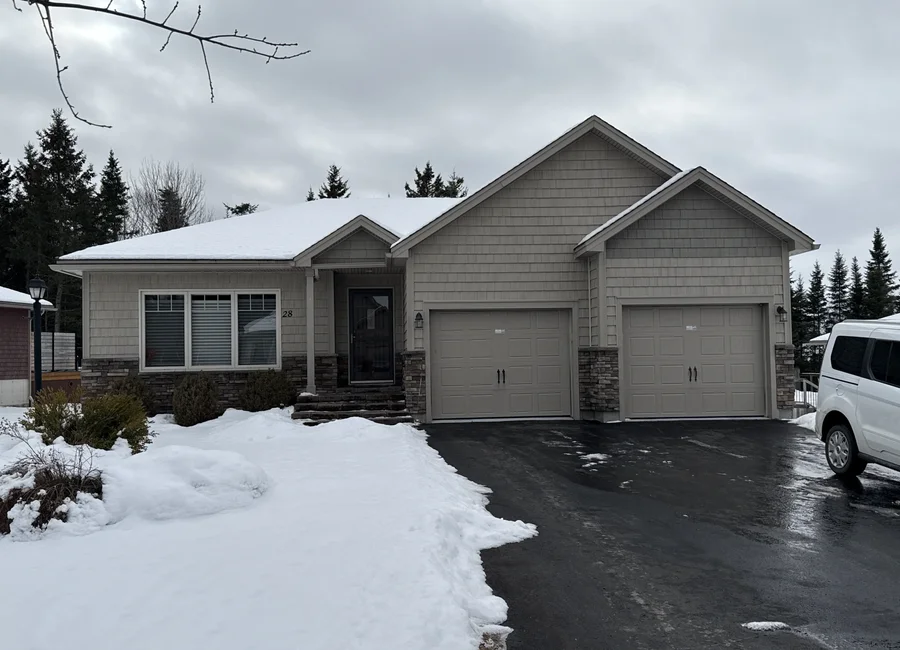
I conduct new construction inspections throughout Rothesay before your builder's warranty period begins. I inspect installation details, building envelope performance, and all mechanical systems while everything is still accessible, including foundation work, HVAC installation, and electrical systems before final landscaping and grading are complete. I inspect new builds year-round in Rothesay and the Kennebecasis Valley.
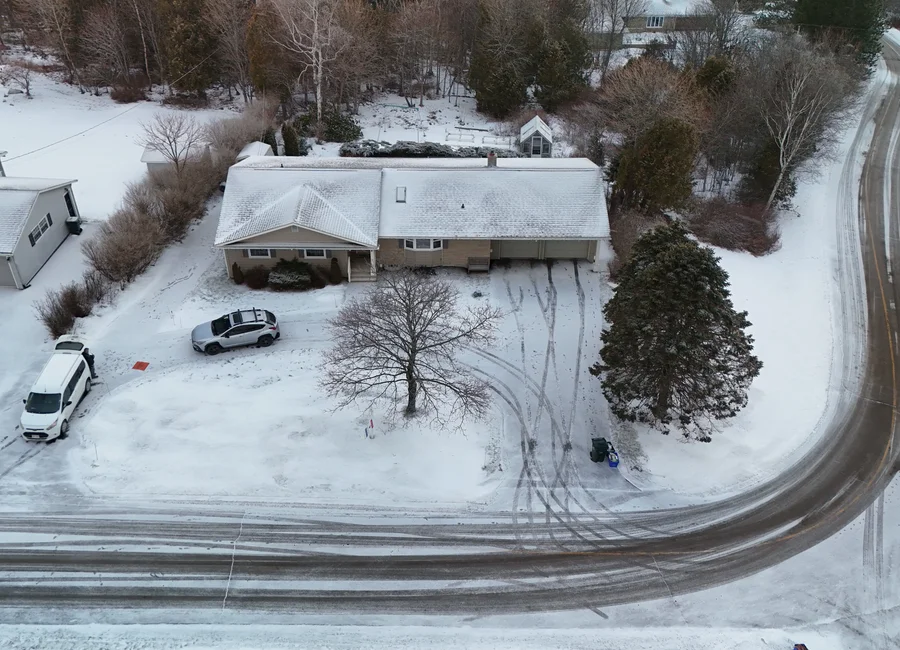
I use drone technology year-round to safely inspect roofs in Rothesay and throughout the Kennebecasis Valley. Winter aerial inspections reveal important details about snow load distribution, ventilation performance, and property drainage patterns that aren't visible during other seasons. Drone documentation allows thorough assessment without the safety risks of walking on snow-covered or icy roof surfaces.
Because many homes are situated on older, larger lots with mature vegetation, inspections often reveal specific patterns tied to the property characteristics.
Older areas of town have faced long-term drainage challenges that can impact foundations and driveways. Proper grading assessment is essential.
Like much of New Brunswick, radon testing is a critical part of any Rothesay inspection due to local geological conditions.
In the predominant 1970s to 80s stock, I frequently check for aging roof trusses, settled foundations, and outdated HVAC systems.
Many mid-century homes were built before modern energy standards. Thermal imaging reveals heat loss in walls and attics invisible to the naked eye.
Rothesay's larger homes and heritage properties benefit significantly from thermal imaging. Many mid-century homes were built before modern insulation standards, and even well-maintained properties can have hidden heat loss through walls, around windows, and in attic spaces. For waterfront properties, thermal imaging is equally valuable for detecting moisture intrusion that may not yet be visible, particularly in lower levels and around windows facing the Kennebecasis River.
See where I've tested for radon in Rothesay and across southern New Brunswick on my radon map. It's a record of my own tests, not a rating of the area.
Read reviews from clients I've helped in the Rothesay area.
Confident and Well-Informed
"Jonathan was thorough, knowledgeable, and took the time to explain every finding. I walked away from the inspection feeling confident and well-informed about my future home."
Knows the Area
"Jon clearly knows Rothesay properties inside and out. His report was detailed and easy to follow, with practical recommendations for every item."
Whether you're considering a heritage estate on Gondola Point Road or a modern home near the Common, I'll provide the thorough, detailed inspection that Rothesay properties deserve.
4.9 rating from 550+ reviews
Serving all of Rothesay, one of New Brunswick's most established communities in the Kennebecasis Valley, with housing ranging from pre-Confederation estates to modern suburban builds. Population: 11,977.
Heritage (Pre-1900's)
The historic heart of Rothesay dates back to the 1850s. Heritage properties along Grove Avenue, Church Avenue, and College Hill Road feature original stone and rubble foundations, wrap-around verandahs, and built-in cabinetry. Inspections here require careful evaluation of century-old foundations, knob and tube wiring still active behind updated finishes, and coal-to-oil heating conversions that were never fully modernised.
Mixed Era
Scenic waterfront properties running northeast toward the Kennebecasis River ferry landing. Housing spans every era, from Victorian estates near the Rothesay Yacht Club to brand-new custom builds. Waterfront inspections demand extra attention to seasonal high water tables, moisture migration through foundation walls, and integrity of multi-era additions. Post-2015 builds should have radon mitigation rough-ins per NB building code.
1960's-1990's
Known locally as "K-Park," one of Rothesay's most desirable family neighbourhoods. The 2018 and 2019 Kennebecasis floods directly impacted this area. I pay close attention to flood damage evidence: water stains on foundation walls, warped subflooring, and compromised electrical. Homes from the 1970s may have aluminum wiring requiring specific inspection protocols.
Early 1900's-1970's
Riverside community with waterfront village character. Character homes feature separate dining rooms, fireplaces, and built-in cabinetry alongside mid-century bungalows. Inspections focus on original foundations that may have settled unevenly, outdated heating systems, and roofing patched rather than replaced across decades of river-wind exposure.
1960's-1980's
Rothesay's largest concentration of 1960s to 1980s construction. Predictable inspection findings: aluminum wiring needing careful assessment at connections, original fibreglass batt insulation that has compressed below modern R-values, single-pane windows, and 100-amp electrical panels that cannot support modern household demand. Several properties back onto wetlands, so drainage and weeping tile condition matter.
Mixed Era
Eclectic mix of housing from pre-Confederation heritage to modern infill. Queen Anne heritage homes demand the same careful approach as Rothesay Common. Some properties connect to town sewer while others operate on private septic, not always obvious from the listing. The 2018 flood affected portions of this neighbourhood, so past water intrusion is always part of my assessment.
Rural-Suburban
The only part of town located on the inland side of Route 1, physically separated from the river communities. More rural lot sizes and no exposure to Kennebecasis flooding. Approximately 30% of Rothesay residents aren't on municipal sewer; most are in Wells. Every Wells inspection includes septic evaluation and recommendations for well water testing (common issues: elevated iron, manganese, hardness).
If you are also looking at properties outside Rothesay, I serve the entire Kennebecasis Valley and beyond.
Rothesay has some of the oldest residential properties in the Kennebecasis Valley, with estates in the Common and College Hill area dating back to the 1850s. These homes may have stone or rubble foundations, original plaster and lath, and heating systems that have been converted multiple times over the decades. The inspection approach is different because you are evaluating how well the home has been maintained and updated over 100+ years, not just checking boxes.
Some areas of Rothesay were significantly impacted by the 2018 and 2019 Kennebecasis River floods, particularly Kennebecasis Park, Hastings Cove, and parts of East Riverside-Kinghurst. I look for signs of past water damage and flood mitigation work. If you are considering a property near the river, this is something I pay close attention to during the home inspection.
About 30% of Rothesay properties are on private wells, especially in the Wells and Campbell Drive area. Well water in that part of Rothesay can have elevated iron, manganese, and hardness levels. I recommend water testing for any property on a private well so you know what treatment system you may need.
Many Rothesay homes from the 1950s through 1980s were built before modern insulation standards. Thermal imaging reveals gaps in insulation coverage, cold spots around windows and doors, and moisture intrusion along the waterfront where Kennebecasis River humidity is a factor. It helps me give you a clearer picture of the home's energy performance without any invasive testing.
Yes. The Gondola Point Road corridor has a mix of housing from Victorian era to modern builds, many with waterfront exposure. High water tables, flood line moisture, and multi-era additions are common along that stretch. I also look at whether radon mitigation rough-ins were included in post-2015 construction. This stretch borders Quispamsis, and I cover both sides regularly.
Find My Package
Every home in Southern New Brunswick has its own story. Age, heating, layout, hidden systems all matter. Answer four quick questions and I will recommend the package that fits.
4.9 rating from 550+ reviews
Free to use. No email needed to see your recommendation.
Heritage estates to waterfront. Same-day reports across Rothesay and the Kennebecasis Valley.
