

Last month, I inspected what looked like a perfectly maintained 1970s home in Rothesay. Fresh paint, updated kitchen, beautiful curb appeal. The buyers were excited. This was “the one.” But when I ran my thermal imaging camera across the basement walls, bright blue patches appeared everywhere. The insulation had been removed during a previous renovation and never replaced. The oil furnace was running constantly just to keep the house at 18°C. The energy bills? Over $500 per month in winter.
That inspection changed everything. The buyers negotiated a $15,000 price reduction to cover proper insulation. Without it, they’d have discovered the problem in January, after closing, after moving in, after it was too late to do anything except pay those bills.
This is what home inspections do. They reveal the truth about a property before you commit to the biggest purchase of your life.
I’m Jonathan Gogan, owner of East Coast Home Inspection Ltd. I’ve been serving Southern New Brunswick for over 10 years, completing thousands of inspections throughout Saint John, Hampton, Rothesay, Quispamsis, and surrounding communities. I’m a National Certificate Holder (NCH) and Registered Home Inspector (RHI) with CAHPI, WETT Certified for wood-burning systems, and a C-NRPP Certified Radon Measurement and Analysis Professional.
In this guide, I’ll cover the essential aspects of home inspections in New Brunswick. You’ll learn what inspections include, what they cost, how to choose an inspector, and why Maritime homes present unique challenges that require local expertise. Whether you’re a first-time buyer in Saint John, a seller preparing to list in Hampton, or an investor evaluating a multi-unit property, this guide will help you understand the inspection process and make informed decisions.
Let’s start with the basics.
What Is a Home Inspection?
A home inspection is a visual assessment of a property’s condition at a specific point in time. I examine the major systems and components of the home to identify defects, safety concerns, and items that need attention. The goal is to give you an accurate picture of what you’re buying so you can make an informed decision.
What I Actually Do
Here’s what that means in practice. I show up with my equipment and spend 2 to 4 hours examining the property from roof to foundation. I’m looking at everything I can see and safely access. I test systems to verify they’re operating as intended. I take photos of issues I find. Then I compile everything into a detailed report that you receive the same day.
During an inspection, I follow the Standards of Practice set by CAHPI, the Canadian Association of Home and Property Inspectors. These standards define what I inspect and how thoroughly I inspect it. I look at structural components, roofing, exterior elements, electrical systems, plumbing, heating and cooling systems, insulation and ventilation, interior finishes, and built-in appliances.
What’s Included vs. What’s Not
But I want to be clear about what an inspection is and what it isn’t. This is a visual inspection. I’m not moving furniture, lifting carpets, or removing wall coverings to see what’s behind them. I’m not performing invasive testing like cutting into walls or digging around foundations. I can’t predict future failures. A furnace that’s working fine today might fail next month, and I can’t foresee that. What I can tell you is whether it’s operating properly now, how old it is, and whether it’s nearing the end of its typical lifespan.
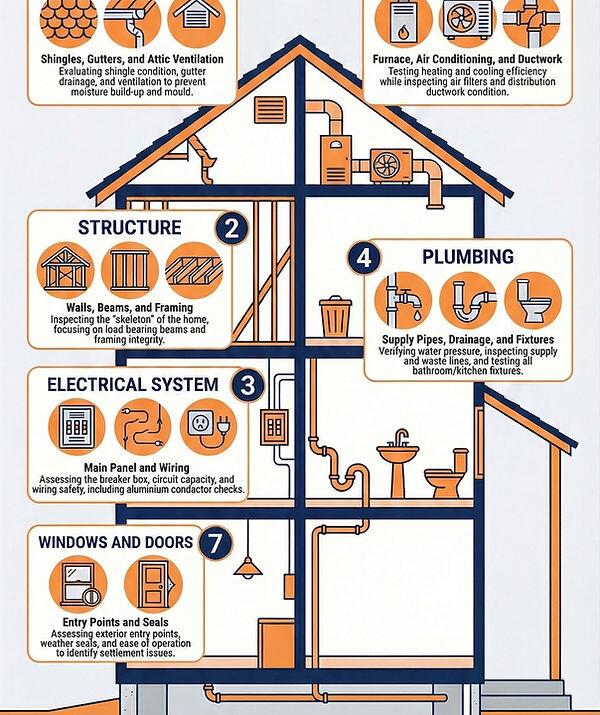
Exterior & Structure
- Roof covering, flashing, and penetrations
- Gutters, downspouts, and drainage
- Siding, trim, and exterior cladding
- Foundation walls and visible structure
- Decks, porches, and walkways
- Grading and lot drainage
Interior & Systems
- Electrical panel, wiring type, and safety
- Plumbing supply, drains, and water heater
- Heating and cooling systems
- Insulation and ventilation
- Windows, doors, and interior surfaces
- Attic, basement, and crawlspace access
Every home inspection covers the same basic systems, but there are important limitations buyers need to understand. I inspect visible and accessible components. If the attic access is blocked by stored items, I can’t inspect the attic. If there’s 3 feet of snow on the roof, my visual inspection of the roof surface is limited.
I also don’t inspect for things that require specialized equipment or expertise beyond general home inspection. That includes asbestos testing, mould sampling, radon measurement (though I offer this as a separate service), lead paint testing, or environmental hazards. If I see something that looks like it needs specialist evaluation, I note it in my report and recommend you bring in the appropriate expert.
Septic systems are another common question. I can do a visual inspection of the tank location and drain field, looking for obvious issues like standing water or sewage odours. But I can’t evaluate what’s happening inside the tank or whether the system is functioning properly without it being pumped and inspected by a septic specialist.
The same goes for wells. I can test water pressure and flow at fixtures, but I can’t assess water quality or the condition of the well system itself. If you’re buying a home with well water, you need a separate water quality test from a laboratory.
Why Visual Inspection Matters
Some buyers wonder if a visual inspection is enough. Can you really find problems just by looking? The answer is yes, absolutely. Most defects are visible if you know what to look for and where to look for it. A crack in a foundation wall tells a story. The pattern of wear on roof shingles reveals ventilation issues. The way a floor slopes indicates structural movement.
This is where experience matters. After 10 years and thousands of inspections in New Brunswick homes, I know what’s normal wear and tear versus what’s a red flag. I know how homes in this region age, what fails first, and what issues show up repeatedly. That pattern recognition is what you’re paying for.

And with thermal imaging included in every inspection I do, I can see things that aren’t visible to the naked eye. Missing insulation, air leaks, moisture intrusion, and electrical hot spots all show up clearly on a thermal camera. It turns invisible problems into visible ones.
The Inspection Report
At the end of the inspection, you get a comprehensive report with photos documenting what I found. I prioritize issues by severity. Safety concerns go at the top. Major system defects come next. Then routine maintenance items. This helps you understand what needs immediate attention versus what can wait.
The report is yours to keep forever. Use it to negotiate with the seller. Use it to plan your first year of homeownership. Use it to budget for future repairs. I’m available to answer questions about it for as long as you own the home.
New Brunswick Specific Considerations
If you’re buying a home in New Brunswick, you need an inspector who understands Maritime homes. The climate here creates challenges you won’t find in Alberta or Ontario. The building practices are different. The common problems are different. An inspector who just moved here from Toronto might miss things that are obvious red flags to someone who’s been working in this market for years.
Let me explain what makes New Brunswick homes unique and what I look for because of it.
Maritime Climate Challenges
The freeze-thaw cycle in New Brunswick is brutal on homes. We regularly swing from -20°C to +5°C and back again within days during winter and spring. Water gets into small cracks, freezes, expands, and turns those small cracks into big problems. I see this everywhere. Foundation cracks that looked minor in summer become serious structural concerns after a few freeze-thaw cycles. Roof damage that seemed cosmetic leads to leaks when ice dams form and melt.
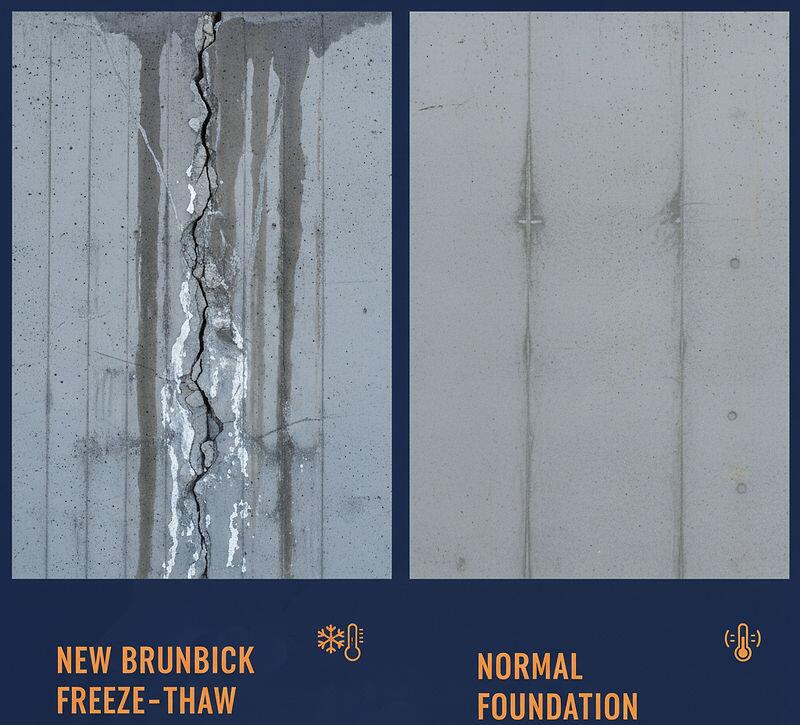
Moisture is the other big issue. As New Brunswickers we get significant precipitation year-round, and coastal proximity means high humidity. Homes that aren’t properly ventilated develop mould problems. Basements that lack adequate drainage flood repeatedly. Attics without proper ventilation trap moisture that rots sheathing and framing.
During inspections, I pay extra attention to how the home handles water. Is the grading sloped away from the foundation? Are gutters and downspouts directing water at least 6 feet from the house? Is there evidence of water entry in the basement? These aren’t just maintenance issues in New Brunswick. They’re critical to the home’s longevity.
Common Issues in Older Properties
Southern New Brunswick has beautiful older homes, especially in Saint John, Rothesay, and Hampton. Many date back to the early 1900s. These homes have character and solid construction, but they also have predictable problems.
Knob and tube wiring shows up frequently in pre-1950s homes. This old electrical system was fine when installed, but it’s not designed for modern electrical loads. Most insurance companies won’t insure homes with active knob and tube wiring, so this becomes a deal point in transactions.
Vermiculite insulation is another common find in older New Brunswick homes. Some vermiculite contains asbestos, particularly if it was mined from Libby, Montana. If I see vermiculite in an attic, I recommend testing before anyone disturbs it.
Oil heating systems are standard in New Brunswick, unlike much of the rest of Canada. I inspect a lot of oil furnaces and oil tanks. Tanks can be above ground or buried. Buried tanks are a concern because if they’re leaking, soil contamination is expensive to remediate. I always recommend oil tank inspections for older homes, and some buyers choose to add tank insurance.
Foundation issues are common in older homes too. Many have stone foundations that have settled or shifted over decades. Some have been partially rebuilt with concrete block or poured concrete. I look carefully at how these different foundation materials are working together and whether there’s evidence of ongoing movement.
Radon in Southern New Brunswick
This is something every buyer needs to understand. Southern New Brunswick has elevated radon potential. Radon is a radioactive gas that comes from uranium decay in the soil. It’s colourless, odourless, and the leading cause of lung cancer in non-smokers.
I’m a C-NRPP Certified Radon Measurement and Analysis Professional, and I test a lot of homes. Based on what I’ve seen, a significant percentage of homes in this region test above Health Canada’s action level of 200 Bq/m³. It’s not something you can predict based on the house next door. Two identical homes built side by side can have completely different radon levels.
The good news is radon is fixable. Mitigation systems work effectively and typically cost $2,000 to $4,000 to install. But you need to know about it before you buy, which is why I recommend radon testing as part of every home inspection in New Brunswick.
Heating Systems and Energy Costs
New Brunswick has some of the highest electricity rates in Canada, and we have cold winters. How a home is heated matters significantly to your monthly costs.
Oil furnaces are common. I check their age, condition, and whether they’re maintaining proper temperature throughout the home. I also look at the oil tank for signs of rust or leakage.
Electric baseboard heating is in many homes, particularly condos and newer builds. It’s clean and requires little maintenance, but it can be expensive to run if the home isn’t well insulated.
Heat pumps are becoming more popular. They’re efficient but need to be sized correctly for our Maritime climate. An undersized heat pump will struggle in January when temperatures drop to -20°C.
Forced air systems, wood stoves, and pellet stoves all show up too. Each has its own inspection considerations.
Well Water vs. Municipal Systems
Many rural properties in the Hampton, Sussex, and St. Stephen areas have well water rather than municipal connections. I test water pressure and flow during inspections, but I always recommend buyers get the water quality tested by a laboratory. You want to know what you’re drinking.
Wells can have issues with bacteria, minerals, or other contaminants. Treatment systems exist for most problems, but you need to know what you’re dealing with.
Septic Systems
Like wells, septic systems are common in rural areas. I do a visual inspection of the tank location and drain field, but I can’t see inside the tank or evaluate whether it’s functioning properly. I recommend buyers hire a septic specialist to pump and inspect the tank before closing. A failing septic system can cost $15,000 to $30,000 to replace.
Coastal Property Considerations
If you’re buying near the coast, there are additional factors. Salt air accelerates corrosion on metal roofing, flashing, and fixtures. Storms can cause more damage here than inland. Flood risk and erosion are real concerns in some areas.
I look at how coastal homes are holding up against these conditions. Is the roof showing premature wear from salt exposure? Are metal components rusting faster than they should? Is there evidence of storm damage or water intrusion?
This local knowledge is why you want an inspector who works in this market regularly. I know what’s normal for a 1920s Saint John home versus a 1980s Hampton split-level versus a 2010s Quispamsis new build. That context matters.
The Home Inspection Process
Let me walk you through what actually happens during a home inspection, from when you book to when you receive your report.
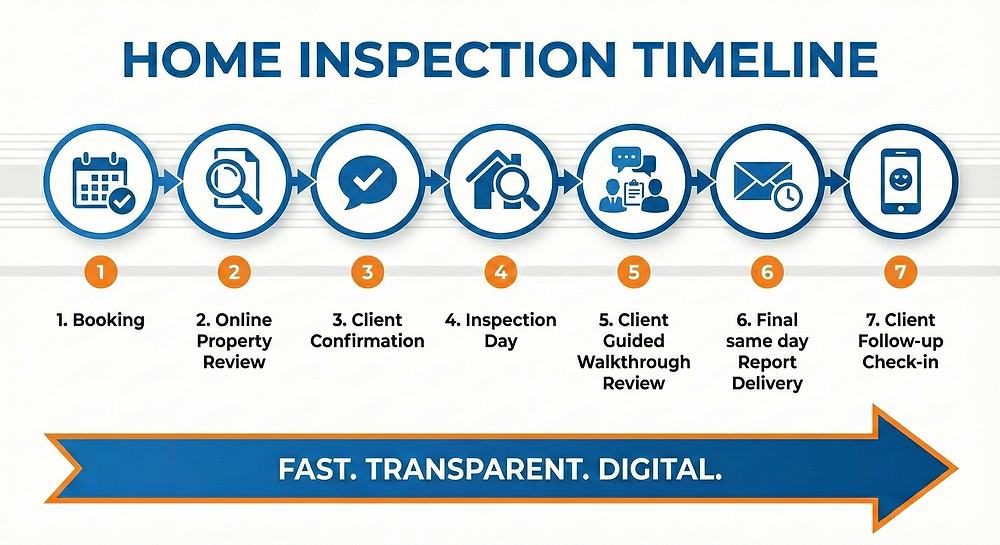
Scheduling and Timing
Most buyers schedule their inspection as soon as their offer is accepted. In New Brunswick, inspection periods are typically 5 to 10 days, though this can vary. I recommend booking as early as possible in your conditional period to allow time for any follow-up assessments if needed.
Availability can change based on the season but typical availability is 2 to 4 days on average throughout Southern New Brunswick. During peak spring and summer seasons, booking a few days ahead is wise. In winter, I usually have more flexibility in my schedule.
The inspection itself takes 2 to 4 hours depending on the size and condition of the home. A 1,200 square foot bungalow might take 2.5 hours. A 3,000 square foot two-storey with a finished basement and detached garage could take 4 hours or more. I never rush. If something needs more time, I take it.
Should You Attend?
Yes. I strongly encourage buyers to attend their inspection, at least for the final walkthrough.
You don’t need to follow me around for the entire inspection, though you’re welcome to if you want. Most buyers show up for the last 30 to 45 minutes when I walk through my findings. This is your chance to ask questions, see problems firsthand, and understand what you’re getting into.
I’ll show you where the main water shutoff is, how to change the furnace filter, where the electrical panel is located, and other essential information about operating your home. This time together is valuable. You’ll learn more about the home in 30 minutes with me than you would in hours of research online.
What I Inspect
Here’s what I examine during a typical inspection, roughly in the order I do it.
Exterior and Grounds
I start outside, looking at the property as a whole. I check grading and drainage around the foundation. Water should slope away from the house, not toward it. I look at driveways and walkways for settlement or cracking. I examine retaining walls for stability.
Then I move to the exterior walls. I’m looking at siding condition, trim, soffit and fascia, and checking for signs of water damage or pest entry. I test exterior doors and look at the condition of windows, frames, and caulking.
Decks and porches get close attention. I check railings for stability, stairs for proper rise and run, and structural supports for rot or deterioration. A lot of deck failures happen because posts are in direct contact with soil or concrete, leading to rot at the base.
Roofing
For accessible roofs, I get up there and walk the surface when it’s safe to do so. I’m looking at shingle condition, flashing around chimneys and vents, and checking for proper drainage. I look for missing or damaged shingles, signs of previous repairs, and evidence of ice dam damage.
For steep roofs, older roofs that might not support my weight safely, or roofs covered in snow, I use my drone. Aerial inspection lets me see the entire roof surface without risking damage to fragile materials or putting myself in danger.
I also check attic ventilation from inside. Proper ventilation prevents ice dams in winter and extends roof life. Many older New Brunswick homes have inadequate attic ventilation.
Attic and Insulation
Inside the attic, I look at insulation levels, ventilation, framing condition, and signs of leaks or moisture problems. I check roof sheathing for rot or damage. I look at bathroom and kitchen exhaust vents to make sure they’re properly vented to the outside, not just dumping moisture into the attic.
Insulation depth matters in our climate. Many older homes have insufficient insulation by modern standards. I measure what’s there and note if upgrades would improve energy efficiency.
Electrical System
I open the main electrical panel and examine the wiring, breakers, and overall condition. I’m looking for proper sizing, signs of overheating, double-tapped breakers, aluminum wiring, and any modifications that don’t meet code.
I test outlets throughout the home for proper grounding and polarity. I check GFCI outlets in bathrooms, kitchens, and exterior locations. I look at light fixtures and ceiling fans. I verify smoke detectors and carbon monoxide detectors are present and functioning.
Electrical issues are common in older homes. Upgrading from 100-amp to 200-amp service is often recommended for homes that have added modern loads like electric vehicle chargers or heat pumps.
Plumbing System
I test water pressure at multiple fixtures. I run all faucets, flush all toilets, and check drainage throughout the home. I look under sinks for leaks or signs of previous water damage. I examine visible supply piping and drain lines.
I inspect the water heater for age, condition, proper venting, and temperature/pressure relief valve operation. I check for corrosion or leaks. Most water heaters last 10 to 15 years. If yours is approaching that age, plan for replacement.
In crawl spaces and basements, I look at main supply lines and drain systems. Cast iron drains in older homes can corrode from the inside. Galvanized supply pipes can restrict water flow as they age. These are things that affect water pressure and quality.
Heating System
I operate the heating system and verify it’s producing heat. I check the thermostat response. I look at the furnace or boiler age, condition, and maintenance history.
For forced air systems, I examine ductwork for proper support and sealing. I check air filters. I listen for unusual noises that might indicate problems with the blower motor or other components.
For oil systems, I inspect the tank for rust, leaks, or damage. I check the fuel lines and connections. I verify proper venting and combustion air supply.
For heat pumps, I test operation in heating mode and check refrigerant lines, condensate drainage, and indoor and outdoor unit condition.
Air Conditioning
If the outdoor temperature is above 15°C, I test the air conditioning system. Below that temperature, running AC risks damaging the compressor, so I note in my report that testing was limited by weather conditions.
I check the condenser unit outside for damage or deterioration. I verify proper electrical connections. I test airflow at registers and check for adequate cooling.
Interior
Inside the home, I walk through every room looking at walls, ceilings, floors, windows, and doors. I’m checking for signs of water damage, structural issues, or safety concerns.
I test windows for operation and check weatherstripping. I look for condensation between panes in thermal windows, which indicates seal failure. I operate doors and check for proper fit and function.
I examine floors for levelness, squeaks, or soft spots that might indicate structural problems below. I look at stairs for proper handrails and safe construction.
Basement and Foundation
In basements, I look carefully for signs of water entry. Stains on walls or floors, efflorescence (white mineral deposits), mould growth, or a musty smell all indicate moisture problems.
I examine foundation walls for cracks, bowing, or other structural concerns. Not all cracks are serious, but some are. The pattern, width, and location of cracks tell me whether this is normal settling or something more significant.
I check basement windows for proper egress if bedrooms are located below grade. Building code requires safe escape routes from sleeping areas.
I inspect basement support posts and beams. I look for rot, insect damage, or structural modifications that might affect the home’s stability.
Garage
If there’s a garage, I inspect it like a small building. I check the foundation, framing, roof, and door operation. I test the garage door opener and safety reverse feature. I look at electrical outlets and lighting.
Attached garages need a fire-rated separation from the house. I verify this is in place and hasn’t been compromised by modifications.
Built-In Appliances
I test the basic operation of built-in appliances including the dishwasher, range, oven, microwave, and garbage disposal. I’m not doing a full performance evaluation, just verifying they turn on and appear to function. Appliances aren’t covered by most home warranties, so knowing their condition before you buy is helpful.
Thermal Imaging
Depending on the package selected, while I’m moving through the home, I’m also using my thermal imaging camera. This is included in every inspection I do, not an extra charge. The camera shows temperature differences that reveal problems invisible to the eye.
I find missing insulation, air leaks around windows and doors, moisture intrusion in walls, and electrical issues creating hot spots. Just last week, thermal imaging revealed an active roof leak that had no visible stains yet. The temperature difference showed exactly where water was coming in.
The Final Walkthrough
After I’ve inspected everything, I spend time with you reviewing what I found. I walk through the major issues. I answer your questions. I explain what’s safety-related, what’s a significant defect, and what’s normal maintenance.
This conversation is important. You’ll understand the home better after this walkthrough than you did after a dozen showings. You’ll know what to fix immediately, what to plan for in the next few years, and what’s just cosmetic.
Your Report
You receive your inspection report via email the same day, usually within hours of the inspection. It includes photos of issues I found, descriptions of problems, and recommendations for repairs or further evaluation.
The report is organized by system, with findings prioritized by severity. You can download it as a PDF, share it with your realtor or lawyer, or access it online from any device.
I’m available after you receive the report to answer questions. That support doesn’t end at closing. If you have questions about your inspection report six months or six years later, you can contact me.
Specialty Inspection Services
A standard home inspection covers the major systems and components, but there are additional services that provide valuable information about specific concerns. Some of these I recommend for nearly every home in New Brunswick. Others depend on the property’s age, features, or location.
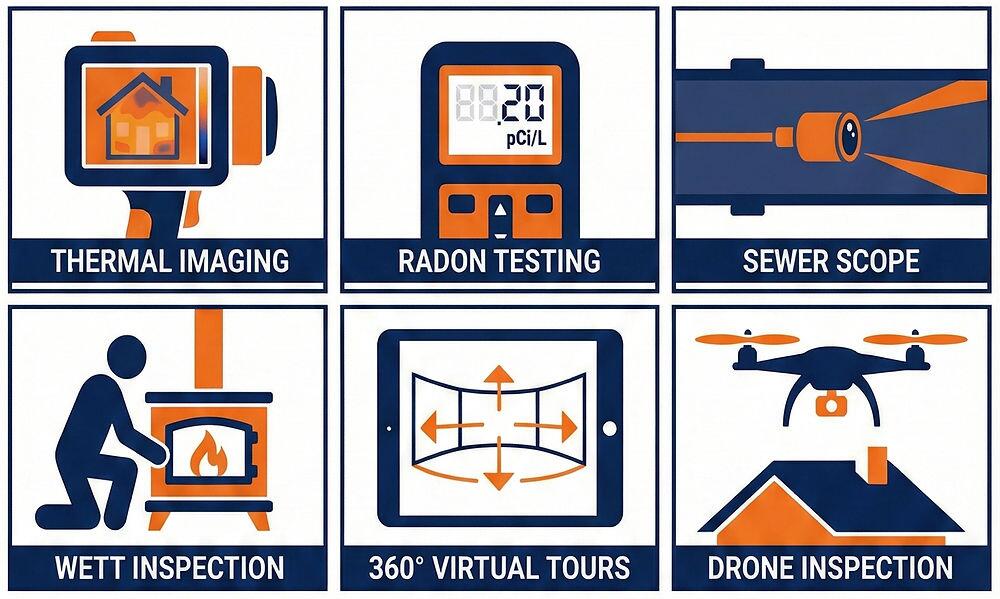
Radon Testing
I recommend radon testing for every home in Southern New Brunswick. Not some homes. Not just older homes. Every home.
Radon is a radioactive gas that comes from uranium decay in soil and rock. It’s colourless and odourless, so you can’t detect it without proper testing equipment. It’s also the leading cause of lung cancer in non-smokers and the second leading cause of lung cancer overall, according to Health Canada.
Southern New Brunswick has elevated radon potential due to the geological composition. I’ve tested hundreds of homes in this region, and a significant percentage come back above Health Canada’s action level of 200 Bq/m³. I’ve seen brand new homes test high. I’ve seen renovated homes test high. You cannot predict radon levels based on the house next door or the age of the home.
As a C-NRPP Certified Radon Measurement and Analysis Professional, I use continuous radon monitors that provide accurate results over a selected testing period. This is more reliable than the DIY test kits you can buy at hardware stores, which require you to mail them to a lab and wait weeks for results. These DIY kits offer 48 hour testing, which is a USA minimum, while Health Canada requires a 4 day minimum for real estate transactions and 7 to 91 days for short term and 91+ days for long term.
If radon levels come back elevated, it’s not a reason to walk away from the home. Radon mitigation systems are effective and typically cost $2,000 to $4,000 to install. A C-NRPP certified mitigation specialist installs a pipe system that vents radon from beneath the foundation to the outside air. These systems reduce radon levels by 90% or more.
The key is knowing about radon before you close. You can negotiate mitigation costs with the seller, or plan for installation after you move in. What you don’t want is to discover high radon levels after you’ve owned the home for five years.
WETT Inspections
If the home has a wood stove, fireplace, pellet stove, or any solid fuel-burning appliance, you need a WETT inspection. WETT stands for Wood Energy Technology Transfer, and it’s a specialized assessment of wood-burning systems.
Most insurance companies in New Brunswick require a WETT certificate before they’ll insure a home with wood-burning appliances. No certificate means no insurance, or significantly higher premiums.
As a WETT certified inspector, I examine the appliance itself, the chimney and venting system, clearances to combustible materials, and overall installation safety. I check for creosote buildup, damaged chimney liners, improper installations, and fire hazards.
I’ve seen wood stoves installed too close to walls, chimneys with cracked liners, and DIY installations that violate multiple safety codes. These aren’t just insurance issues. They’re serious fire risks.
A WETT inspection provides you with an official certificate that satisfies insurance requirements and identifies any safety concerns that need correction. If problems exist, you can address them before closing or negotiate with the seller to handle repairs.
Sewer Scope Inspection
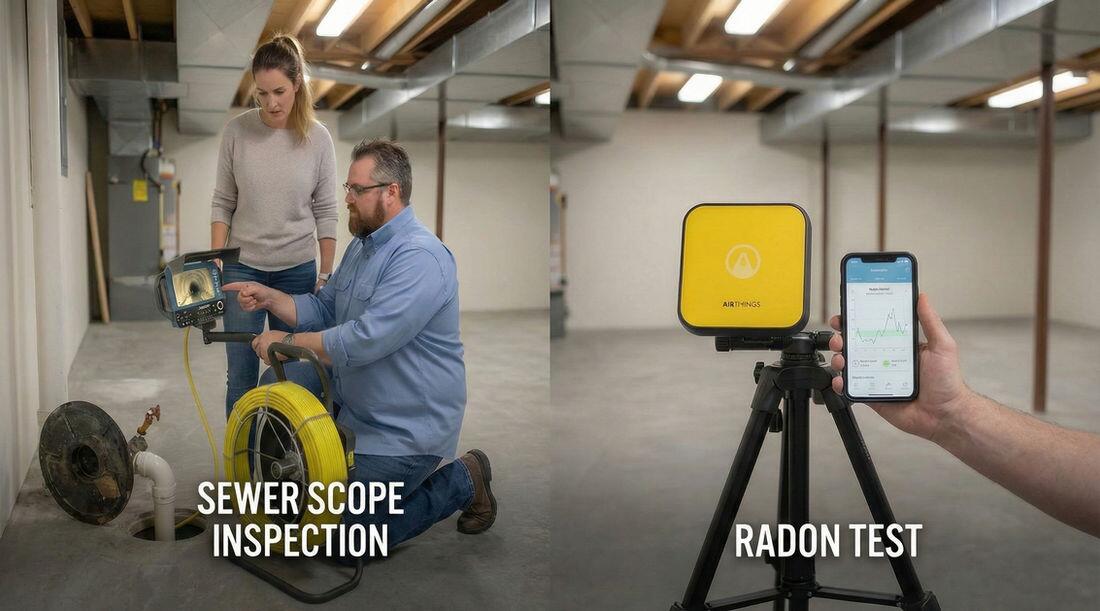
A sewer scope uses a specialized camera to inspect the main sewer line from the inside. This is one of the most valuable add-on services for older homes, and I recommend it frequently.
The main sewer line runs from your home to the municipal connection or septic tank. It’s buried underground, which means you can’t see its condition during a normal inspection. But problems with this line can cost $5,000 to $15,000 or more to repair, especially if excavation is required.
Tree roots are the most common issue I find with sewer scopes. Roots seek moisture and can infiltrate pipes through small cracks or joints. Once inside, they grow and eventually block the line completely. Clay tile pipes, common in older homes, are particularly vulnerable to root intrusion.
I’ve also found collapsed sections, severe corrosion, improper slope causing standing water, construction debris left in lines, and connections to old systems that are no longer recommended installation method.
Last month I scoped a sewer line for a 1960s home in Saint John. The camera revealed a section of clay pipe that had completely collapsed 15 feet from the house. The buyers had no idea. The drains were working fine during showings because the blockage was partial. But within months of closing, that line would have failed completely. The repair estimate was $12,000. The sewer scope cost $275.
For homes built before 1980, I strongly recommend adding a sewer scope to your inspection. For newer homes with large trees near the sewer line, it’s worth considering too.
Thermal Imaging
Thermal imaging is included in every inspection I do at no additional cost. Many inspectors in other markets charge $200 to $300 extra for this service. I include it because it’s too valuable to skip.
A thermal camera detects temperature differences and displays them as colour-coded images. Cooler areas show up as blue or purple. Warmer areas show up as yellow, orange, or red. These temperature differences reveal problems that are completely invisible to the naked eye.
Missing insulation shows up clearly. Air leaks around windows and doors appear as distinct temperature changes. Moisture intrusion in walls creates cool spots where water has entered. Electrical issues like overloaded circuits or loose connections create hot spots that can indicate fire hazards.
I use thermal imaging throughout the entire inspection. In attics, it shows where insulation is missing or compressed. In basements, it reveals moisture problems behind finished walls. On exterior walls, it identifies air leakage that’s costing you money in heating bills.
The inspection I mentioned earlier, where I found the missing wall insulation in the Rothesay home, only happened because of thermal imaging. Visually, those walls looked perfect. The thermal camera showed the truth.
Thermal imaging works best when there’s a temperature difference between inside and outside. That’s why it’s particularly effective during New Brunswick winters. But I use it year-round and find valuable information in every season.
Drone Roof Inspections
I use drone technology to inspect roofs that are too steep, too high, or too fragile to walk on safely. This is included in my Rising Tide and High Tide packages, with targeted drone review in the Low Tide package.
Walking on an aging asphalt shingle roof can damage the shingles. Walking on a steep roof is dangerous. A drone solves both problems. I can capture high-resolution photos and video of the entire roof surface, chimneys, flashing, and all roof penetrations without ever stepping on the roof.
The aerial perspective also reveals issues that are hard to see from a ladder. Sagging roof lines, damaged flashing around chimneys, and areas of shingle deterioration all show up clearly in drone footage.
Drone inspections are particularly valuable for multi-storey homes, homes with complex roof lines, and older homes where the roof condition is uncertain.
Well Water Testing
For homes with well water, I test water pressure and flow during the inspection. But I can’t assess water quality. That requires laboratory testing.
I recommend all buyers with well water arrange for a separate water test through an accredited laboratory. The test checks for bacteria like E. coli, nitrates, and other contaminants. Some buyers also test for minerals like iron or manganese that can cause staining or taste issues.
Water treatment systems can address most problems, but you need to know what you’re treating. A $300 water test can save you from unpleasant surprises after you move in.
Septic System Inspection
Similarly, for homes with septic systems, my visual inspection has limitations. I can look at the tank location and drain field for obvious problems. But I can’t see inside the tank or evaluate whether the system is functioning properly.
I recommend buyers hire a septic specialist to pump and inspect the tank before closing. This costs $300 to $500 typically, and it’s the only way to know the condition of baffles, the integrity of the tank, and whether the system is nearing failure.
Replacing a failed septic system costs $15,000 to $30,000 depending on soil conditions and site constraints. That’s a lot of money to discover after you own the home.
These specialty services aren’t required, but they provide information that protects your investment. I’m always transparent about what’s included in your inspection package and what services I recommend based on the specific property you’re buying.
Understanding Your Inspection Report
Your inspection report is one of the most important documents in the home buying process. It tells you what’s wrong with the property, what needs attention, and what you should plan for in the future. Let me explain how my reports work and how to use them effectively.
Same-Day Delivery
You receive your inspection report via email on the same day as your inspection, typically within hours of completion. This is important because your conditional period is limited. You need time to review the report, discuss it with your realtor, and make decisions about how to proceed.
The report is delivered as a secure online document that you can access from any device. You can download it as a PDF for your records, share access with your realtor or lawyer, or view it on your phone while you’re at the property.
How Reports Are Organized
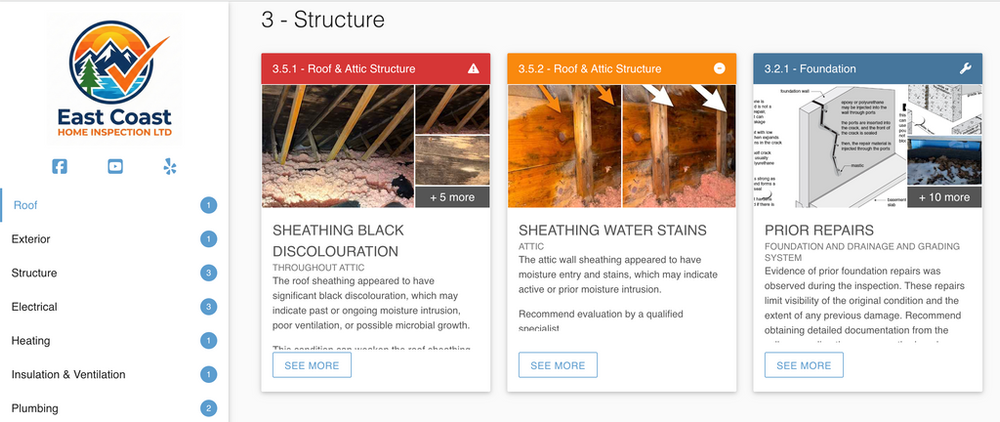
My reports are structured by system. There’s a section for the roof, one for electrical, one for plumbing, and so on. Within each section, I describe what I inspected, what I found, and what recommendations I have.
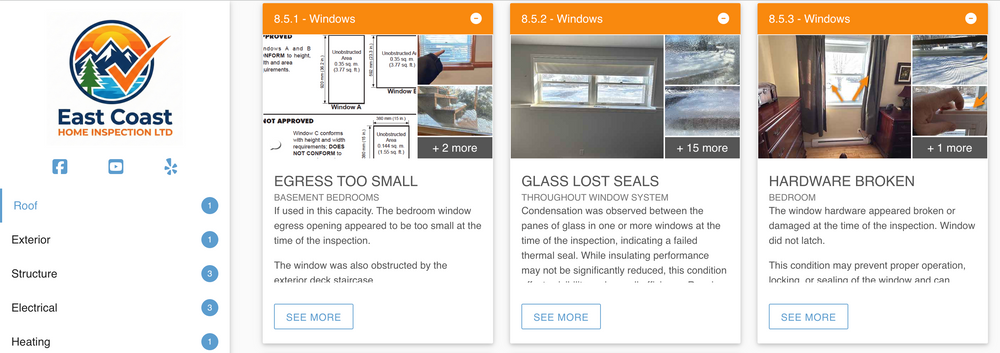
Every issue is documented with photos. If I’m noting a crack in the foundation, you’ll see a photo of that specific crack. If I’m identifying a safety concern with the electrical panel, you’ll see exactly what I’m talking about. This visual documentation is critical. It helps you understand the issues and provides evidence if you need to negotiate with the seller.
For issues found with thermal imaging, you’ll see both a regular photo and a thermal image showing the temperature differences. This makes problems like missing insulation or air leaks very clear.
Prioritizing Findings
Not all defects are created equal. A missing downspout extension is not the same as an active roof leak. A burned-out light bulb is not the same as aluminum wiring that’s a fire hazard.
I prioritize findings by severity to help you understand what matters most.
Safety issues go at the top. These are things that pose immediate risk to occupants. Examples include exposed electrical wiring, gas leaks, structural instability, or missing handrails on stairs. Safety issues need attention before you move in.
Major defects come next. These are significant problems with major systems or components. A failing furnace, a leaking roof, foundation cracks that indicate structural movement, or a malfunctioning sewage system all fall into this category. Major defects are expensive to repair and often become negotiating points in the transaction.
Then there are items that need repair or replacement in the near future. A water heater that’s 14 years old and nearing the end of its typical lifespan. Windows with broken seals that will eventually need replacement. A roof that has a few years left but should be budgeted for.
Finally, there are routine maintenance items and minor defects. Missing weatherstripping, a cracked outlet cover, a loose handrail, or peeling paint. These are things you can handle over time as part of normal homeownership.
This hierarchy helps you focus on what’s important. You can’t fix everything at once, nor should you try. But you need to know what’s urgent and what can wait.
What the Report Includes
Beyond just listing problems, the report provides context. If I find a crack in the foundation, I note its location, width, pattern, and whether there’s evidence of movement. I explain whether this appears to be old settling or an active structural issue. I recommend whether you need a structural engineer to evaluate it further.
If I find the furnace is 18 years old, I note that and explain that typical furnace lifespan is 15 to 20 years. You might get a few more years out of it, or it might fail next winter. That’s information you need for budgeting even if it’s working fine today.
The report also notes things that are working well or have been recently upgraded. If the roof was replaced two years ago and looks great, I note that. If the electrical panel was recently upgraded to 200 amps, that’s documented too. It’s not all bad news.
Using Your Report
Once you have the report, you have several options depending on what was found.
If there are no major issues, you can proceed with confidence. You know what you’re getting into, and you can plan for normal maintenance and eventual system replacements.
If significant problems were discovered, you can negotiate with the seller. Common approaches include asking the seller to make repairs before closing, requesting a price reduction to cover repair costs, or asking for a credit at closing. Your realtor can guide you through these negotiations.
In some cases, issues are serious enough that you’ll want a specialist’s evaluation. If I recommend a structural engineer, a roofing contractor, or a septic specialist, get those assessments done during your conditional period. Their reports provide more detailed information about repair costs and urgency.
If problems are severe and the seller won’t address them, you have the option to walk away. That’s what the inspection condition is for. It’s better to lose your deposit on an inspection that saves you from a $50,000 surprise than to close on a home with hidden problems.
Post-Closing Use
Your inspection report remains valuable long after you close on the home. Use it as a maintenance guide. If I noted that the water heater is 12 years old, you know to start budgeting for replacement. If I recommended monitoring a foundation crack, you can check it periodically to see if it’s changed.
Many of my clients refer back to their reports years later when planning renovations or dealing with problems that develop. The report is a snapshot of the home’s condition at purchase, which can be useful for insurance claims or resale.
Post Inspection Support
I stand behind my reports. If you have questions after reviewing it, call me. If something in the report is unclear, I’ll explain it. If an issue develops six months later and you want to know if it was mentioned in the report, I’ll help you find that information.
This support doesn’t end when you close on the home. I’ve had clients call me years later with questions about their report or asking advice about a problem that’s developed. That’s part of the service. I want you to be confident in your home purchase, and I’m here to help with that long term.
Limitations and Disclaimers
Every inspection report includes important limitations. I inspect what’s visible and accessible at the time of inspection. I can’t see through walls, under carpets, or behind stored items. I can’t predict future failures or hidden defects.
The report represents the condition of the home on the day I inspected it. Things can change. A roof that’s fine in October might develop a leak in January. A furnace that works in summer might fail when you need it in winter.
This is why the report focuses on current condition and remaining lifespan rather than making predictions. I tell you what I found, what concerns me, and what you should watch or plan for. But I can’t eliminate all risk from a home purchase. No inspector can.
Questions and Follow-Up
After you receive your report, take time to read it thoroughly. Make a list of questions. Then call me or email me. I’d rather spend 30 minutes on the phone explaining issues than have you make decisions based on misunderstandings.
If the report recommends an evaluation by specialists, don’t skip that step. Those additional assessments provide critical information about repair costs and urgency. Factor them into your decision making.
Your report is a tool. Use it to negotiate, to plan, to budget, and to maintain your home properly. It’s an essential step toward making an informed decision with greater confidence.
What Happens After the Inspection
The inspection is complete. You have your report. Now what? This is where many buyers feel overwhelmed, especially if the report contains issues they weren’t expecting. Let me walk you through the typical next steps and how to approach them strategically.
Reviewing Your Findings
Start by reading the entire report, not just the summary. Pay attention to the priority levels I’ve assigned to each issue. A long list of minor maintenance items looks intimidating, but it’s very different from a short list of major defects.
Separate the issues into categories in your mind. Safety concerns that need immediate attention. Major systems that are failing or near the end of their lifespan. Deferred maintenance that’s accumulated over years. Normal wear and tear. Once you’ve categorized the findings, the path forward becomes clearer.
Talk to your realtor about what you found. They’ve seen hundreds of inspection reports and can give you perspective on whether the issues are typical for a home of this age and price, or whether they’re unusual red flags. Their experience helps you understand what’s normal and what’s not.
When to Bring in Specialists
If my report recommends evaluation by a qualified specialist, take that seriously. I make these recommendations when an issue is beyond the scope of a general home inspection or when you need detailed repair cost estimates.
Structural engineers evaluate foundation problems, significant cracks, sagging floors, or other structural concerns. They can tell you whether a crack is cosmetic or serious, whether repairs are needed, and what those repairs will cost.
Roofing contractors can provide detailed assessments of remaining roof life and replacement costs. If I’ve noted the roof is near the end of its lifespan, a roofer can tell you whether you have one year or five years before replacement is necessary.
HVAC specialists evaluate heating and cooling systems in detail. If the furnace is old or showing signs of problems, they can assess its condition and provide replacement quotes.
Electricians can evaluate complex electrical issues like knob and tube wiring, aluminum wiring, or panel problems. They provide cost estimates for upgrades or rewiring.
Plumbers handle sewer line issues, well pump problems, or complex plumbing defects. If the sewer scope showed problems, a plumber gives you repair costs.
Septic specialists pump and inspect septic tanks, evaluate drain fields, and provide replacement estimates if needed.
Get these specialist evaluations done during your conditional period. Their reports give you the detailed information you need to make decisions and negotiate effectively. Don’t wait until after closing and then discover the foundation repair costs $40,000.
Negotiating with Sellers
Once you understand what’s wrong and what it will cost to fix, you have several negotiation options.
You can ask the seller to make repairs before closing. This works well for clear cut issues like replacing a broken furnace or fixing a leaking roof. The advantage is the work gets done and you move into a home without those problems. The disadvantage is you don’t control who does the work or the quality of repairs.
You can request a price reduction equal to the repair costs. This gives you control over hiring contractors and overseeing repairs. The disadvantage is you have to deal with the repairs after moving in, which can be stressful.
You can ask for a credit at closing. The seller reduces the purchase price or provides money at closing that goes toward your down payment or closing costs. This is similar to a price reduction but structured differently for financing purposes.
Some buyers ask the seller to provide a home warranty that covers major systems for the first year. This doesn’t fix existing problems, but it provides some protection if something fails shortly after you move in.
Your approach depends on the issues found, the market conditions, and the seller’s motivation. In a buyer’s market with motivated sellers, you have more negotiating power. In a competitive seller’s market, you might need to be more strategic about what you ask for.
Your realtor handles the actual negotiations, but you need to tell them what you want. Be clear about your priorities. If the roof is your main concern, focus negotiations there rather than asking for repairs to twenty minor items.
Prioritizing Repairs
You can’t fix everything at once, and you shouldn’t try. Focus on safety issues first. If there are electrical hazards, gas leaks, or structural problems, those need immediate attention.
Next, address failures in major systems. A furnace that’s barely working won’t last the winter. A roof that’s actively leaking will cause more damage every time it rains. These can’t wait.
Then plan for items nearing the end of their lifespan. If the water heater is 14 years old, budget for replacement in the next year or two. If the roof has three years left, start saving for that expense.
Deferred maintenance and cosmetic issues can be handled over time as you have the budget and energy. Peeling paint, worn flooring, and outdated fixtures don’t affect the home’s functionality. They’re projects you can tackle when you’re ready.
Understanding Normal vs. Abnormal
This is important. Every home has issues. A perfect home doesn’t exist, especially in the resale market. What matters is whether the issues are normal for a home of this age and condition, or whether they indicate serious problems or poor maintenance.
A 30 year old home will have some worn components. That’s normal. But a 30 year old home with a failing foundation, a leaking roof, and electrical hazards suggests either bad luck or neglect. Context matters.
I’ve inspected homes where buyers were concerned about a long list of minor items in my report. Fifteen things that each cost $50 to $200 to fix. That’s maybe $2,000 total. It sounds like a lot when you see a long list, but it’s actually normal maintenance for a 20 year old home.
I’ve also inspected homes with short reports that contained three major issues adding up to $30,000 in repairs. The length of the report doesn’t tell you everything. The severity of the issues does.
Your realtor can help you understand this context. So can I. Call me after you’ve read the report if you’re unsure whether what I found is typical or concerning.
When to Walk Away
Sometimes the smart decision is to walk away from the purchase. This happens when the issues are too severe, too expensive, or too uncertain to accept.
Major structural problems with unclear repair costs are a common reason to walk away. If a structural engineer says the foundation needs extensive work and provides a repair estimate of $60,000 to $100,000, that ends the deal for most buyers.
Severe water damage with potential mould contamination throughout the home is another reason. Remediation is expensive and sometimes it’s impossible to fully resolve moisture problems in older homes.
Discovering the home needs complete rewiring, a new roof, a new furnace, and foundation repairs all at once can make the total repair costs exceed your budget even with seller concessions.
Sometimes it’s not the cost but the uncertainty. If specialists can’t give you a clear answer about whether repairs will work or how extensive they’ll need to be, that risk might be too much to accept.
Walking away is not a failure. It’s a smart decision when the inspection reveals problems that make the home a poor investment. That’s exactly why you have an inspection condition.
Why I Recommend Specialist vs. Re-Inspections
When a seller agrees to make repairs, your goal is to ensure the work is done right the first time. I recommend skipping the re-inspection in favour of Specialist Certification.
By recommending and by hiring a qualified specialist handle the repair, you gain a professional account of the work and a warranty that stays with the home. This provides a much higher level of security than a visual check, ensuring that the seller hasn’t simply used the quickest or cheapest fix available.
Using Your Report for Future Planning
After closing, keep your inspection report in a safe place. Use it as a maintenance planning guide.
If I noted the roof has 5 to 7 years of life remaining, start budgeting for replacement. If the water heater is 10 years old, know that replacement is probably 3 to 5 years away. If I recommended monitoring a foundation crack, check it annually to see if it’s growing.
The report helps you maintain the home properly and plan for major expenses. It’s a roadmap for the first several years of ownership.
Some buyers create a spreadsheet of all the items in the report with estimated replacement dates and costs. This turns the report into a long-term financial planning tool.
Moving Forward with Confidence
By highlighting observable issues, a home inspection aids in developing a clearer understanding of a home’s current state. This assessment enables you to move forward with your eyes open to the property’s requirements, allowing you to plan effectively for future maintenance or immediate repairs.
Choosing to have an inspection provides a factual baseline that is simply not available otherwise. It is designed to uncover significant visible conditions, providing essential data to help you navigate the transition into homeownership.
How to Choose a Home Inspector in New Brunswick
Choosing the right home inspector is an important decision. The inspector you hire should provide thorough, accurate information that helps you make an informed decision about your purchase. Here’s what to look for.
Certifications and Professional Affiliations
In Canada, home inspection is not regulated in most provinces, including New Brunswick. This means professional certifications and affiliations are important indicators of training and commitment to standards.
Reputable organizations include CAHPI (Canadian Association of Home and Property Inspectors) and InterNACHI (International Association of Certified Home Inspectors). Both require training, testing, and adherence to standards of practice.
Within CAHPI, the RHI (Registered Home Inspector) and NCH (National Certificate Holder) designations indicate advanced credentials and ongoing education requirements.
For specialty services, look for relevant certifications. C-NRPP certification for radon measurement professionals. WETT certification for wood-burning system inspections.
Ask inspectors about their credentials and affiliations. Qualified professionals are happy to explain their training and what it means for the service you’ll receive.
Experience and Local Knowledge
Years in business matters. An inspector who has been working in Southern New Brunswick for several years understands local housing stock, common regional issues, and how Maritime climate affects homes.
Ask how long they’ve been inspecting in this area and roughly how many inspections they’ve completed. Experience brings pattern recognition that helps identify problems and put findings in proper context.
Insurance Coverage
Professional inspectors carry expensive errors and omissions insurance and general liability coverage. This protects both you and them. Ask about insurance and verify coverage is current.
Reviews and References
Check online reviews on Google and other platforms. Look for consistent feedback about thoroughness, communication, and helpfulness.
Ask your realtor for recommendations. Realtors work with many inspectors and know who provides reliable, detailed service.
Strong reviews and referrals from multiple sources indicate consistent quality work.
Sample Reports
Ask to see a sample report before booking. This shows you how thorough the inspector is, how they organize information, and whether reports are clear and detailed.
Look for comprehensive photo documentation, clear prioritization of issues, and explanations that help you understand what was found and why it matters.
Website and Professionalism
A professional website with clear information about services, pricing, credentials, and contact information indicates a serious business operation.
Check responsiveness when you reach out. How quickly do they respond to inquiries? Are they helpful in answering questions?
Report Delivery
Ask when you’ll receive your report. During a conditional period, timely delivery matters. You need time to review findings and make decisions.
What’s Included
Clarify what’s included in the quoted price. Is thermal imaging included or extra? What about drone inspection capabilities for difficult-to-access roofs?
Understand exactly what you’re getting for the price.
Post-Inspection Support
Ask about availability for follow-up questions. Can you call after receiving the report if you need clarification? Good inspectors stand behind their work and remain available to help you understand their findings.
Making Your Decision
Choose based on credentials, experience, insurance coverage, reviews, report quality, and service. The inspector’s job is to provide accurate information that protects your investment. Look for someone who takes that responsibility seriously.
Home Inspection Pricing in New Brunswick
Home inspection costs vary based on the size of the property, the services included, and the level of detail provided. Let me explain how my pricing works and what affects inspection costs.

What Affects Pricing
Property size is the primary factor. A 1,200 square foot bungalow takes less time to inspect than a 3,000 square foot two-storey home with a finished basement. However, all my packages cover homes up to 2,500 square feet. Homes larger than that require custom pricing ($50 per 500 sqft over 2500).
Age and condition matter too. A newer home in good condition typically takes less time than an older home with deferred maintenance and multiple issues requiring documentation.
Additional structures add time. A detached garage, workshop, or guest house means more area to inspect and more systems to evaluate.
Specialty services like radon testing, WETT inspections, sewer scopes, or water sample collection have their own costs because they require specialized equipment and additional time.
My Package Structure
I offer three packages based on the level of detail and services included. All three cover homes up to 2,500 square feet and include comprehensive inspection of major systems and components. The difference is in thermal imaging coverage, drone documentation, and included specialty services.
Low Tide Package: $550
This package provides a thorough visual inspection of all major systems following CAHPI Standards of Practice. You receive a photo-documented report with clear priorities.
Low Tide includes targeted thermal scanning of high-probability risk areas. I use thermal imaging where it’s most likely to reveal problems like missing insulation, air leaks, or moisture intrusion.
Drone review is targeted too, focusing on primary roof components where safely accessible from the air.
This package works well for buyers who want a solid, professional inspection covering all the essentials at a straightforward price.
Rising Tide Package: $595
Rising Tide includes everything in Low Tide plus more comprehensive thermal and drone coverage.
The thermal assessment is wall to wall throughout the interior. I scan every room systematically looking for thermal anomalies that indicate problems. This comprehensive approach finds issues that targeted scanning might miss.
Drone imaging is expanded to include complete documentation of all roof surfaces and exterior elevations. You get a robust visual record of the entire exterior.
The reporting is enhanced with a higher volume of images and findings, creating a more complete permanent record of the home’s condition.
This package is best for buyers who want a more detailed picture of how the home is performing.
High Tide Package: $775
High Tide includes everything in Rising Tide plus your choice of one premium service. You select what matters most for your property.
Premium service options include:
- Sewer scope video evaluation of the main waste line. This identifies tree roots, blockages, cracks, or other issues in the buried sewer line.
- Radon testing with professional short-term continuous monitoring to evaluate indoor air concentrations.
- WETT inspection providing a specialized level 1 assessment of wood-burning systems with official certification for insurance.
- Complete thermal analysis with room by room evaluation of the entire interior for all visible thermal anomalies.
This package gives you the most comprehensive inspection with detailed documentation and the specialty service your property needs most.
What’s Included in Every Package
Regardless of which package you choose, you receive the same core inspection of all major systems. I inspect structural elements, roofing, exterior, electrical, plumbing, heating, cooling, insulation, ventilation, interior, basement, garage, and built-in appliances.
Every package includes same day digital report delivery. You get your comprehensive report via email within hours of the inspection, not days later.
Every package includes lifetime customer support. Questions about your report months or years later are welcome.
Every package includes thermal imaging. The difference is whether it’s targeted to high-risk areas or comprehensive throughout the entire home.
Payment and Scheduling
Payment and signed contract is due 24 hours prior to the inspection. I accept e-transfer, credit cards, cheques, and cash. You receive your invoice via email along with your report on the same day.
If paying by cash or cheque, payment can be made onsite at the inspection, though the signed contract is still required 24 hours beforehand. If paying by e-transfer or credit card, payment is required 24 hours prior to the inspection. Please notify me of your preferred payment method before the inspection.
Add-On Services
If you want services beyond what your package includes, they can be added:
- Radon testing as a standalone service for any package.
- WETT inspection if your package doesn’t include it.
- Sewer scope inspection for older homes or properties with large trees near sewer lines.
- Additional dwelling units or outbuildings are priced separately based on size.
Return on Investment
A home inspection costs a few hundred dollars. Finding a major problem before you buy can save tens of thousands.
I recently inspected a home where thermal imaging revealed missing insulation throughout the exterior walls. The buyers negotiated a $15,000 price reduction to cover proper insulation. That $595 inspection returned $15,000 in savings.
Another inspection found a foundation issue that a structural engineer estimated at $75,000 to repair. The buyers walked away from that purchase. The inspection protected them from a major financial hit.
A professional home inspection is valuable regardless of the findings, as it offers a documented overview of the building’s systems at the time of the evaluation. By understanding the current condition of the home and its anticipated maintenance needs, you can move forward with a clearer view of the property’s long-term requirements.
Comparing Costs
When comparing inspection prices, look at what’s included. An inspector charging $450 but adding $250 for thermal imaging, $150 for drone inspection, and delivering reports 5 days later isn’t actually cheaper than my $595 Rising Tide package with everything included and same day delivery.
Look at credentials too. Inspectors with advanced certifications, extensive experience, and comprehensive insurance coverage typically charge more because they provide more value.
The cheapest inspection isn’t always the best value. You’re making a decision about a property that costs hundreds of thousands of dollars. The inspection protects that investment. Choose based on quality and thoroughness, not just the lowest price.
Choosing Your Package
For most buyers, Rising Tide at $595 offers the best value. You get comprehensive thermal imaging throughout the home, complete drone documentation, and enhanced reporting. This level of detail finds problems that targeted inspection might miss.
If you’re buying a property with a wood stove, old sewer line, or in a high radon area, High Tide at $775 makes sense. You get everything in Rising Tide plus the specialty service your property needs most.
Low Tide at $550 works well for newer homes in good condition where you want professional inspection of all systems but don’t need the most comprehensive thermal and drone coverage.
Not sure which package fits your situation? Call me. I can recommend the right package based on the property age, condition, and your concerns.
Common Questions About Home Inspections
Here are the questions I hear most often from buyers, sellers, and realtors. These answers should help clarify what to expect from the inspection process.
Do I really need a home inspection for new construction?
Yes. New construction homes can have defects, installation errors, and code violations just like any other home. Builders are human. Subcontractors make mistakes. Quality control varies.
Municipal building inspections only verify code compliance at specific construction stages. They’re not designed to protect the buyer’s interests. The inspector shows up, checks off items, and moves on. They’re not looking at the home the way I do during a buyer’s inspection.
I’ve inspected new construction homes with missing insulation, improperly installed windows, plumbing leaks, electrical issues, and HVAC systems that don’t work correctly. These problems need to be caught before your warranty period begins or they become your responsibility to fix.
New construction inspections work best at two stages. Pre-drywall inspection lets me see framing, electrical rough-in, and plumbing before walls are closed up. Final inspection before closing catches finishing issues and verifies everything operates correctly.
Don’t skip the inspection just because the home is new. You’re still spending hundreds of thousands of dollars. Verify you’re getting what you paid for.
Can I skip the inspection if I’m paying cash?
Paying cash doesn’t reduce the risk of buying a home with problems. You still need to know what you’re getting.
Cash buyers sometimes think they don’t need inspections because they’re not required by a lender. That’s backwards thinking. If anything, you need an inspection more because you’re putting significant cash into this property with no mortgage company requiring an appraisal or condition assessment.
A $30,000 foundation problem costs the same whether you financed the purchase or paid cash. The inspection protects your investment regardless of how you’re funding it.
What if the seller won’t let me do an inspection?
This puts you in a difficult position. While some sellers have legitimate reasons for not wanting inspections, buying without one means accepting significant risk.
In competitive markets, some sellers receive multiple offers and choose ones without inspection conditions. That’s their right as a seller. As a buyer, you need to decide whether you’re comfortable taking on that level of uncertainty.
Buying without an inspection means you won’t know about existing problems until after you own the home. Foundation issues, roof problems, electrical defects, plumbing failures, all of these become your responsibility and expense to fix.
I’ve never met a buyer who regretted getting an inspection. I’ve met many who regretted skipping one.
If you’re considering waiving an inspection to make your offer more competitive, at least try to negotiate a pre-offer inspection. Some sellers will allow a brief walkthrough inspection before offers are submitted, even if they won’t accept conditional offers.
How often should I inspect rental properties I own?
For rental properties, I recommend inspections between tenants or every few years if you have long-term tenants. This helps you stay on top of maintenance issues before they become expensive problems.
Rental properties take more wear than owner-occupied homes. Tenants don’t always report problems promptly. Small leaks become big water damage. Minor electrical issues become fire hazards.
Regular inspections help you budget for maintenance, identify problems early, and document property condition for insurance purposes.
Should I get a pre-listing inspection as a seller?
Pre-listing inspections are smart strategy for sellers. Knowing your home’s condition before listing lets you address problems on your terms and timeline.
You can fix issues before buyers find them, avoiding last-minute negotiations and deal complications. Or you can price the home accounting for known defects and disclose them upfront. Either way, you’re in control.
Many realtors report that homes with pre-listing inspections sell faster and for better prices because buyers have confidence they’re not walking into surprises. The inspection report reduces uncertainty.
Pre-listing inspections also help you prepare realistic expectations about what might come up during buyer inspections. You won’t be blindsided by findings in the final days before closing.
What are inspection conditions in purchase offers?
Most purchase offers in New Brunswick include an inspection condition. This means the sale is conditional on the buyer completing a satisfactory home inspection within a specified time period, typically 5 to 10 days.
If the inspection reveals problems the buyer isn’t willing to accept, they can walk away from the purchase without penalty. Or they can negotiate with the seller to address the issues.
The inspection condition protects buyers from being locked into a purchase before they know what they’re getting. It’s standard practice in real estate transactions.
Your realtor handles the specific wording of the inspection condition in your offer. Make sure it gives you enough time to complete the inspection, review the report, and get any necessary follow-up evaluations from specialists.
How much time do I need for my inspection period?
I recommend at least 7 days, though 10 days is better if you can negotiate it. This gives you time to book the inspection, attend it, receive and review the report, get specialist evaluations if issues are found, and make informed decisions.
If the inspection reveals foundation concerns and I recommend a structural engineer, you need time to get that assessment during your conditional period. Rushing leads to stress and poor decisions.
In competitive markets, buyers sometimes agree to shorter inspection periods to make their offers more attractive. Three or four day periods are tight but workable if you book immediately and move quickly on any follow-up needed.
Will you find everything wrong with the home?
No inspector can promise that. Home inspection is a visual assessment of accessible components at a specific point in time. I can’t see through walls, predict future failures, or inspect areas that aren’t accessible.
What I can tell you is that I’ll conduct a thorough, professional inspection following CAHPI Standards of Practice, document what I find with detailed photos, and provide you with an honest assessment of the home’s condition.
I’ve been doing this for over 10 years. I know what to look for and where to look. But I’m not clairvoyant and I don’t have x-ray vision. There are limits to what any inspection can reveal.
That’s why the inspection report includes limitations and explains what wasn’t accessible or couldn’t be evaluated. Transparency about what I can and can’t assess is part of providing honest service.
What happens if something breaks shortly after I buy the home?
Home inspections assess current condition, not future performance. A water heater working fine during inspection might fail two weeks later. That’s not an inspection error. It’s an unpredictable failure.
If something I specifically noted as functioning properly fails immediately after closing, that’s worth discussing. Contact me and we’ll review what was documented in the report.
But normal wear and tear, sudden failures of aging components, or problems that develop after purchase aren’t inspection defects. They’re part of homeownership.
This is why the report notes the age and remaining lifespan of major components. If the water heater is 14 years old and I note it’s near the end of typical lifespan, you’re on notice that it could fail anytime. Plan accordingly.
Can you recommend contractors to fix problems you find?
I don’t recommend specific contractors because that creates a conflict of interest. I want to remain completely independent and unbiased.
What I can do is tell you what type of specialist you need for particular issues. Foundation problems require a structural engineer. Roof issues need a roofing contractor. Complex electrical work needs a licensed electrician.
Your realtor often has contractor recommendations based on other clients’ experiences. That’s a good place to start.
How long does an inspection report stay valid?
Inspection reports document the condition of the home at the time of inspection. Conditions can change. A roof that’s fine in October might develop a leak in January.
For real estate transactions, reports are typically considered current if the inspection was done within 30 days of closing. Older than that and conditions may have changed enough to warrant a new inspection.
If you’re buying a home and the seller provides a pre-listing inspection report from six months ago, I’d still recommend your own inspection. Things change. You want current information.
Do I get to keep the inspection report after closing?
Yes. The report is yours permanently. Keep it in a safe place and refer to it for maintenance planning, future renovations, or if you sell the home down the road.
Some buyers create digital backups and store them in cloud storage. Others keep printed copies with important house documents.
Years from now, that report remains a valuable reference for the condition of the home when you bought it.
Seasonal Considerations for New Brunswick Homes
The time of year affects what I can inspect and what information the inspection provides. Understanding these seasonal factors helps you know what to expect and how to plan your home purchase.
Spring Inspection Advantages
Spring is a popular time for home buying and inspections. The weather is improving, snow has melted, and homes are coming out of winter stress.
Spring inspections let me see how the home handled winter. Ice dam damage on roofs becomes visible. Foundation cracks from freeze-thaw cycles show clearly. Drainage issues appear as snow melts and spring rains hit.
I can inspect exterior grading and drainage thoroughly. Gutters and downspouts are accessible. I can see the full roof surface without snow cover.
The challenge in spring is high demand. The market gets busy and inspection schedules fill up quickly. Book as early as possible in your conditional period to ensure availability.
Spring also reveals moisture problems that developed over winter. Basement leaks, attic condensation, and ventilation issues all become apparent as temperatures warm and humidity increases.
Summer Peak Season
Summer is the busiest time for real estate and home inspections. The weather is ideal for inspecting all exterior components. Everything is accessible and visible.
I can test air conditioning systems properly since outdoor temperatures are high enough to run them without risk of damage. Roofs are dry and safe to walk on. Exterior painting and siding are easy to assess without weather interference.
The downside is that heating systems can’t be fully evaluated. I can turn on a furnace in July, but I can’t assess how it performs under real heating load in cold weather.
Summer schedules are packed. Booking several days ahead is wise during peak season. I try to accommodate tight timelines, but availability is more limited than other times of year.
Fall Preparation Season
Fall is an excellent time for inspections. Weather is still good for exterior work, but the market has cooled from summer peak so scheduling is easier.
I can test heating systems under realistic conditions as temperatures drop. Furnaces, boilers, and heat pumps show how they’ll perform when you actually need them.
Fall inspections also catch maintenance issues before winter. Roof problems need to be identified and fixed before snow and ice arrive. Heating system issues need addressing before cold weather hits.
The transition from cooling to heating season reveals homes that struggle with temperature regulation. Poor insulation, air leaks, and HVAC sizing problems become obvious.
Winter Inspections
Winter inspections are absolutely possible and actually provide unique advantages. I inspect homes year-round in New Brunswick, including the coldest months.
What I can inspect in winter: heating system performance under real load, insulation effectiveness through thermal imaging, air leakage detection, electrical systems, plumbing, interior conditions, basement and foundation, how the home actually handles cold weather.
What has limitations: exterior grading and drainage under snow, roof surface covered by snow, exterior siding buried in deep snow, air conditioning testing, hose bibs that should be winterized, septic drain fields under snow cover.
But here’s what buyers miss. Winter shows you how the home performs when it matters most. Anyone can keep a house comfortable in July. January reveals the truth. Does the furnace keep up? Are there cold spots? Is the basement dry despite freeze-thaw cycles?
Thermal imaging is most effective in winter. Temperature differential between inside and outside makes problems show up clearly on the thermal camera. Missing insulation, air leaks, and moisture intrusion all appear as distinct temperature patterns.
I use drones to inspect roofs even with snow coverage. I document what’s visible and note limitations due to snow. For items that can’t be fully assessed in winter, I note that in the report and can discuss spring follow-up if needed.
Winter also means less competition for homes and inspectors. Availability is better. Sellers are often motivated. You have more time with the inspector rather than being one of five inspections that day.
Don’t let the calendar stop you from buying your home. Winter inspections are thorough, professional, and provide valuable information you can’t get in summer.
Year Round Capabilities
I inspect homes every month of the year. Each season has trade-offs, but none prevent a thorough, professional inspection.
Modern equipment helps. Thermal imaging works in all seasons but excels in winter. Drones inspect roofs regardless of weather. Digital reporting works the same whether it’s January or July.
The key is understanding what each season reveals and what limitations exist. I’m transparent about both in every report.
Best Time to Buy in New Brunswick
From an inspection perspective, there’s no single best time. Each season provides different information.
Spring and fall offer the most balanced conditions. Weather is reasonable for inspecting everything, systems can be tested appropriately, and you see how the home transitions between seasons.
Summer is ideal for exterior assessment and AC testing but limits heating system evaluation.
Winter provides the best assessment of heating performance and insulation effectiveness but limits some exterior components.
The best time to buy is when you find the right home at the right price. Don’t wait for a particular season. Get the inspection done whenever you’re ready to purchase, understanding the seasonal considerations that apply.
Conclusion
A home inspection is one of the most important steps in buying or selling property. It reveals the true condition of the home, protects your investment, and gives you the information you need to make confident decisions.
Whether you’re buying your first home in Saint John, selling a property in Hampton, or investing in multi-unit buildings in Rothesay, a thorough inspection provides clarity. You learn what works, what needs attention, and what to plan for in the coming years. That knowledge is valuable whether you’re negotiating with sellers, budgeting for maintenance, or simply gaining clarity about your purchase.
New Brunswick homes face unique challenges. Our freeze-thaw cycles stress foundations. Our humidity creates moisture problems. Our older housing stock has characteristics that require local knowledge to assess properly. Radon is prevalent in our soil. Oil heating, well water, septic systems, and wood-burning appliances are common. These aren’t issues that inspectors from other regions necessarily understand.
This is why choosing an inspector with extensive New Brunswick experience matters. Someone who knows how homes in this region age, what problems show up repeatedly, and what’s normal versus concerning. Someone with the credentials, insurance, and professionalism to provide reliable information you can trust.
I’ve been inspecting homes in Southern New Brunswick for over 10 years. I’ve seen thousands of properties throughout Saint John, Hampton, Rothesay, Quispamsis, and surrounding communities. I hold NCH and RHI designations through CAHPI, WETT certification for wood-burning systems, and C-NRPP certification as a Radon Measurement and Analysis Professional. Every inspection I complete includes thermal imaging to find problems invisible to the naked eye. Every report is delivered the same day. Every client receives lifetime support for questions about their inspection.
My job is to give you accurate, thorough information about the property you’re considering. Not to tell you whether to buy it. Not to scare you or minimize concerns. Just to document what exists and explain what it means so you can make informed decisions.
If you’re buying a home, don’t skip the inspection to save a few hundred dollars or speed up closing. The risk is too high. Get the inspection. Attend it if you can. Ask questions. Use the information to negotiate, plan, and protect your investment.
If you’re selling, consider a pre-listing inspection. It helps you address problems on your terms, price appropriately, and avoid last-minute complications that derail deals.
Whether you’re ready to schedule an inspection or just exploring your options, I’m here to help. Call me at (506) 651-9461, email jonathan@theinspectors.ca, or book online through my website. I’m available to answer questions, explain the process, and recommend the right inspection package for your situation.
Buying a home is a major decision. Make it with confidence, backed by thorough, professional inspection.
Serving Hampton and the Greater Saint John Area. I know the specific challenges of Southern New Brunswick properties, from radon levels to coastal weather impacts.