

4.9

550+ Google Reviews
Insured
Certified CAHPI, RHI, CPI, WETT, CNRPP
Same Day Reports
Thermal imaging (infrared) uses a camera to read surface temperature differences. Those patterns help highlight areas worth a closer look during the inspection and could add useful context to what was already visible.
What Thermal Imaging Is


What Can It Help Identify

Moisture Related Concerns
Roof leaks
Plumbing leaks
Wet areas
Air Leakage & Heat Loss

Windows
Doors
Exterior Walls
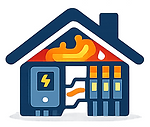
Overheating Indicators
Overheating indicators at accessible electrical areas
Radiant Heating Anomalies
Radiant Floor
Radiant Ceiling
Duct & Plumbing

What Thermal Imaging Finds in Southern New Brunswick Homes
New Brunswick's climate creates specific conditions that thermal imaging is well suited to detect. Cold winters, high humidity, and aging housing stock mean moisture and heat loss issues are common across my service area.
In older homes in Saint John, Rothesay, and surrounding areas, I regularly find:
-
Missing or compressed insulation in exterior walls and attic spaces, especially in homes built before modern energy codes
-
Cold air infiltration around window frames, door headers, and rim joists
-
Moisture intrusion behind finished basement walls where foundation cracks allow water entry
-
Overheating electrical connections at accessible panels and junction boxes
-
Radiant floor heating loops with dead zones or uneven flow
-
Condensation patterns on cathedral ceilings and flat roofs that signal inadequate ventilation
These are conditions that may not show visible signs yet. Thermal imaging gives us an early indication so you can address things before they become larger problems.
What Thermal Imaging Can and Cannot Do
Thermal imaging is a powerful screening tool, but it is important to understand what it does and does not tell us.
What it does:
-
Detects surface temperature differences that suggest something may be happening behind a wall, ceiling, or floor
-
Helps narrow down where further investigation may be needed
-
Adds context to visible findings by showing the thermal pattern behind them
What it does not do:
-
It does not see through walls. It reads surface temperatures and I interpret the patterns.
-
It does not confirm moisture. A thermal anomaly suggests the possibility, and I verify with a moisture meter when warranted.
-
It does not replace a standard inspection. It is an add-on that enhances what I already check.
Setting clear expectations up front means you get useful, honest information in your report rather than overblown claims about what the camera found.
What Clients Are Saying
Read reviews from clients I've helped with Thermal Imaging Inspections
Seeing What's Hidden
"Very thorough and clear in his summary. The report is well formatted, easy to understand, and very detailed, with pictures including thermal images where applicable."
B
Ben A, Grand Bay-Westfield, NB
October 2020
When to Add Thermal Imaging to Your Inspection
Thermal imaging adds value on almost any home, but there are situations where I especially recommend it:
-
Homes built before 1980 where insulation quality and coverage is unknown
-
Properties with finished basements where moisture issues can hide behind drywall
-
Homes with known history of ice damming or roof leaks
-
Any property where past renovations may have disturbed or bypassed insulation
-
Flat roof or cathedral ceiling homes where ventilation is harder to assess visually
If you are unsure whether thermal imaging makes sense for your inspection, call or text me at 506-651-9461 and I will give you an honest recommendation based on the property.
What's Included

Thermal Scan
Infrared scan of accessible areas (conditions permitting) to identify notable surface temperature patterns

Clear Next Steps
Clear reporting with photos and plain-language notes explaining what was observed and why it mattered

Context
Context, not just images. Observations were interpreted alongside the rest of the inspection (visual findings, materials, conditions)

Next Steps
Next steps when needed. If a concern was identified, a qualified specialist was recommended to evaluate and correct/repair/replace as needed
Common Questions About Thermal Imaging
What will thermal imaging show me that a regular home inspection won't?
A standard home inspection covers everything I can see and access, and that covers a lot. But there are things hiding behind walls, above ceilings, and under floors that no visual inspection can catch. Thermal imaging lets me see temperature differences on surfaces that reveal what is going on underneath. Hidden moisture, insulation that has settled or gone missing, air leaks around windows and doors, electrical components running hotter than they should. These are the kinds of problems that show no visible signs until they turn into something expensive. The thermal camera catches them early so you have that information before you make your decision.
The home I'm buying is older. Is thermal imaging more important for older homes?
It is one of the most valuable add ons for older properties, and I have a lot of them here in Southern New Brunswick. Many homes across Saint John, Hampton, Rothesay, and surrounding areas were built with insulation materials and methods that simply do not hold up over decades. Insulation settles, vapour barriers break down, and moisture quietly works its way into wall cavities with no visible sign on the surface. Thermal imaging shows me where those failures are happening so you know what you are walking into before you close.
Can thermal imaging detect mould?
Not directly, but it picks up the conditions that lead to mould growth. Hidden moisture and cold spots behind walls are exactly the kind of environment where mould thrives. If the thermal scan reveals a moisture pattern that should not be there, I document it in your report with images and notes so you can have it looked into further. Catching it at this stage is a lot easier and less costly than dealing with it after you move in.
I'm concerned about heating costs. Can thermal imaging show where heat is escaping?
This is one of its strongest applications and one of the most common reasons people add it. The camera maps temperature differences across walls, ceilings, windows, and doors. Those cold spots and drafts you feel but can never quite pinpoint become clearly visible in the thermal image. Instead of guessing where to start with upgrades, you get a clear picture of where the heat loss is happening so every dollar you spend on efficiency actually counts.
How do the thermal images show up in my report?
All of the thermal images are available online for you to review at any time. If I find any concerns during the thermal scan, those are included in your inspection report with detailed findings, what they could mean for the home, and recommended next steps. You get the full visual record and a clear explanation of anything that needs your attention.
Is thermal imaging worth adding to my home inspection?
If you want the most complete picture of the home before you buy, it really is. A standard home inspection covers everything visible and accessible, and that is thorough. Thermal imaging takes it a step further into the areas you cannot see. Inside walls, above ceilings, around every window and door. The kinds of issues it uncovers, like hidden moisture, insulation gaps, and air leaks, are the ones that get expensive if they go unnoticed. Finding them now puts you in a much better position whether you are planning repairs or working with your realtor on next steps.