
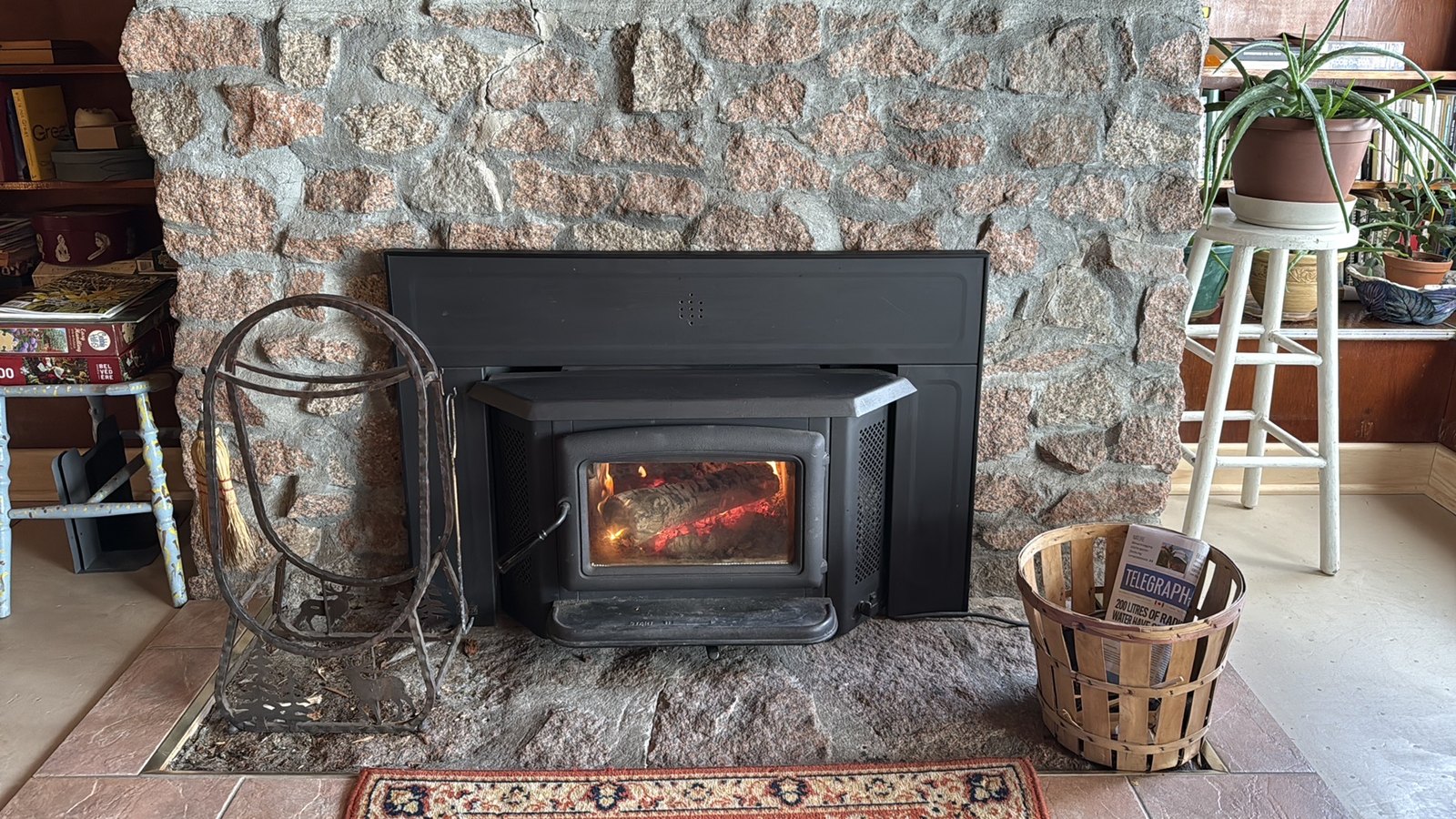
When a buyer calls me about a house with a wood stove, the first question is almost never about the stove. It is whether the insurance company will care. The answer is yes. Most insurers ask about wood heat on the application, and many want a WETT inspection report before they will issue the policy. A lot of the homes I inspect across Southern New Brunswick have a stove in the basement, an insert in the living room fireplace, or a stove out in the garage that has kept a workshop warm for years. Here is what a WETT inspection is, what I check, and what to do before you light the first fire this fall.
Quick Answer
A WETT inspection verifies that a wood stove, fireplace or insert and its chimney meet the clearance and installation requirements of the manufacturer and the building code, and it is done by an inspector certified through WETT Inc. I use the certification label for the manufacturer’s requirements, then inspect the condition of the system and the clearances in and around it: the walls, the floor protection, the flue pipe and the chimney. Many insurers ask for the report before they will cover a home with wood heat. My Level 1 WETT inspection is $250 plus tax on its own, or $200 plus tax added to a home inspection, and the report typically arrives the same day.
1. What WETT Is, and What a “WETT Certificate” Really Is
WETT Inc. stands for Wood Energy Technology Transfer. It is a non profit training association, with a training office in Moncton. It trains and certifies the people who install, sweep and inspect wood heating, and it keeps the national list of them. It does not certify stoves. Testing laboratories do that.
That clears up a phrase I hear every week: “the insurance company wants a WETT certificate.” There is no such thing for a stove or fireplace. WETT says it plainly: a certified inspector provides an inspection report, not a WETT certificate. The report is what your insurer wants. It records what the installation looked like on the day I was there.
I am certified by WETT as a SITE Basic inspector, which means I do the Level 1 Visual inspection. I offer it on its own or with a home inspection across Saint John, Rothesay, Quispamsis and the rest of Southern New Brunswick.
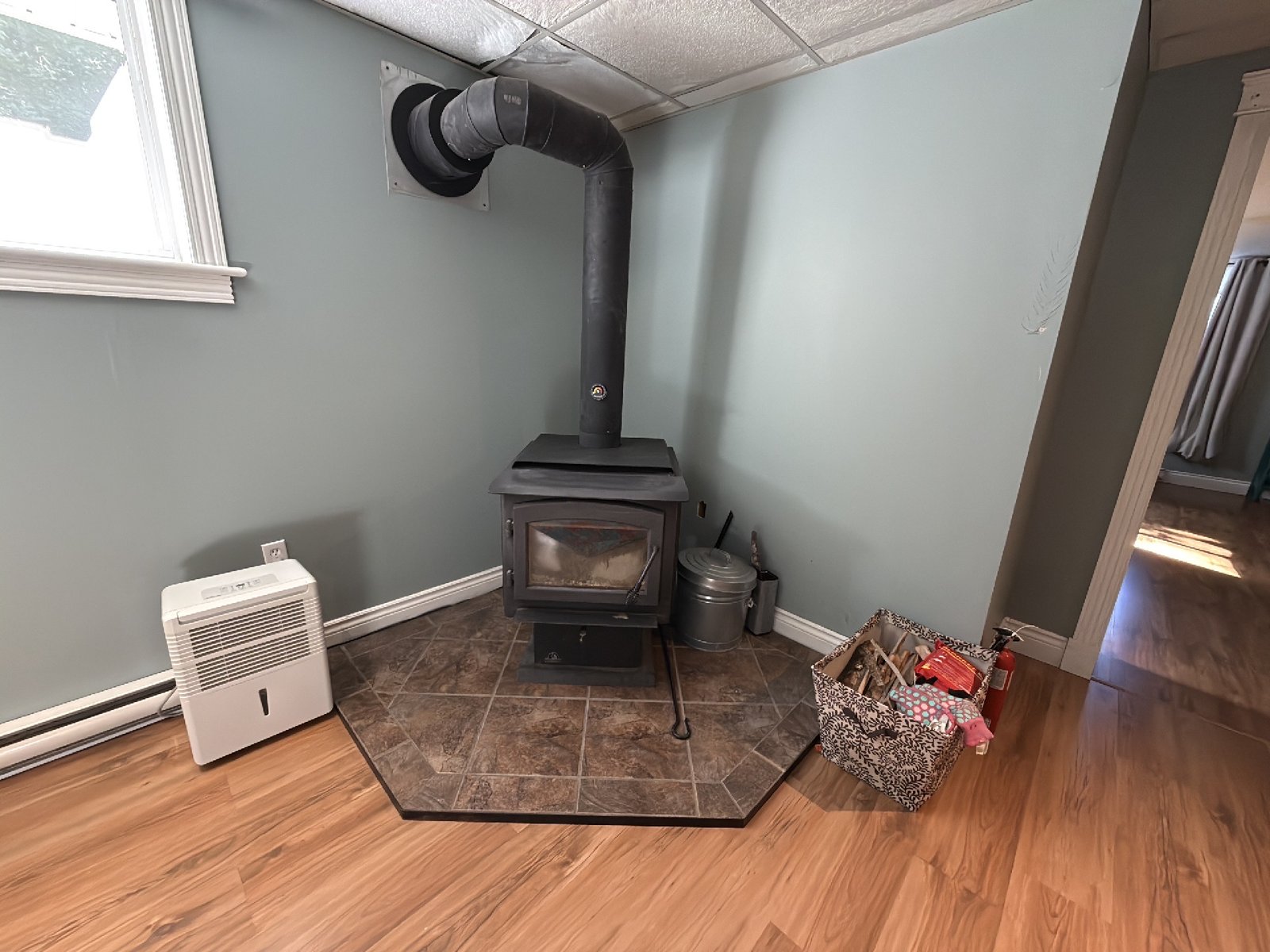
2. What I Check on a WETT Inspection
WETT describes its Level 1 Visual inspection as the level used for most insurance and real estate needs. I use a range of tools, from a flashlight, mirror and tape measure to my drone, to reach the hard to reach areas, and I compare what I see to the manufacturer’s instructions, the CSA B365 installation code, and the building code as adopted in New Brunswick.
Here is what I look at:
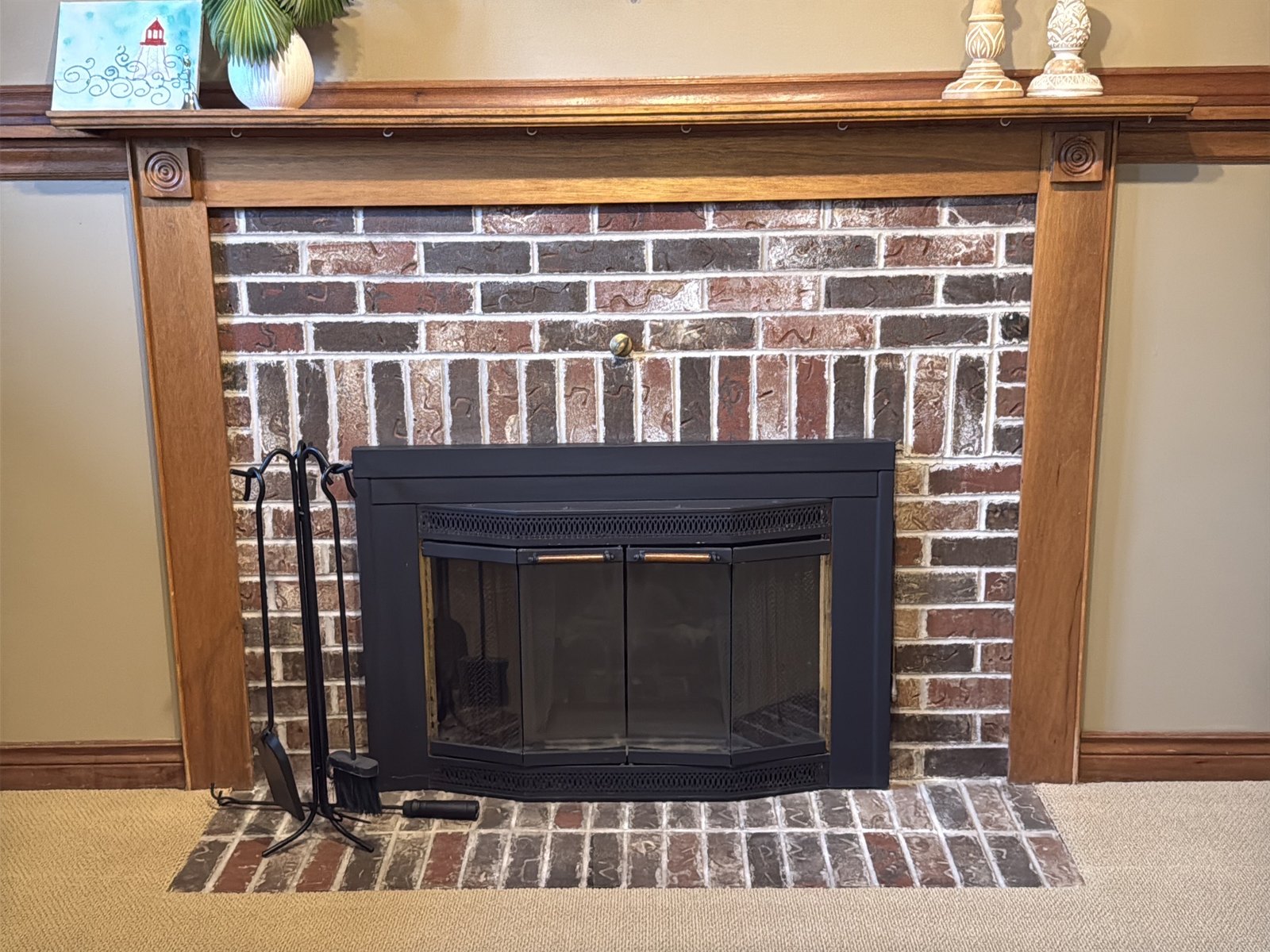
The certification label. On a stove, this is usually a plate or sticker on the back. It tells me the stove was tested, and I use it for the manufacturer’s clearance requirements. More on that below.
The space around it. How far the stove and the flue pipe sit from walls, the ceiling and anything else that can burn. Heat reaching the wood framing, year after year, is the main thing I am measuring for.
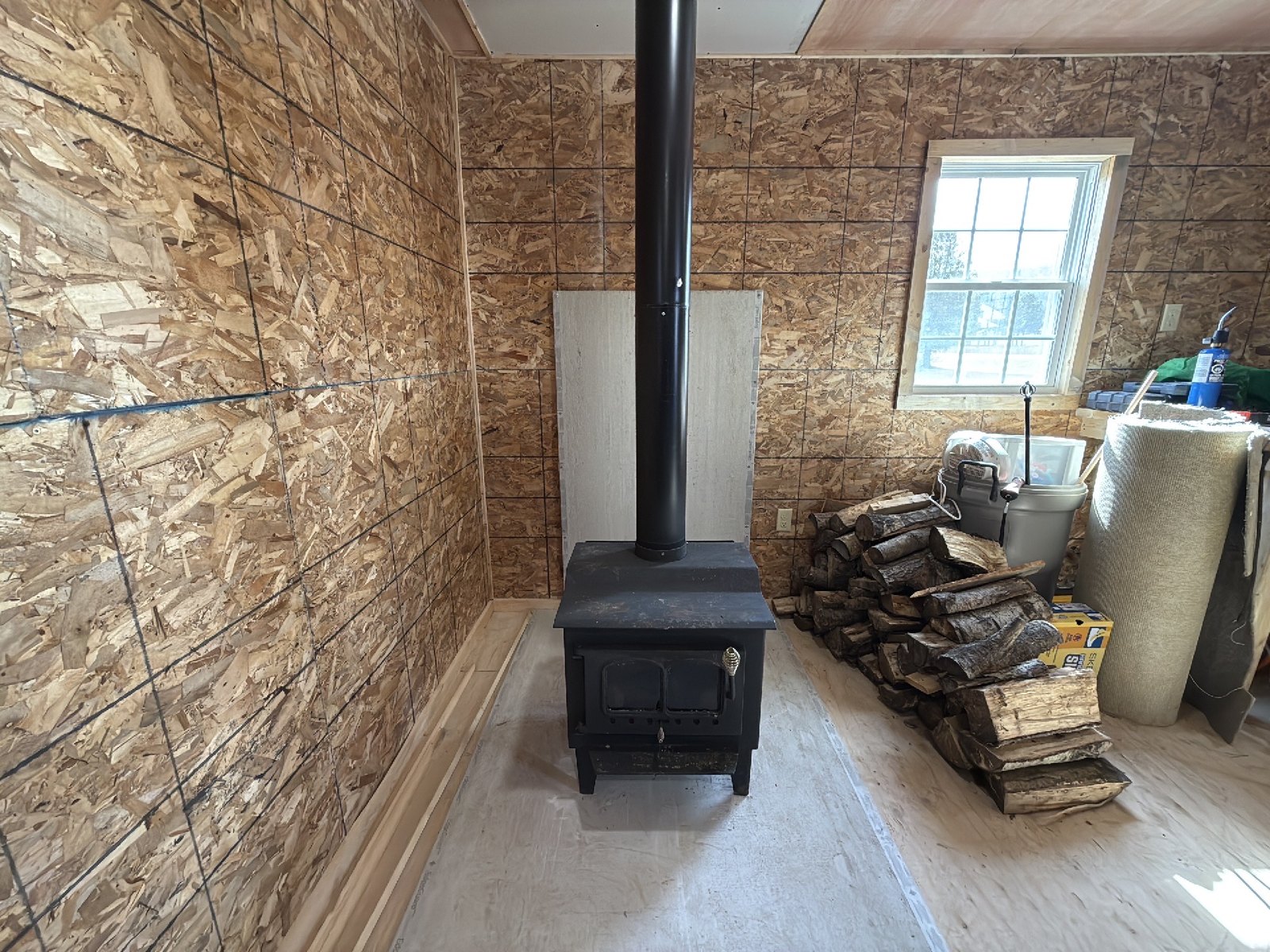
The floor under it. Embers fall out when you open the door, so a stove needs a non combustible pad under it that reaches at least 18 inches out in front of the door.
The flue pipe. Its length, its slope, the elbows, and whether every joint is screwed together. A loose joint is where smoke and heat get out.
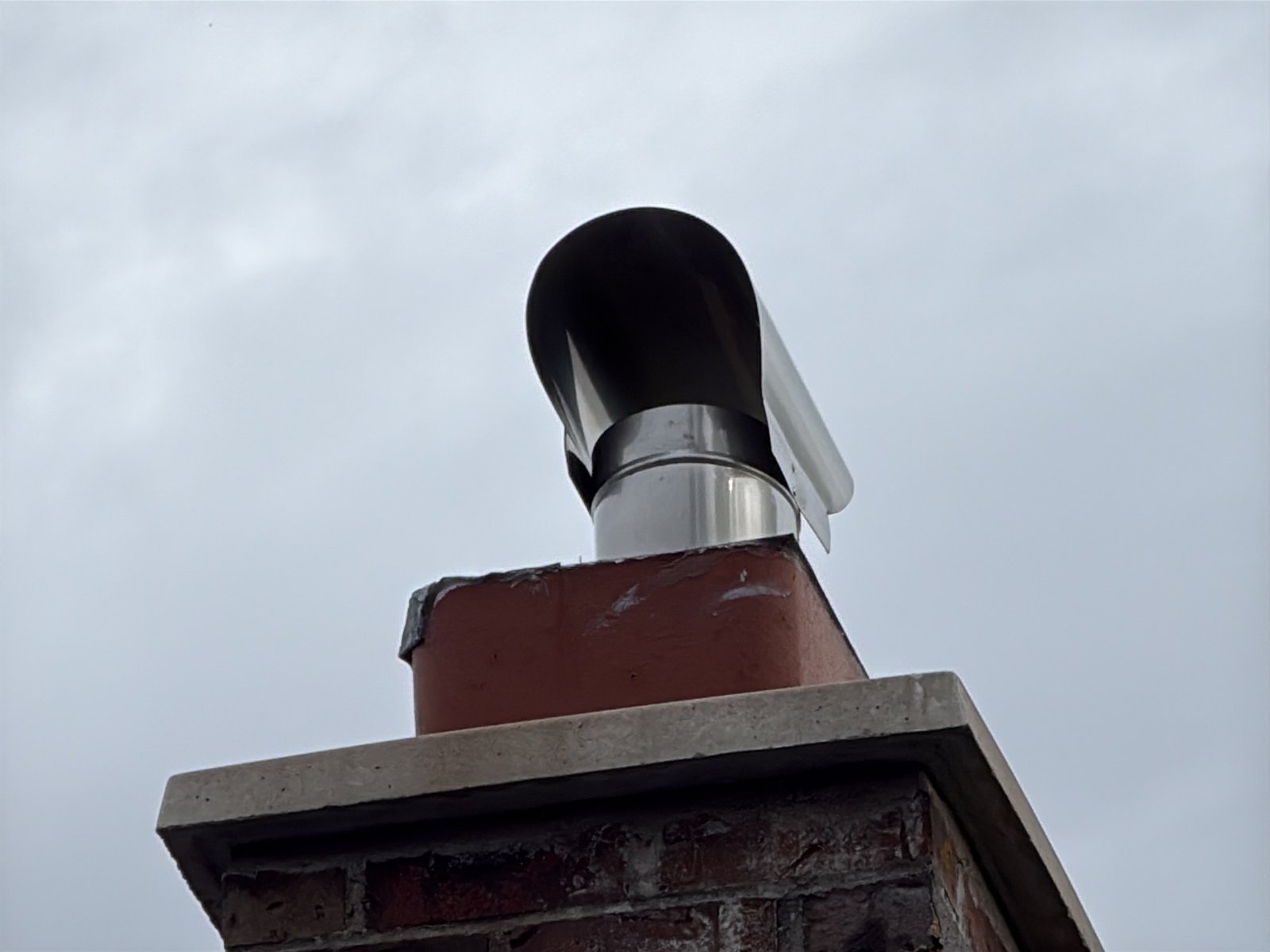
The chimney. What type it is, its condition and its cap, viewed from the ground, from the roof, and with my drone when needed.
The carbon monoxide alarm. Whether there is one near the appliance. I note it; I do not test it.
The paperwork. A building permit, who installed it and when, and the owner’s manual. It is the easiest way to confirm how the stove went in.
Every item on my report gets one of four answers: compliant, not compliant, not applicable (N/A), or unable to inspect (UTI). You will see UTI on almost every WETT report, and that is normal. Some things, like the liner inside a masonry chimney, cannot be seen on a visual inspection, and I record that rather than guess.
3. Why the Label Matters So Much
If you remember one thing from this post, make it this: the label decides almost everything.
A certified stove has been tested by a laboratory, and its label tells me how close it can safely sit to a wall. Many modern stoves are tested to sit much closer than an older stove with no label. A stove with no label gets no such allowance, and here is what that means in a real room. Under the CSA B365 clearance table, reproduced in Natural Resources Canada’s A Guide to Residential Wood Heating, a stove with no label needs 48 inches, a full four feet, clear to the walls on both sides and behind it, and 60 inches above. If the stove has a jacket or a heat shield attached to its body, the sides and rear drop to 36 inches. In a small den or a basement corner, that often will not fit. Every wood stove, labelled or not, also needs 48 inches clear in front of the loading door. The drawing further down shows the difference to scale.
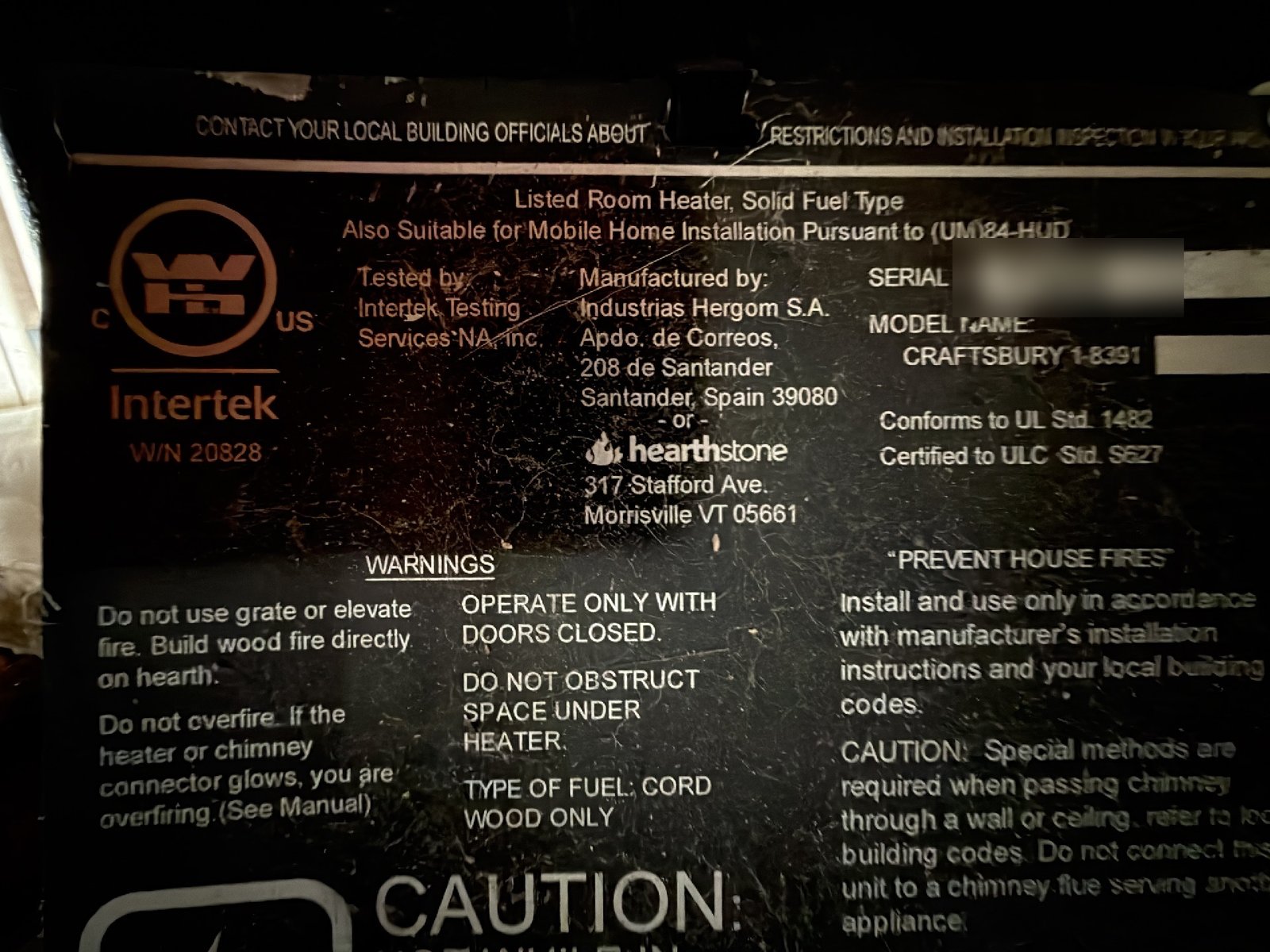
You may also see a CSA B415.1 or EPA label. That one is about emissions, how cleanly the stove burns. Health Canada recommends choosing a stove that has one, but it does not set the clearances.
4. The Wood Stove in the Garage
A wood stove in the garage is one of the most common installations I see, and one of the most commonly wrong. It is also where most of the grey areas are, so it gets its own section.
Is it a garage? The building code defines a garage by what the space is used for: storing or parking vehicles. I make that call on the day of the inspection, based on how the space is being used and its current condition. If the seller calls it a shop or a studio but there is a lawn mower and a motorcycle parked inside, it is a garage. If the space holds food storage, clothes and neatly organized art supplies, it has clearly been converted into a workspace, and the stove is treated as a standard installation. Either way, I record my call in the report, with photos to back it up.
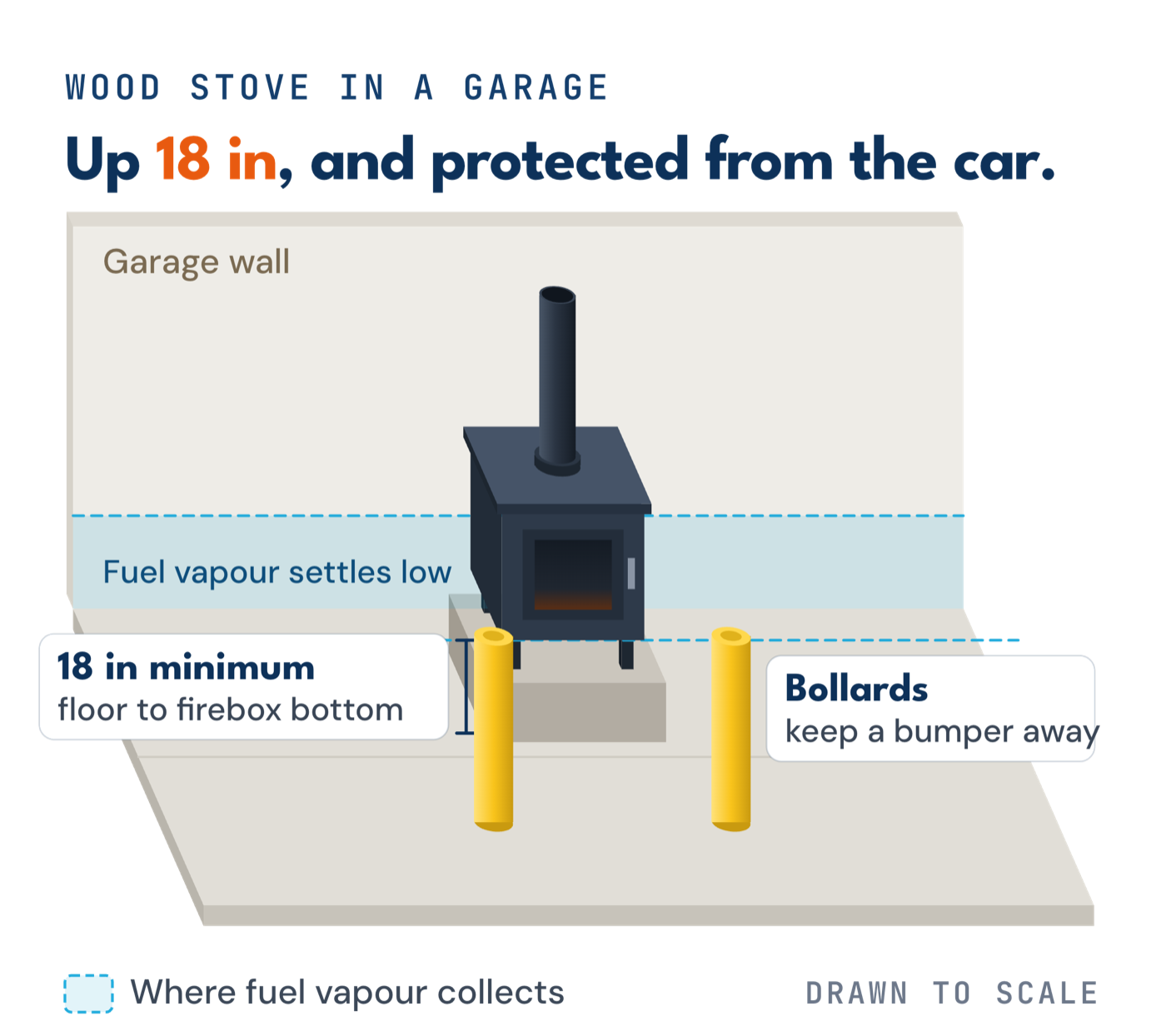
If it is a garage, the fire has to sit up off the floor. Under the CSA B365 installation code, any part of the stove that could ignite something has to be at least 18 inches above the floor. I measure to the bottom of the firebox or the blower, whichever is lower. The reason is fuel vapour. Vapour from gasoline is heavier than air and settles near the floor, so the fire has to sit above it. Most stoves on their own legs sit lower than that, which means a garage stove usually needs a raised stand made of non combustible material.
It also has to be protected from the car. The code says a stove in a garage must be protected against physical damage. In practice, that usually means steel or concrete posts, called bollards, set in front of the stove so a bumper cannot reach it.
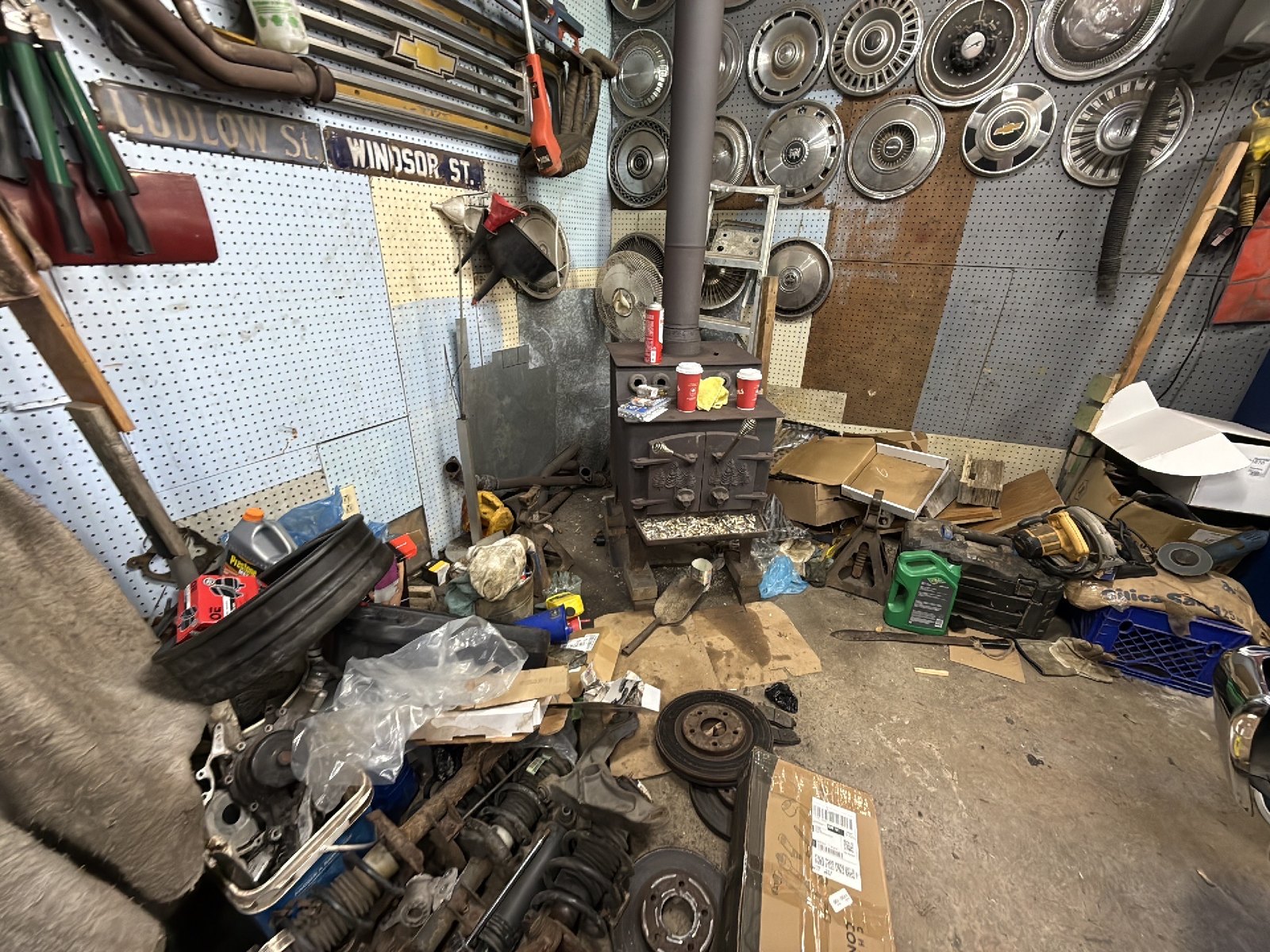
Nothing in the air that can catch. The installation code does not allow a wood burning appliance where flammable vapour or combustible dust may be present. An active workshop with fine sawdust in the air and no proper exhaust ventilation is not a safe place for a wood fire.
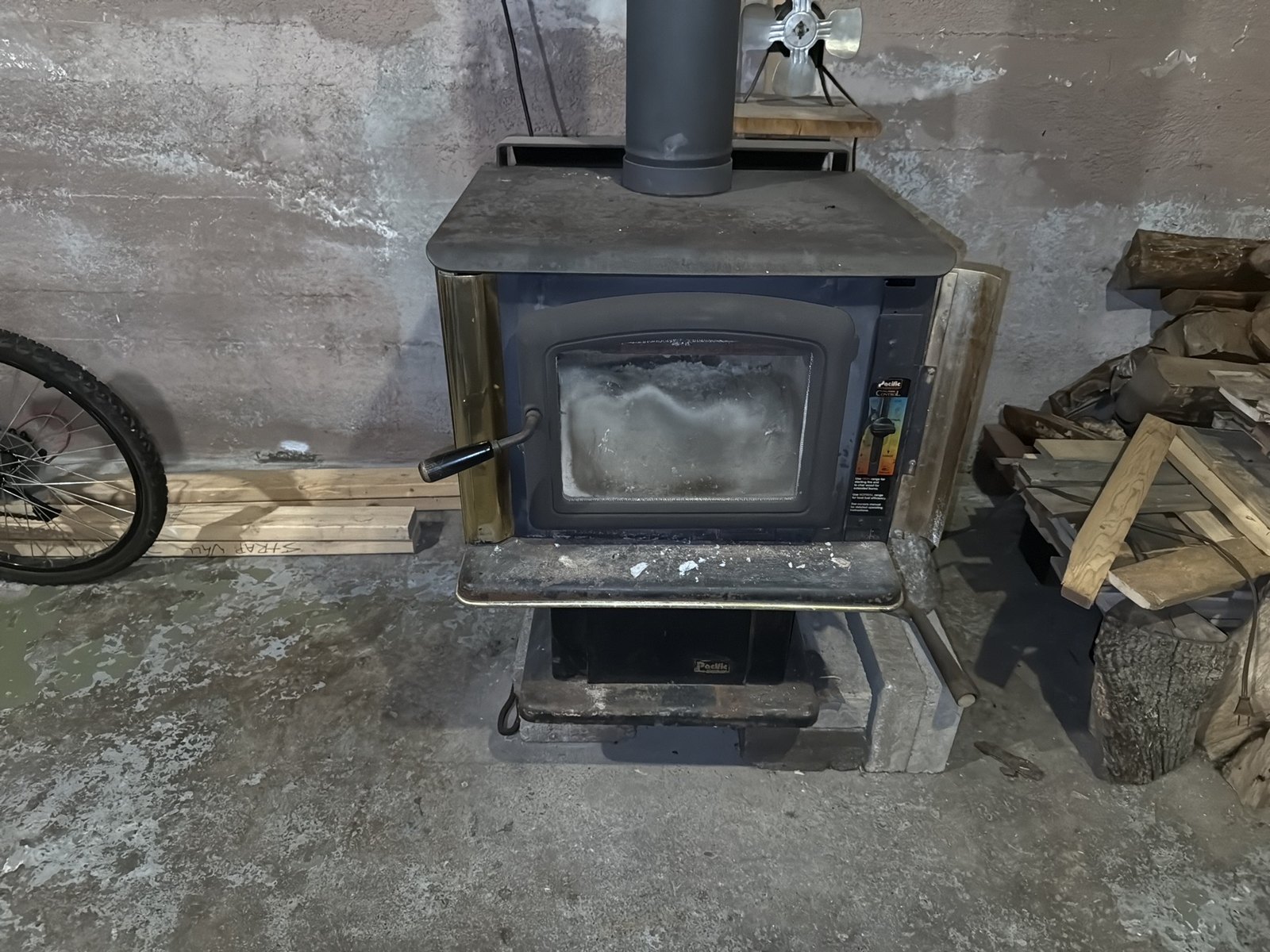
The label and your insurer. The garage is also where I most often find a stove with no certification label at all. It may have kept someone warm for years, but with no label and no records, it is an unknown, and an insurer treats it that way. Some insurers will not cover a wood stove in a garage at all, so ask yours before you count on it. My note to the buyer is always the same: do not light it until a WETT inspector has looked at it.
If the garage is attached to the house, the wall and ceiling between them are there to keep car exhaust and fuel fumes out of the living space, and a flue pipe or chimney passing through them should not leave a gap. The building code in New Brunswick also calls for carbon monoxide alarms in a home with an attached garage.
5. Insurance and Your Condition Period
The practical question on almost every WETT inspection I do comes from the insurer. Many insurers ask for a WETT report on a home with a wood stove or fireplace, and they want the stove disclosed. When you are buying, you need a policy in place before the mortgage funds, so the best time for the inspection is inside your condition period, while a short hearth or a missing label is still a small thing to sort out.
Before you book, ask your insurer, and your lender if you have one, two questions: how recent a report they accept, and which level they want. Most ask for Level 1. If yours wants a Level 2 Technical inspection, that is done by a WETT certified technician, sweep or comprehensive inspector.
6. What a WETT Inspection Does Not Cover
A Level 1 inspection is visual. I look at the outside of the chimney and at the parts of the flue I can easily see, so I do not measure creosote, and I do not light the stove. It is also not a chimney cleaning. Sweeping is a separate job, and Natural Resources Canada recommends having the system inspected and cleaned at least once a year by a WETT certified technician.
If the stove has sat unused for a long time, been modified or had parts replaced, or if my inspection finds something that needs a closer look, WETT’s Level 2 Technical inspection goes further, including the attic.
7. Before the First Fire This Fall
Most wood stoves in Southern New Brunswick have been cold since April. Whether you just bought the house or have lived in it for twenty years, three things are worth doing before the first real fire.
Have the chimney swept. A sweep will tell you how much creosote last winter left behind, and whether anything moved into the cap over the summer.
Burn dry wood. Natural Resources Canada puts seasoned firewood at about 20 percent moisture, which a moisture meter from the hardware store will check for you, and Health Canada recommends splitting and stacking it for at least six months. Wet wood is the fastest way to build creosote.
Test your alarms. A home with a fuel burning appliance needs a carbon monoxide alarm inside each bedroom or within 5 metres of each bedroom door. For new installations and renovations, the building code in New Brunswick also calls for one in the same room as a wood or pellet stove. The Southwest New Brunswick Service Commission explains it well. The clocks change on November 1, which is a good weekend to test them all.
Buying a home with a wood stove?
I do the WETT inspection on the same visit as your home inspection, with the clearances measured and photographed, and the report typically in your hands the same day, in time for your insurer.
View My WETT Inspection ServicesFrequently Asked Questions
Do I need a WETT inspection to buy a house in New Brunswick?
No law requires one for a sale. In practice, many insurers ask for a WETT report before they will cover a home with a wood stove or fireplace, and you need a policy in place before closing. That makes your condition period the right time to have it done.
How much does a WETT inspection cost?
WETT does not set what its members charge. My Level 1 WETT inspection is $250 plus tax on its own, or $200 plus tax added to a home inspection, and each additional wood burning appliance on the same property is $100. Current pricing is on my pricing page.
How long is a WETT report good for?
A WETT report does not carry an expiry date, but it only describes the system on the day I inspected it. WETT notes that each insurer decides how recent a report it will accept, so ask yours. A change to the system is different. If the stove, flue pipe or chimney is replaced, moved or modified, or there has been a chimney fire, the old report no longer describes what is in the house, and the system needs a new inspection. WETT also points to a Level 2 Technical inspection after a long period of disuse.
Is there such a thing as a WETT certificate?
Not for a stove or fireplace. WETT Inc. trains and certifies inspectors, sweeps and installers, and the appliance itself is tested and certified by a laboratory. On a Level 1 inspection, I check that a stove or insert carries a safety certification recognized in Canada, such as ULC S627 for a wood stove, and that it is installed the way the manufacturer and the installation code require. A masonry fireplace built on site has no label, so I check it against the building code. My report records what I found on the day, and that report is what your insurer is asking for.
Does a WETT inspection include cleaning the chimney?
No. A Level 1 inspection looks at the outside of the chimney, from the ground, from the roof, and with my drone when needed, and at the parts of the flue that are easy to see. Sweeping is a separate service, and the sweep is the one who sees inside the flue. To find a WETT certified sweep near you, use WETT’s Find a WETT Professional directory, which also lets you confirm anyone’s certification before you hire them.
What should I have ready for a WETT inspection?
The owner’s manual for the appliance if you have it, a photo of its certification label, any building permit, and the installer’s invoice or receipt. If the house has more than one wood burning appliance, such as a wood stove, a fireplace insert or a fireplace, tell me when you book. Each one is inspected and reported on separately.
What if the stove has no certification label?
Then it has to meet the much larger clearances for a stove with no label in the CSA B365 table, and Natural Resources Canada warns you may not be able to get insurance for it. Here is the difference to scale, for two stoves of the same size.
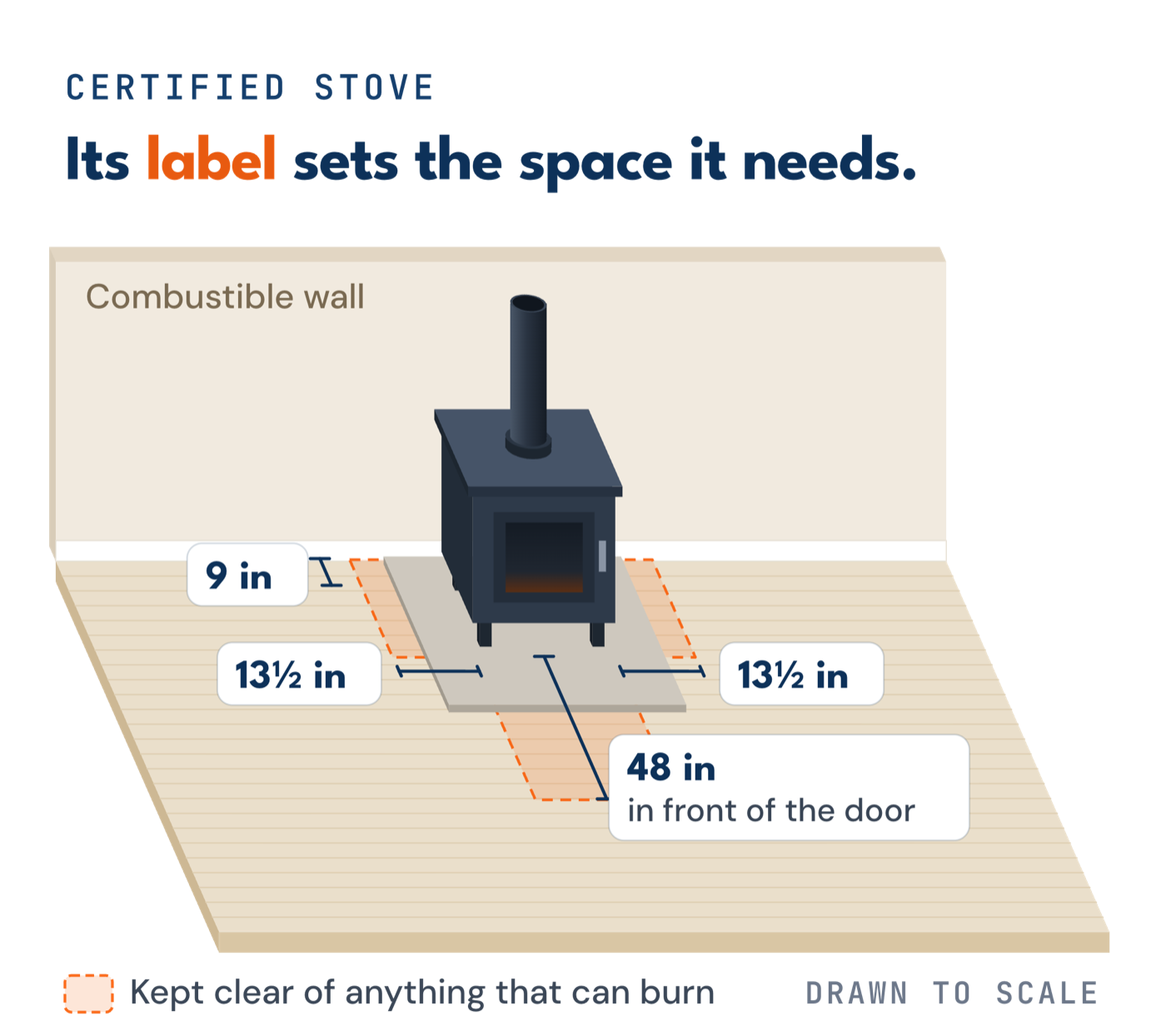
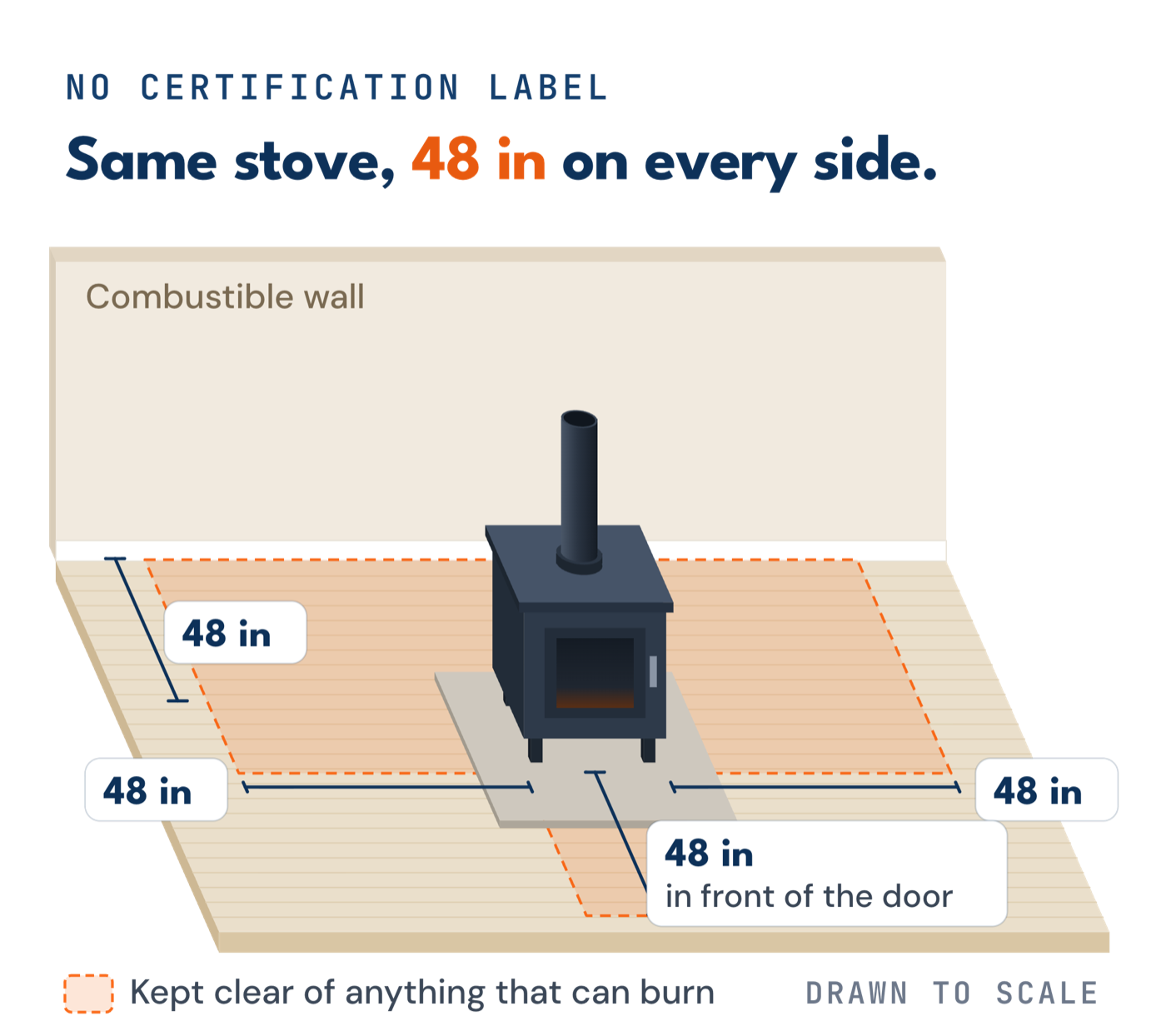
Replacing a stove that has no label with a certified one is often simpler than rebuilding the room around the old one.
Most of what I find on a WETT inspection is small. Three of the last four I did had nothing to correct, and the fourth needed a longer hearth and a damper that works. Having the inspection done in your condition period means small things get found while they are still small, and your insurer gets a report it can read. If you are buying a home with a wood stove in Southern New Brunswick, book your inspection at theinspectors.ca or call or text (506) 651-9461.