
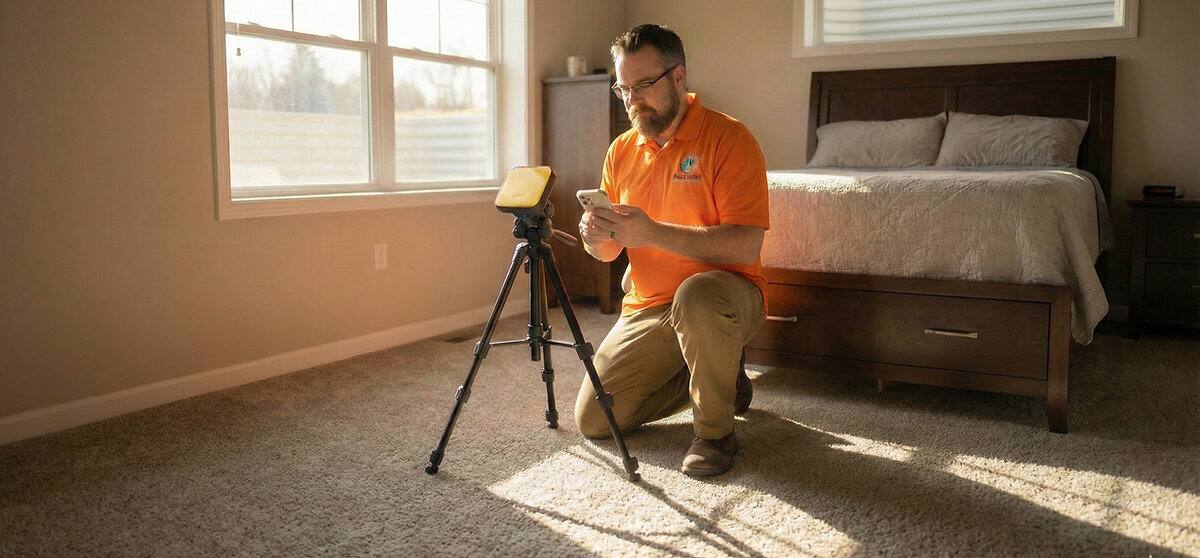
How to test your home, understand your results, and protect your family, from a C-NRPP certified radon professional.
Why This Matters
New Brunswick has some of the highest residential radon levels in Canada. The province’s geology, particularly the uranium rich soil and bedrock found throughout Southern NB, creates conditions where radon gas forms naturally and enters homes through foundation cracks, gaps around pipes, and sump pits.
Four of the 14 worst health regions nationally for radon are in New Brunswick.
Yet most homeowners have never tested. If you own a home in New Brunswick and haven’t tested for radon, this guide will walk you through everything you need to know, what radon is, how testing works, what your results mean, and what to do if levels are high.
This guide is written for New Brunswick homeowners who want to understand radon and make informed decisions about testing and protecting their families.
A Story From Saint John
A young couple reached out to book a home inspection for a property in Saint John. They’d been searching for a while and had a lot of questions, almost all of them about safety. They had a new baby at home and wanted to know everything about the house before committing.
When the topic of radon came up, they didn’t hesitate. It wasn’t about negotiating with the seller or getting a price reduction. Their exact words were: “We just want to know.” They wanted every available test done so they could make informed decisions for their family.
The test ran for four weeks. When the results came back, the home measured 848 Bq/m³, more than four times Health Canada’s action guideline of 200 Bq/m³.
They were understandably nervous. I recommended a follow up long term test to validate the initial results before they invested in a mitigation system. The second test confirmed the home had elevated radon levels that required action.
But here’s what surprised me: instead of being upset or disappointed, they were relieved. They were glad they’d had the foresight to test, especially with their new baby in the house. They had a mitigation system installed, and I gave them a home radon monitor as a housewarming gift for a little extra ongoing reassurance.
That family now knows exactly what’s in their air, and their radon levels are well within safe limits. That’s the thing about radon, it’s completely fixable once you know it’s there. The problem is when you don’t test at all.
What Is Radon?
Radon is a naturally occurring radioactive gas that forms when uranium in soil, rock, and groundwater breaks down. It’s colourless, odourless, and tasteless, which means you can’t detect it without testing. It exists everywhere in the environment, but outdoors it disperses harmlessly into the air. The concern is when it enters enclosed spaces like homes and buildings, where it can accumulate to concentrations that pose a health risk.
Every home in Canada contains some level of radon. The question isn’t whether your home has radon, it does. The question is how much.
Why Is New Brunswick a High Risk Province for Radon?
New Brunswick consistently ranks among the highest provinces in Canada for residential radon levels. This isn’t random, it’s geology.
The bedrock throughout much of New Brunswick, particularly in the southern part of the province, contains naturally higher concentrations of uranium. As that uranium decays, it produces radon gas that migrates upward through the soil. When that gas meets your foundation, it follows the path of least resistance, through cracks, gaps, pipe penetrations, and sump pits, and enters your home.
The Numbers Are Significant
The 2024 Cross Canada Radon Survey found that approximately 1 in 4 New Brunswick homes have radon levels at or above the 200 Bq/m³ guideline. That puts NB alongside Manitoba, Saskatchewan, and the Yukon as the highest risk regions in the country.
In Health Canada’s earlier survey, 4 of the 14 worst health regions nationally for radon were in New Brunswick, with some areas showing 23 to 44% of homes above the guideline.
What does that mean practically? If you live on a street with 10 houses in Southern New Brunswick, statistically 2 or 3 of those homes have radon levels that Health Canada says require action. And because you can’t see, smell, or taste it, the homeowners in those houses almost certainly don’t know.
It’s also worth noting that radon levels can vary dramatically between neighbouring homes. Your neighbour’s home could test low while yours tests high. Differences in foundation type, construction, soil conditions, and ventilation all play a role. The only way to know your home’s radon level is to test it.
What Are the Health Risks of Radon Exposure?
Radon is the leading cause of lung cancer among non-smokers in Canada and the second leading cause overall, after smoking. Health Canada attributes approximately 3,200 lung cancer deaths per year to radon exposure.
When you breathe in radon, the gas itself isn’t the primary danger, it’s the radioactive particles that radon decays into. These particles can become trapped in your lungs, where they continue to emit radiation and damage lung tissue over time. The risk increases with both the concentration of radon and the duration of exposure.
Risk Factors
Your risk from radon depends on three things: the radon level in your home, how much time you spend there, and whether you smoke or have ever smoked. Smokers exposed to elevated radon face a significantly higher risk than non-smokers, because the combined effect of smoking and radon is greater than either risk alone.
This isn’t about creating fear. It’s about understanding that radon is a well documented health risk with a straightforward solution. You test, you learn your level, and if it’s high, you fix it. The Canadian Lung Association, Health Canada, and the World Health Organization all agree: testing your home is the single most important step you can take.
How Does Radon Get Into Your Home?
Radon moves from the soil into your home through any opening where the building contacts the ground. Your home doesn’t need to be old or poorly maintained for this to happen, even new, well built homes can have elevated radon levels.
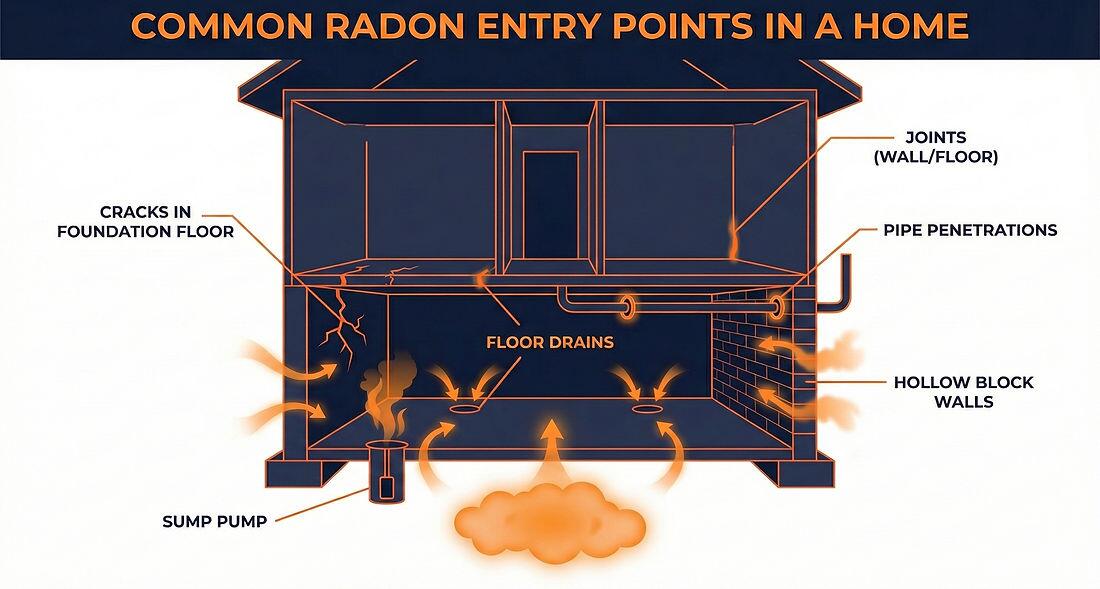
Common Entry Points
-
Entry 01
Foundation Cracks
Cracks in basement floors and walls are the most common entry point. Even hairline cracks that are invisible to the eye can allow radon to migrate indoors.
-
Entry 02
Gaps Around Pipes and Wiring
Where plumbing, electrical, or other services penetrate the foundation, gaps often exist that allow soil gas to enter. These are frequently overlooked because they're hidden behind walls or in utility areas.
-
Entry 03
Sump Pits
Open or poorly sealed sump pits provide a direct pathway from the soil beneath your home into your basement. This is one of the easiest entry points to address, a properly sealed sump pit cover can make a meaningful difference.
-
Entry 04
Floor Drains
Older floor drains that connect directly to the soil beneath the slab, rather than to the drainage system, can allow radon to enter. Dry drain traps can also be an entry point.
-
Entry 05
Exposed Soil or Gravel
Crawlspaces with exposed soil, or unfinished areas of basements with gravel floors, allow radon to enter freely. Covering exposed soil with thick polyethylene sheeting and sealing it at the edges is a recommended first step.
In New Brunswick, where homes are typically well sealed to retain heat through long winters, radon that enters the home has fewer opportunities to escape. This is why indoor radon levels tend to be highest during the heating season, from late fall through early spring, when windows and doors remain closed for extended periods.
How Does Radon Testing Work?
Radon testing is straightforward. A certified professional places a testing device in the lowest liveable level of your home, usually the basement, and the device measures radon concentration in the air over a defined period.
After the testing period, the device is collected, the data is analyzed, and you receive a report with your results.
There are three types of radon tests, each suited to different situations: screening assessments (4 to 7 days) for real estate transactions, short-term tests (7 to 90 days), and long-term tests (91+ days) for the most accurate annual average.
What to Expect During a Test
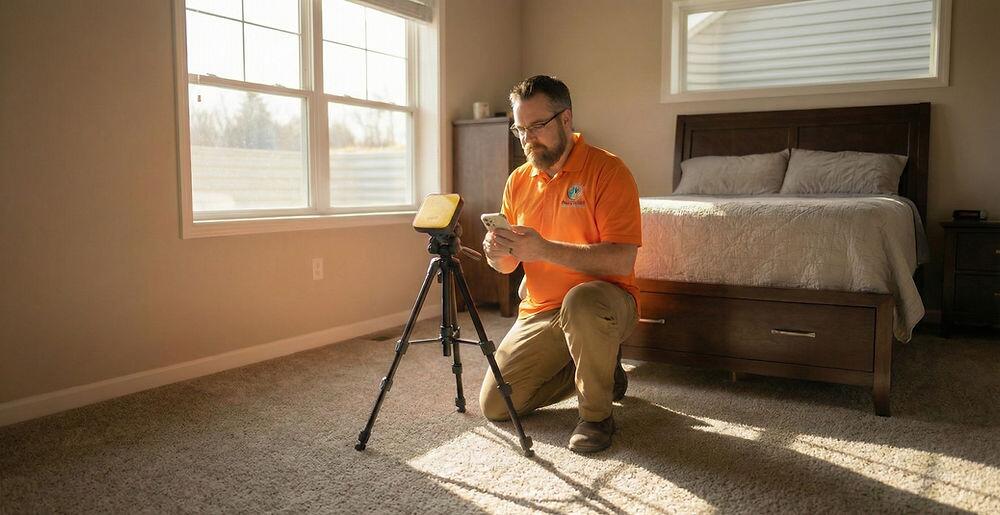
When I deploy a radon testing device in your home, here’s what happens:
I place the device at least two feet above the floor in the lowest liveable area of your home, away from drafts, exterior walls, and direct sunlight. During the testing period, you’ll want to keep windows and exterior doors on the testing level closed as much as reasonably possible, normal coming and going is fine, but avoid leaving doors and windows open for extended periods.
After the testing period, I return to collect the device and analyze the results in my certified lab. Because I hold both C-NRPP Measurement and Certified Analysis Laboratory designations, I can provide your results the same day the device is collected. You won’t wait weeks for a third-party lab, I process the data myself.
When to Test
Health Canada recommends that every home in Canada be tested for radon, regardless of age, construction type, or location. Radon levels should also be retested after any major renovations or energy retrofits that affect the foundation or ventilation of your home.
For the most accurate long term results, testing during the heating season (October through April) captures the period when radon levels are typically highest and homes are most sealed up. However, testing can be done any time of year, some data is always better than no data.
Understanding Your Radon Test Results
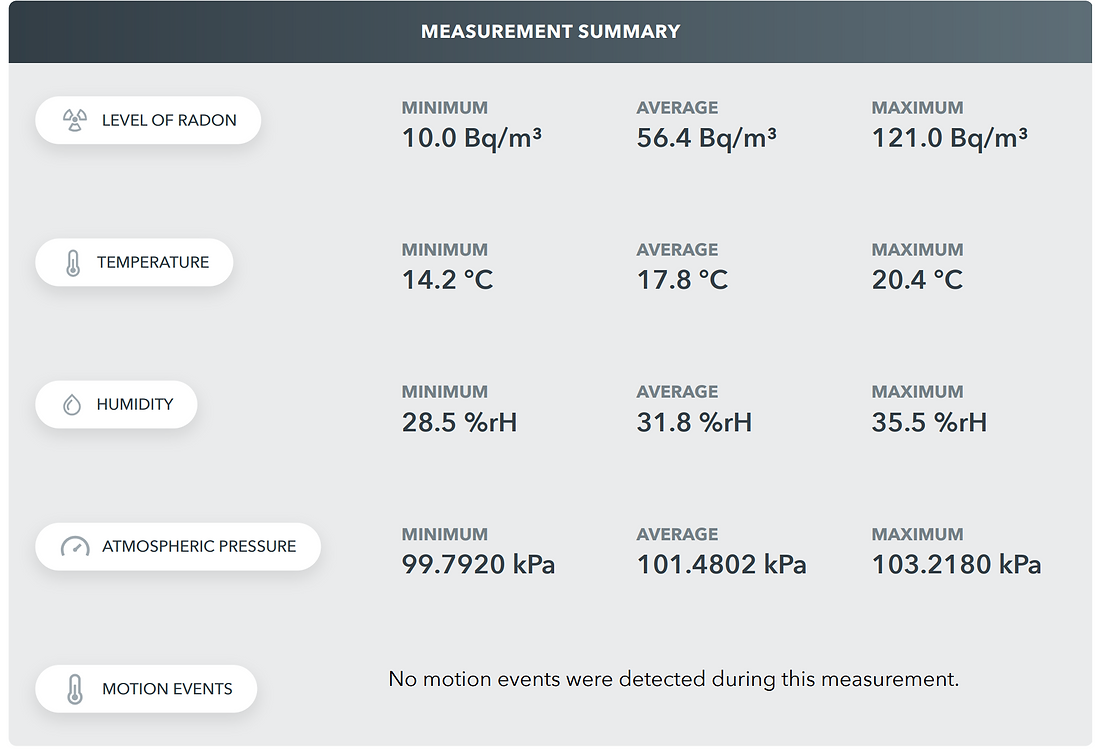
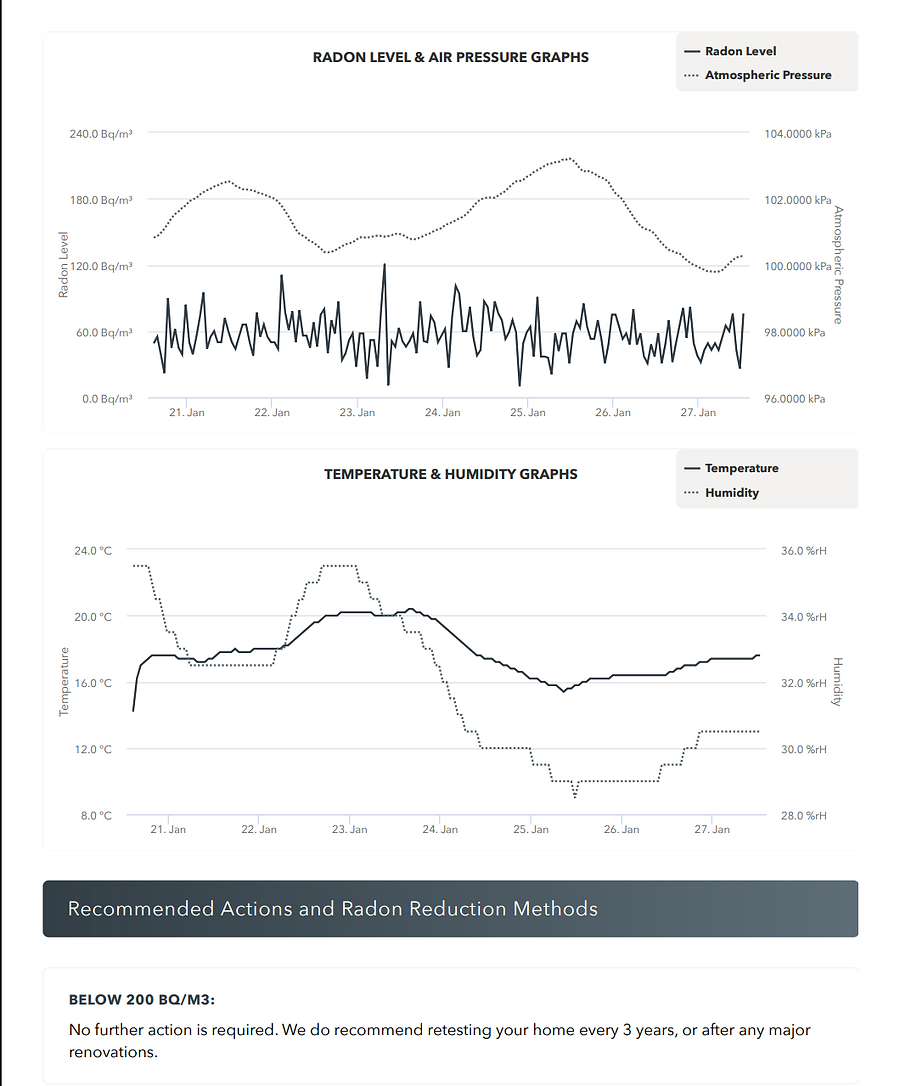
When you receive your radon test report, you’ll see a number measured in Bq/m³ (becquerels per cubic metre). Here’s what those numbers mean:
Your Options as a Buyer
Below 200 Bq/m³: No immediate action required. Your home is below Health Canada’s guideline. A follow-up long term test during the next heating season is still recommended to confirm the result, as radon levels fluctuate seasonally. No mitigation is warranted at this time.
200 to 600 Bq/m³: Action recommended within 1 year. Your home exceeds Health Canada’s guideline. Health Canada recommends reducing radon levels within one year. A follow-up long-term test can help confirm the average level and inform mitigation planning.
Above 600 Bq/m³: Act sooner than 1 year. Your home has significantly elevated radon levels. Health Canada recommends reducing radon as soon as possible, sooner than the one year it advises for any level of 200 or higher. Contact a C-NRPP certified mitigation professional to assess your home and design an appropriate system.
It’s important to understand what a screening test result does and does not tell you. A short duration test taken during a real estate transaction provides a snapshot, it indicates radon potential at that point in time. It does not represent your home’s annual average. That’s why I always recommend a follow-up long term test, regardless of the initial result. This is especially true if your screening result is close to the 200 Bq/m³ guideline in either direction.
What to Do If Your Radon Levels Are High
If your test confirms elevated radon, the good news is this: radon is fixable. Almost every home with high radon can be brought below the guideline with a properly designed mitigation system.
How Mitigation Works
The most common and effective method is called active soil depressurization (ASD). A certified radon mitigation professional installs a system that draws radon gas from beneath your foundation and vents it safely above the roofline, where it disperses harmlessly into the outdoor air.
The system typically consists of a pipe that runs from below the basement slab (or from a sump pit) up through the home and out through the roof, with a small fan that creates negative pressure beneath the foundation. This prevents radon from entering the home in the first place. The fan runs continuously, is quiet, and uses about as much electricity as a light bulb.
After Mitigation
After a mitigation system is installed, your home should be retested to confirm the system is working effectively. The mitigation professional will advise on when and how to conduct this post mitigation test. Health Canada also recommends retesting every five years once a radon system is installed, and after any major renovations that could affect the foundation or ventilation.
Homes Built After 2015
If your New Brunswick home was built after 2015, it may already have a radon mitigation rough in, a capped pipe installed beneath the basement slab during construction. This rough in makes it significantly easier and less expensive to activate a full mitigation system if testing shows elevated radon levels. Check with your builder or look for a capped PVC pipe in your basement to see if this is in place.
Simple Steps You Can Take Now
While a professional mitigation system is the definitive solution for elevated radon, there are some steps homeowners can take to reduce radon entry:
- Seal visible cracks in basement floors and foundation walls.
- Cover exposed soil in crawlspaces with thick polyethylene sheeting, sealed at the edges.
- Seal sump pits with airtight covers.
- Ensure floor drain traps have water in them. A dry trap is an open pathway for soil gas.
- Improve ventilation in the basement, though this alone is unlikely to solve a significant radon problem.
These measures can help, but they are not a substitute for a professional mitigation system if your home tests above the guideline.
Radon in Real Estate Transactions
If you’re buying or selling a home in New Brunswick, radon testing increasingly comes up during the inspection process. Here’s how it typically works and what both parties should know.
For Buyers
More buyers in New Brunswick are requesting radon testing as part of their due diligence, especially as awareness of the province’s high-risk status grows. During a real estate transaction, a screening assessment (4 to 7 days) is the most common test type because it fits within typical inspection timelines.
When I perform radon testing as part of a home inspection, I coordinate with the realtors and sellers to deploy the testing device as early as possible, often before the inspection date, to allow for the longest possible test within the transaction timeline.
Is High Radon a Showstopper?
In most cases, no. Because radon is fixable, buyers typically treat elevated results as a repair item, similar to a roof issue or a plumbing upgrade. Common approaches include:
-
Option 01
Negotiate a price reduction
The purchase price is reduced to cover the cost of a mitigation system ($3,000 to $5,000). This is the most common resolution.
-
Option 02
Request the seller install a mitigation system
The seller has the system installed before closing. Less common, but straightforward since installation typically takes less than a day.
-
Option 03
Set aside funds through the lawyers
A holdback is arranged at closing to cover mitigation costs, allowing the buyer to manage the installation after moving in.
-
Option 04
Accept and plan for mitigation post closing
Some buyers choose to handle mitigation on their own timeline and budget after taking possession.
For Sellers
If you’re planning to sell your home, consider testing for radon before listing. If your home tests low, it’s a selling point you can share with potential buyers. If it tests high, you can proactively install a mitigation system, which removes the issue from negotiations entirely and demonstrates good faith. A home with an active radon mitigation system and post-mitigation test results is actually in a stronger position than a home that’s never been tested at all.
Important Caveat About Screening Tests
A screening test taken during a real estate transaction is a snapshot, not a long-term average. Whether you’re buying or selling, I always recommend a follow-up long-term test (91+ days) during the next heating season to get a true picture of the home’s radon levels. A screening result, whether high or low, should be followed up with longer testing whenever possible.
Frequently Asked Questions About Radon in New Brunswick
How common is radon in New Brunswick homes?
According to the 2024 Cross-Canada Radon Survey, approximately 1 in 4 New Brunswick homes have radon levels above Health Canada’s guideline of 200 Bq/m³. New Brunswick is one of the four highest risk provinces in Canada. However, radon levels vary significantly between homes, even neighbours can have very different results. The only way to know your level is to test.
How much does radon mitigation cost in New Brunswick?
A radon mitigation system in New Brunswick typically costs between $3,000 and $5,000, depending on the home’s size and complexity.
Most systems can be installed in less than a day and can reduce radon levels by more than 80%. Homeowners may also be eligible for support through the Lungs Matter and the Radon Mitigation Grant or the provincial Homeowner Repair Program.
Should I test if my neighbour’s home tested low?
Yes. Radon levels can vary significantly from one home to the next, even between adjacent properties. Differences in foundation construction, soil conditions, cracks, ventilation, and building tightness all affect how radon enters and accumulates. Your neighbour’s result tells you nothing about your home. Every home needs its own test.
How much does radon testing cost in the Saint John area?
Professional radon testing typically ranges from $300 to $350 depending on the test type and duration. Screening assessments during real estate transactions are at the lower end, while long-term tests cost more but provide the most accurate results. I also offer radon testing at a bundled rate when added to a home inspection, and past clients receive the bundled price for life on any future radon test. Visit my pricing page for current rates.
My home is new, do I still need to test?
Yes. New homes can have elevated radon levels just like older homes. The age of your home doesn’t determine radon risk, the geology beneath it does. New Brunswick homes built after 2015 may have a radon rough-in already in place, but this doesn’t mean the home is radon free. Testing is still necessary.
The Bottom Line
Radon is a serious health risk, but it’s also one of the simplest to address. Test your home, understand your results, and take action if needed. That’s all it takes to protect your family.