
Why the most expensive system in your home is the one you’ve never seen, and how a 30 minute camera inspection can protect you.
What Standard Inspections Don’t Cover
During a standard home inspection, I evaluate all visible and accessible plumbing inside the home, fixtures, supply lines, drain function, and the water heater. But the underground sewer line that runs from the home to the municipal connection or septic tank? That’s outside the scope of a standard inspection. It’s buried. It’s invisible. And it’s one of the most expensive things that can fail.
This guide explains what a sewer scope inspection reveals, which homes need it most, and why it’s one of the most valuable add-ons for both home buyers and current homeowners in Southern New Brunswick.
The Problem You Can’t See
The house looked great. Updated kitchen, newer roof, fresh landscaping with mature trees lining the property. The buyers loved it. Everything inside the home checked out during the inspection, the plumbing fixtures drained fine, the water heater was in good shape, and there were no visible signs of backup or water damage in the basement.
But when I fed the sewer camera into the main line, the picture changed. About 15 feet from the foundation, the camera hit a mass of tree roots that had broken through the joints of the original clay pipe. Past the roots, the pipe had bellied, sagged downward, creating a low spot where water and waste were pooling instead of flowing to the street. The line was still technically functional. Water was getting through. For now.
Without the camera, there was no way to know this was happening. The drains worked fine during the showing. The home inspection found no plumbing concerns inside the house. But underground, a problem was growing that would have eventually meant a sewage backup in the basement, an emergency excavation in the yard, and a repair bill in the range of $8,000 to $10,000.
The buyers used the sewer scope findings to negotiate with the seller. The repair was addressed before closing. A 30 minute camera inspection saved them from what would have been one of the most expensive and unpleasant surprises of homeownership.
This is a scenario I see regularly in Southern New Brunswick, especially in older neighbourhoods with mature trees and original sewer lines.
What Is a Sewer Scope Inspection?
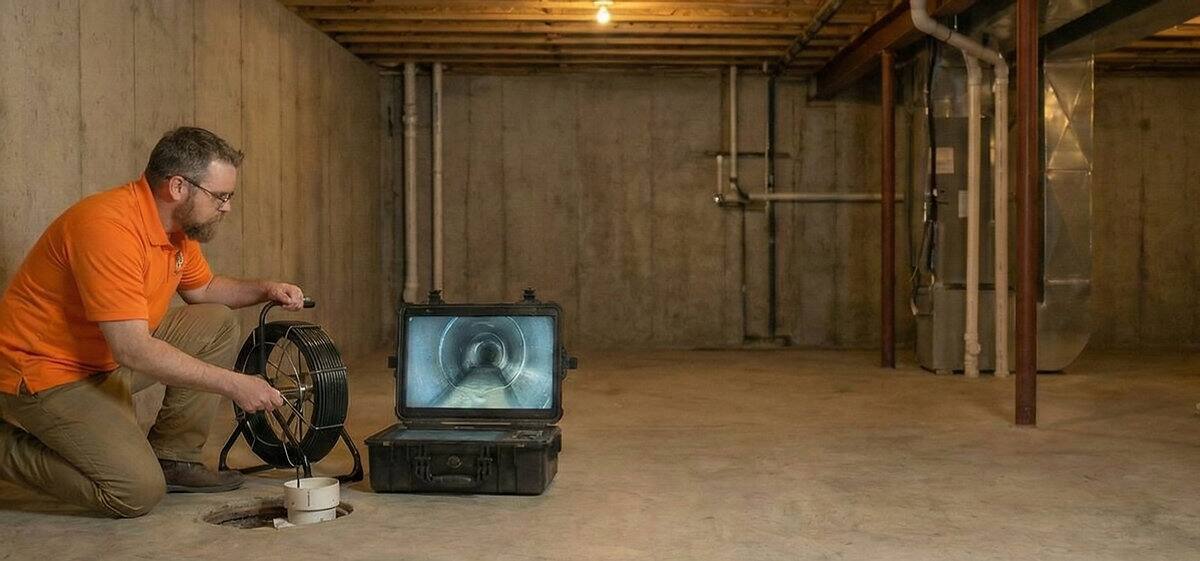
A sewer scope inspection uses a specialized waterproof camera attached to a flexible cable that is fed through the main sewer line of a home. The camera transmits real-time video as it travels through the pipe, allowing me to see the interior condition of the line from inside the home all the way to the municipal connection or septic tank.
The process takes about 30 minutes. I access the line through a cleanout, a capped access point usually located in the basement or outside near the foundation, and guide the camera through the full length of the pipe. I’m looking at everything: the pipe material, the condition of joints, the slope and alignment, and any obstructions or damage.
What I’m Evaluating
-
Check 01
Pipe Material and Condition
What the pipe is made of (clay, cast iron, Orangeburg, PVC), whether it's deteriorating, and how much useful life it has left.
-
Check 02
Joint Integrity
Whether joints are aligned, separated, or offset. Separated joints are the primary entry point for tree roots.
-
Check 03
Slope and Alignment
Whether the pipe maintains proper slope toward the municipal connection or septic tank, or whether sections have bellied (sagged) and are holding water.
-
Check 04
Obstructions
Root intrusion, grease buildup, debris, collapsed sections, or anything else restricting the flow of the line.
-
Check 05
Cracks and Breaks
Any damage to the pipe walls, from hairline cracks to full breaks or collapsed sections.
What the Camera Finds: Common Sewer Line Issues
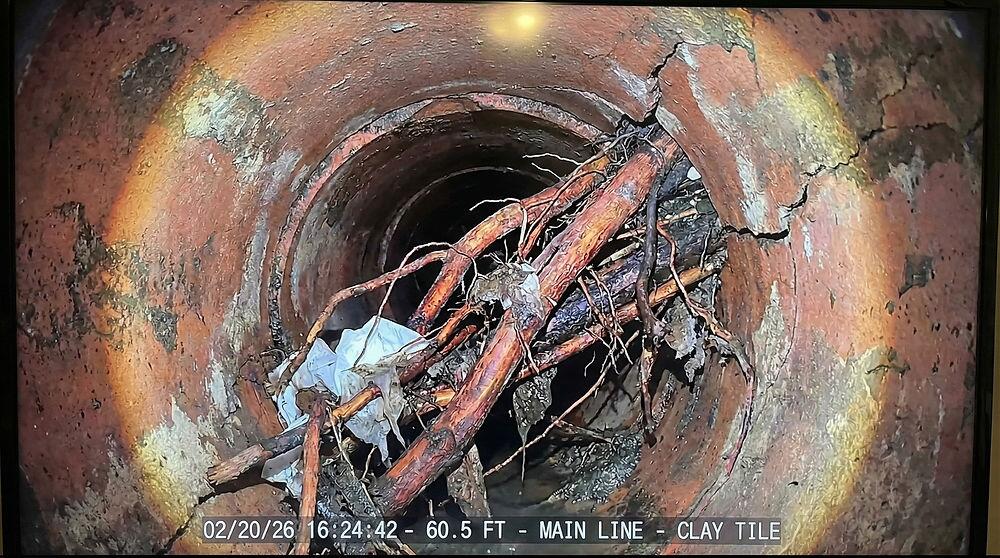
After scoping hundreds of sewer lines across Southern New Brunswick, two issues come up more than anything else: root intrusion and bellied pipes. Often in the same line.
Root Intrusion
Tree roots are the number one cause of sewer line damage in older homes. Roots naturally seek moisture, and even a tiny gap at a pipe joint is enough for fine root hairs to work their way inside. Once in the pipe, roots grow rapidly, fed by the constant supply of water and nutrients. Over time, they form dense masses that restrict flow, trap debris, and eventually crack or break the pipe itself.
The risk is highest in homes with large, mature trees near the sewer line. In many Southern NB neighbourhoods, particularly in Saint John, Rothesay, and Quispamsis, beautiful old hardwoods line the properties. They’re one of the things that make these streets appealing. They’re also the biggest threat to your sewer line.
Bellied (Sagging) Pipes
A “belly” is a section of pipe that has sagged below the surrounding grade, creating a low spot where water and waste collect instead of flowing freely. Bellied pipes are caused by soil settlement, improper installation, or ground movement over time.
A mild belly may cause slow draining that you barely notice. A severe belly traps solid waste, leading to repeated blockages and eventually backups. The problem is that a bellied pipe may drain adequately under light use, like during a showing, but fail under the heavier, sustained use of a family living in the home.
Other Common Findings
- Offset joints. Pipe sections that have shifted out of alignment, creating lips where waste catches and roots can enter.
- Cracked or broken pipe. Especially common in older clay and cast iron lines. Cracks allow groundwater infiltration and root entry.
- Collapsed sections. In severe cases, the pipe has fully collapsed, usually Orangeburg or badly deteriorated clay. This requires full excavation and replacement.
- Grease and debris buildup. Years of accumulated grease, soap, and debris can significantly reduce the effective diameter of the pipe, even without root intrusion.
Pipe Materials in Southern New Brunswick Homes
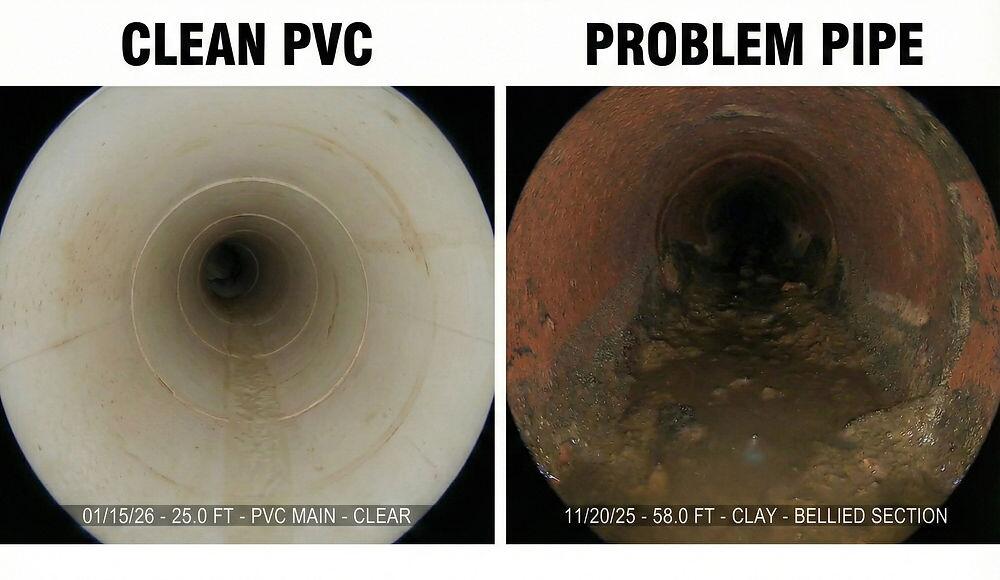
The material your sewer line is made of tells you a lot about how much life it has left and what problems to expect. Here’s what I encounter across Southern NB:
If your home was built before 1970, there’s a good chance the original sewer line is still in the ground, and it’s made of a material with a limited remaining lifespan. That doesn’t mean it needs to be replaced today. But it means knowing its current condition is important.
Which Homes Need a Sewer Scope Most?
I recommend a sewer scope for any home purchase, it’s always worth knowing the condition of the line. But certain properties carry higher risk:
-
Risk 01
Homes Built Before 1970
Most likely to have original clay, cast iron, or Orangeburg sewer lines. These materials have been in the ground for 55+ years and are at or past their expected lifespan.
-
Risk 02
Properties with Large, Mature Trees
Especially trees located near the path between the home and the street (or septic tank). The larger the tree, the more extensive its root system, and the higher the risk of intrusion.
-
Risk 03
Homes with Unknown Sewer History
If the seller doesn't know whether the sewer line has ever been repaired, replaced, or scoped, that's a gap worth filling before you commit.
-
Risk 04
Homes with a History of Drain Issues
Recurring slow drains, gurgling toilets, or any mention of past backups are signs that something may be happening in the main line, not just the interior plumbing.
Municipal Sewer vs. Septic: Does It Matter?
In Southern New Brunswick, it’s roughly split. Homes in the more urban areas of Saint John and surrounding communities connect to municipal sewer. Homes in more rural areas, parts of Hampton, Sussex, Grand Bay-Westfield, and beyond, often use septic systems.
A sewer scope is valuable for both.
If your home connects to municipal sewer, the scope inspects the main line from the house to the municipal connection at the street. This is the homeowner’s responsibility. The municipality is not responsible for the portion of the line on your property.
If your home has a septic system, the scope inspects the line from the house to the septic tank. This line can experience the exact same issues, root intrusion, bellying, cracks, and material deterioration. The fact that it connects to a septic tank rather than the street doesn’t change the risk.
What Happens If I Find Something?
If the sewer scope reveals issues, the next step depends on the severity and whether you’re buying or already own the home.
For Buyers
Sewer scope findings give you leverage in negotiations. Depending on what’s found, buyers typically:
-
Option 01
Negotiate a price reduction
Get quotes for the repair and reduce the purchase price accordingly. This is the most common approach for significant issues.
-
Option 02
Request the seller make repairs before closing
The seller hires a qualified contractor to address the issue. Less common for sewer work, but possible for straightforward repairs.
-
Option 03
Accept the condition and budget for it
If the issue is minor or the home is otherwise exactly what you want, you may choose to accept the finding and plan for the repair on your own timeline.
-
Option 04
Walk away
If the scope reveals a collapsed line, extensive Orangeburg deterioration, or a repair that would exceed your budget, walking away is a valid option, and this is exactly the scenario the sewer scope is designed to catch.
For Current Homeowners
If you already own the home, a sewer scope gives you information to plan proactively rather than react to an emergency. Knowing you have a bellied section or early-stage root intrusion lets you budget for repairs on your terms, not at 2 AM when the basement is flooding.
For Current Homeowners: Why You Should Consider a Sewer Scope
Sewer scopes aren’t just for buyers. If you own a home in Southern New Brunswick, especially one built before 1970, a proactive sewer scope gives you information that can save you thousands.
When to Consider a Scope as a Homeowner
- You’ve never had the sewer line inspected. If you bought before sewer scopes were commonly offered (or simply didn’t add one at the time), you’ve never seen the inside of your line.
- You’re experiencing slow drains or recurring backups. If plunging and snaking provide temporary relief but the problem returns, the issue may be in the main line, not the interior plumbing.
- You have large trees near the sewer line path. Proactive scoping can catch root intrusion before it becomes a blockage.
- You’re planning a renovation or addition. Before adding bathrooms or increasing demand on your plumbing, knowing the condition of the main line is smart planning.
- You’re preparing to sell. A clean sewer scope report is a selling point. A proactive repair removes a negotiation item before it becomes one.
Frequently Asked Questions
What is a sewer scope inspection?
A sewer scope inspection uses a specialized waterproof camera fed through the main sewer line to provide real-time video of the pipe’s interior. It reveals problems like root intrusion, bellied sections, cracks, blockages, and deteriorated pipe material that are invisible from the surface and outside the scope of a standard home inspection.
How much does a sewer line replacement cost in New Brunswick?
Sewer line repair or replacement in Southern New Brunswick typically costs between $5,000 and $10,000 or more. The cost depends on depth, length, pipe material, whether excavation under driveways or concrete is required, and the overall complexity of the site. Spot repairs for localized damage cost less than full line replacement.
Can a home drain normally even if the sewer line is damaged?
Absolutely. This is one of the most common misconceptions. A sewer line with significant root intrusion, a bellied section, or even early stage collapse can still pass water under light use, like during a showing or the quick drain test performed during a standard inspection. Problems often don’t surface until heavier, sustained use when a family moves in. A sewer scope is the only way to see what’s actually happening inside the pipe.
Does a standard home inspection include the sewer line?
No. A standard home inspection evaluates visible, accessible plumbing inside the home, fixtures, supply lines, drain function, and the water heater. The underground sewer line is outside the standard scope because it requires specialized camera equipment to evaluate. A sewer scope is a separate, add-on service.
Should I get a sewer scope if the home has a septic system?
Yes. Homes on septic systems still have a main waste line running from the house to the septic tank. This line is subject to the same issues, root intrusion, bellying, cracks, and material deterioration. A sewer scope inspects this pipe. Note that a sewer scope does not evaluate the septic tank or drain field. That requires a separate septic inspection.
The Bottom Line
The sewer line is the one system in your home you’ll never see, until something goes wrong. A 30 minute camera inspection is the simplest way to make sure you’re not buying someone else’s problem, or sitting on one of your own.