
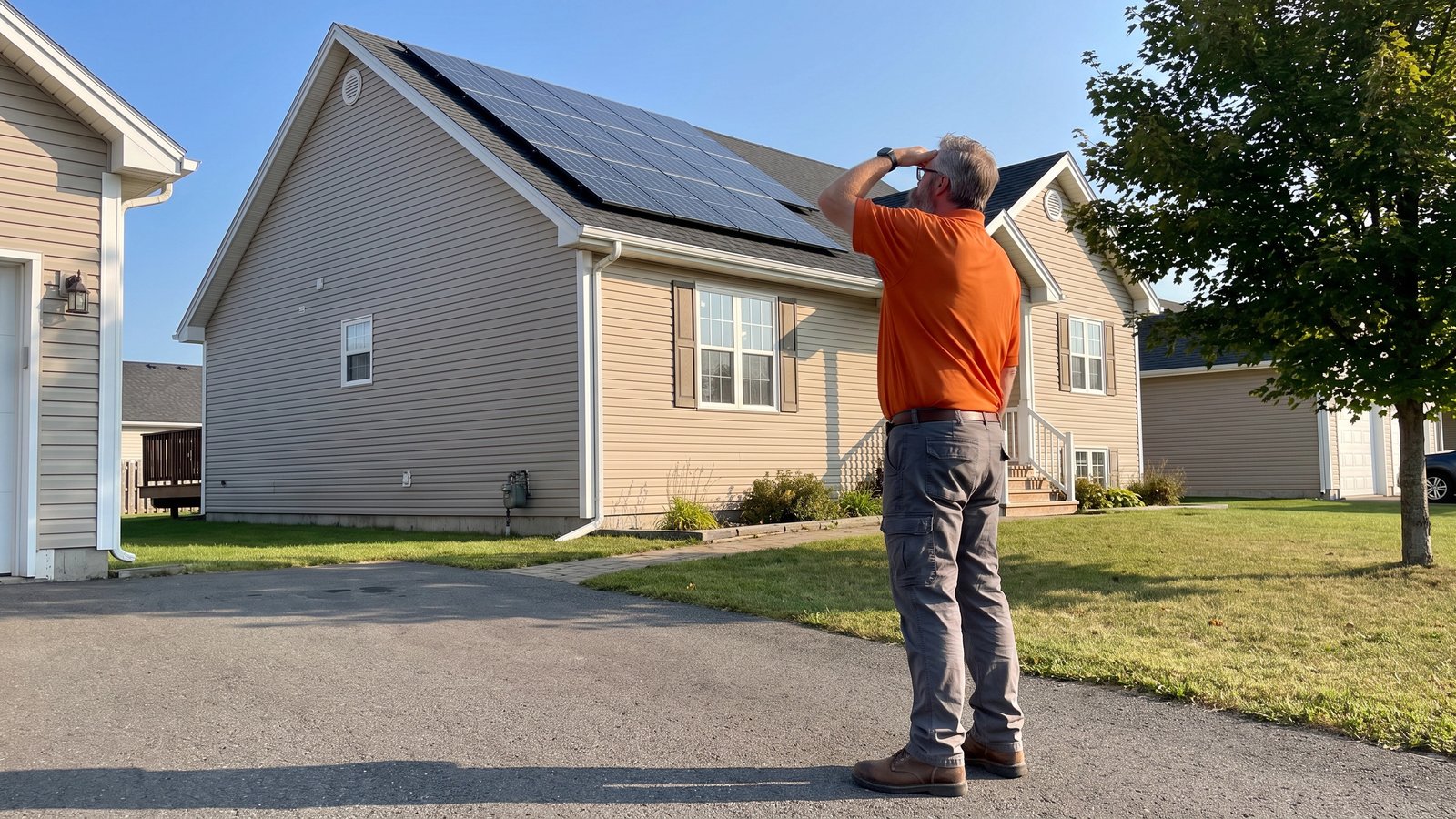
A few years ago, solar panels on a listing in Southern New Brunswick were a novelty. Now I see them regularly, on new builds in the Kennebecasis Valley, on renovated homes in Rothesay and Quispamsis, and on older houses around Saint John. The question buyers ask at the walkthrough has changed with them. It used to be “do those even work here?” Now it is “are these a bonus or a headache?” The answer depends on three things: the roof under the panels, the utility that serves the home, and some rules being rewritten right now.
Quick Answer
Solar works in Southern New Brunswick. A well sited array here produces roughly 1,150 kWh per kW per year, and cold Maritime air helps panel efficiency. Whether it pays depends on which utility serves the home: NB Power credits surplus power one for one, while Saint John Energy credits it at 8.15 cents per kWh. NB Power has proposed major net metering changes, with a decision still pending. If you are buying a home with panels, the roof, the electrical service, and the paperwork matter more than the panels themselves.
Does Solar Actually Work in a Maritime Climate?
Better than most people expect. Southern New Brunswick arrays typically produce 1,100 to 1,180 kWh per kW installed, roughly 90 percent of what the same system delivers in Southern Ontario, and our best production runs May through August.
Winter is the honest caveat. December and January deliver only about 15 to 20 percent of a year’s output, and a panel under snow is a decoration until the snow slides off. Two offsetting facts: cold air improves panel efficiency, and the steep roof pitches already common on our housing stock are close to the ideal tilt for this latitude. Fog on the Fundy coast costs a few percent more. Not a dealbreaker, but it belongs in the estimate.
The 2026 Rule Changes Every Solar Owner Is Watching
NB Power filed a rate design application with the New Brunswick Energy and Utilities Board on April 30, 2026. As filed, it would replace the one for one net metering credit with an avoided cost export credit reported at about 6.77 cents per kWh, against a residential rate of 15.84 cents, and add a monthly demand charge for net metering customers. The board has not ruled, the current rules stay in effect meanwhile, and the solar industry has registered as a formal intervenor, so what comes out may look different from what went in.
Two details deserve attention. First, the grandfathering window: systems with applications approved by October 31, 2026, and inspections completed by October 31, 2027, would keep today’s terms until 2037. Second, and this one is for buyers, the proposal states that a home sale ends the seller’s net metering agreement. If you are buying a home with panels, call the utility before closing and confirm the terms you would inherit.
None of this is settled yet. It is a reason to ask your installer for the payback under both the current rules and the proposed ones. A quote that only works under one scenario deserves a second look.
Saint John Energy Is Not NB Power
Here is the local wrinkle that out of province advice always misses. Many of the homes I inspect are not on NB Power at all. The City of Saint John is served by Saint John Energy, a municipal utility with its own net metering program, and its terms are already different.
| Net Metering | NB Power | Saint John Energy |
|---|---|---|
| Territory | Quispamsis, Rothesay, Hampton, Sussex, Grand Bay-Westfield, rural Southern NB | City of Saint John |
| Surplus energy credit | One for one at the retail rate (15.84 cents per kWh) | 8.15 cents per kWh, credited monthly |
| Leftover credits | Zeroed out every March 31 | Banked and carried forward |
| System sizing | Up to the home’s annual usage | Capped at average usage over 24 months |
| 2026 changes | Proposal before the EUB, decision pending | Not part of the NB Power application |
The practical difference is sizing. Under one for one crediting, surplus summer power offsets winter usage at full value, so covering your whole year can make sense. At 8.15 cents, surplus is worth about half what you pay to buy it back, so the economics favour a smaller system tuned to daytime usage. Same sunshine, different math depending on which side of the city line the home sits on.
What I Look At When a Home Has Solar
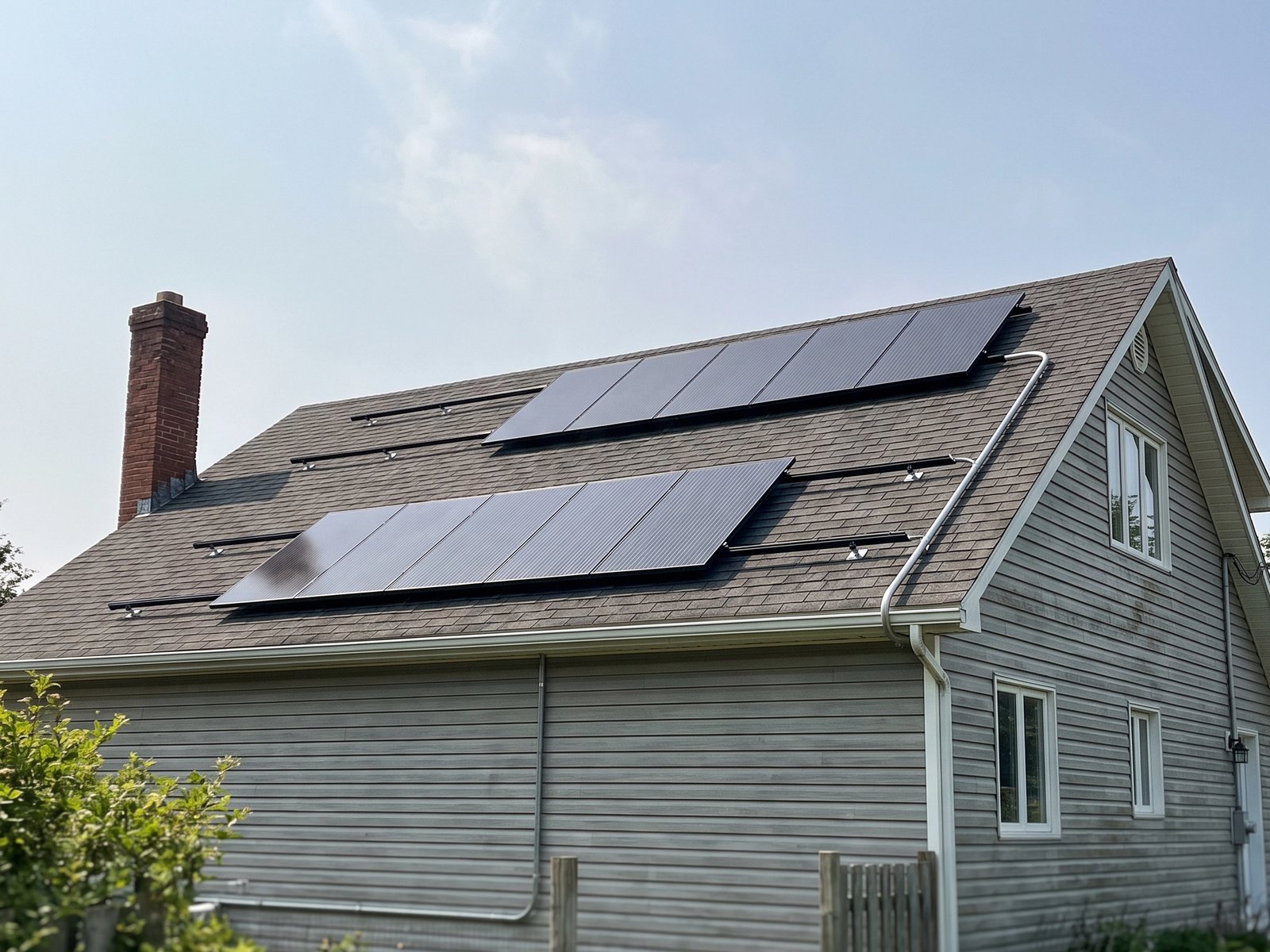
A standard home inspection is visual and non-invasive, so I do not test a system’s output, and I say so plainly. But the things that decide whether panels are a bonus or a headache are mostly things I am inspecting anyway.
| What I check | Why it matters | The next step |
|---|---|---|
| Age and condition of the shingles under and around the array | Panels outlast asphalt shingles, and removing and reinstalling an array for a re-roof is real labour | If the roof has under ten years left, re-roof first or price the removal into your plans |
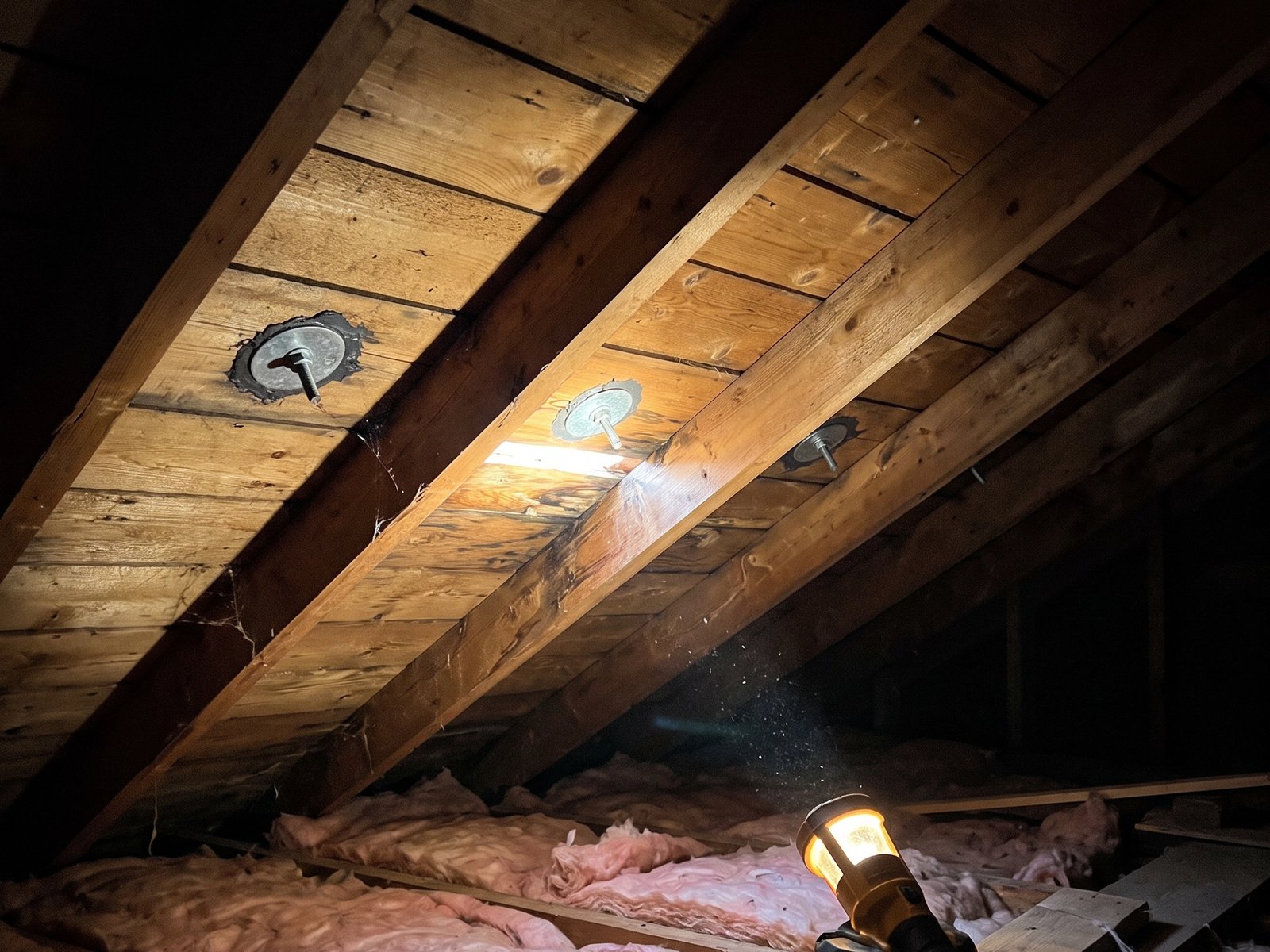
| Flashing and sealant at every roof penetration | A rushed mount is a leak waiting for its first freeze and thaw cycle | Attic check for staining below the array; a roofer if anything looks tired |
| Racking condition and corrosion | Coastal salt air is hard on hardware near the Bay of Fundy | Marine grade hardware on any new coastal install |
| Main electrical service and panel capacity | Solar, a heat pump, and an EV charger can ask more of an older 100 amp service than it has to give | An electrician’s load calculation before stacking upgrades |
| Inverter age and warranty | The inverter’s working life is typically well under the 25 year panel warranty | Ask for the model, install date, and warranty documents |
| Paperwork: permits, ownership, warranties, the utility agreement | Leased or financed equipment and non-transferable terms can follow the home to closing | Confirm ownership and terms with the seller and the utility |
The roof point is the one I raise most often. Panels are a 25 to 30 year commitment bolted to a surface that usually has a shorter life than that in our climate. Roof first, panels second, and a good installer will tell you the same thing.
What Solar Costs, and What Help Is Left
NB Power’s planning figure puts a typical 5 kW rooftop system at about $17,000 installed. At roughly 1,150 kWh per kW per year, that is around 5,700 kWh annually, worth about $900 a year at the current residential rate if you use most of it yourself. Run the arithmetic with your own power bill in hand.
The incentive picture has changed more in a year than in the previous five, so here is where each program actually stands:
| Program | Status in August 2026 | What it means |
|---|---|---|
| SaveEnergyNB solar rebate ($200 per kW) | Closed to new enrolments May 27, 2026 | Registered participants have until January 31, 2027 to finish |
| Canada Greener Homes Loan (up to $40,000 interest free) | Closed to new applications October 1, 2025 | Funding fully committed; approved loans continue |
| Oil to Heat Pump Affordability Program | Registration closed June 30, 2026 | Registered households have deadlines into 2027 |
| SaveEnergyNB heat pump rebates | Open | $400 for a ductless mini split up to $2,000 for ground source, after a Home Energy Evaluation |
| Enhanced Energy Savings Program (income $70,000 or less) | Open, no deadline | No cost upgrades, including heat pumps and insulation |
The pattern is worth naming: the money has moved from generation to efficiency. Governments are still paying to reduce how much energy a home needs, not to produce more of it.
The Other Alternate Energy: Heat Pumps
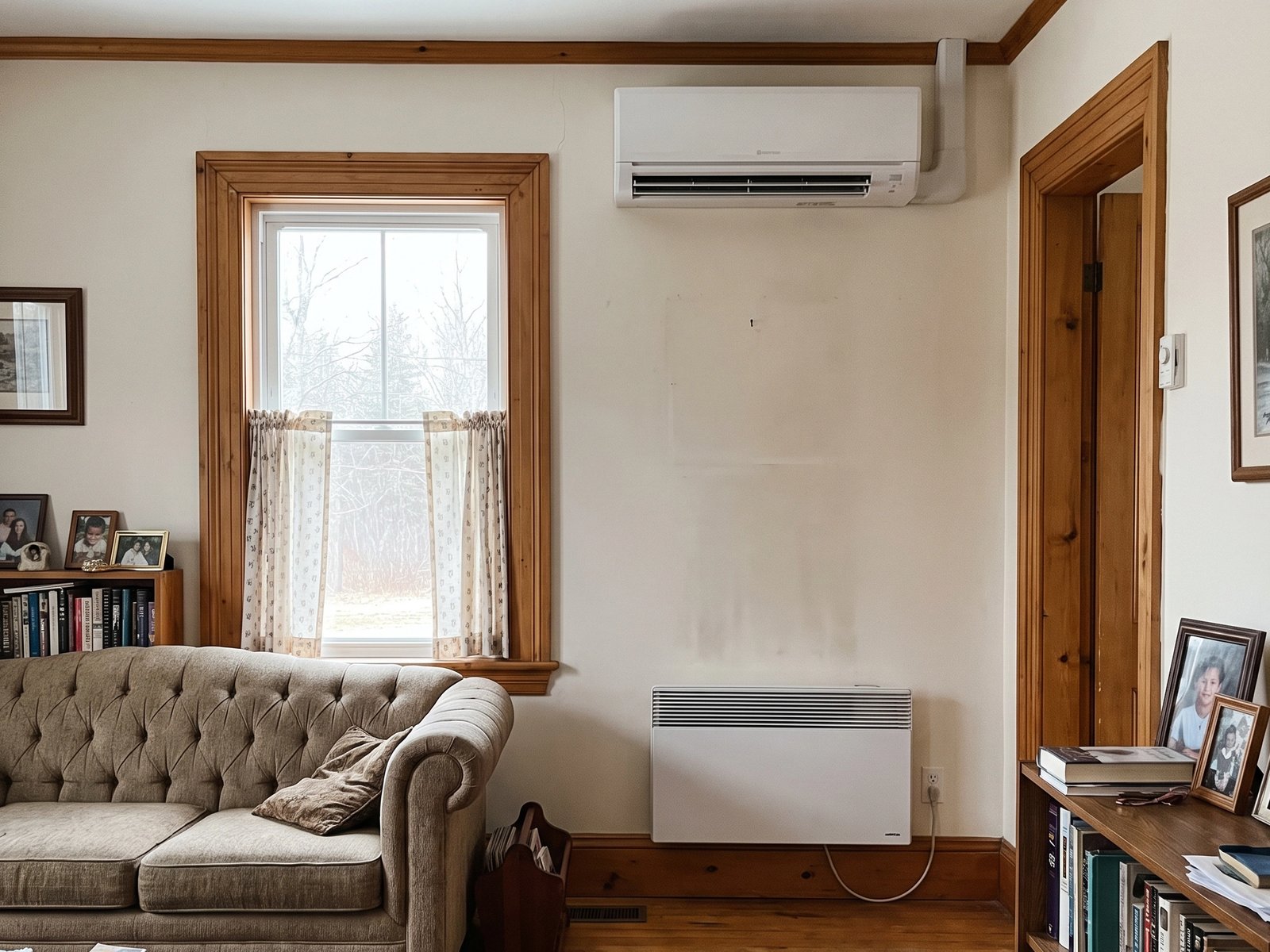
For most homes I inspect, a heat pump is still the stronger first investment, and it is where the remaining incentives point. A ductless mini split heats at a fraction of the cost of electric baseboards and takes a real bite out of an oil bill, which is why they have spread so quickly through Hampton, Sussex, and the Valley. The rebates above are still open, the energy evaluation comes first, and lower income households can qualify for no cost upgrades.
Heat pumps also pair naturally with solar: one uses electricity smarter, the other produces it. Done in the right order, on a sound roof, with a panel that can carry the load, the two add up to a house that costs noticeably less to run through a Maritime winter.
Buying a home with solar panels or a heat pump?
I inspect homes with both across Southern New Brunswick, and I will tell you plainly what the roof, the electrical service, and the equipment have left in them, before you close.
Find My PackageFrequently Asked Questions
Do solar panels work in a New Brunswick winter?
Yes, with managed expectations. December and January produce about 15 to 20 percent of a year’s output, and snow cover pauses production until it sheds. Cold air works in your favour: panels run more efficiently at minus ten than at plus twenty five. Net metering smooths this out by banking summer surplus against winter usage.
Is my roof good enough for solar panels?
Two questions decide it. Orientation first: south facing is ideal, east and west are workable, north is not. Then remaining life: asphalt shingles here rarely outlast the 25 to 30 year life of the panels, so a roof with under a decade left should be replaced before an array goes on, not after.
What happens to net metering when I buy a home with solar panels?
Ask the utility before you close, because this is exactly what NB Power’s proposal would change. As filed, a home sale ends the seller’s agreement, and the buyer comes on under whatever rules are then in force. The terms you inherit may not be the terms the seller enjoyed, and that difference belongs in your offer math.
Are there still solar rebates in New Brunswick in 2026?
For solar itself, essentially no. The SaveEnergyNB solar rebate closed May 27, 2026, and the federal Canada Greener Homes Loan closed in October 2025. The programs still open aim at efficiency: heat pump rebates, and no cost upgrades for lower income households.
Does a home inspection cover a solar system?
Partially, and I am upfront about the line. I inspect the roof around the array, the attic beneath the penetrations, the electrical service, and the visible wiring and disconnects. I do not test output or open the inverter; for a dedicated performance check I recommend a licensed solar contractor, the same way I recommend a WETT certified inspection for a wood stove.
The short version: solar earns its place on a Southern New Brunswick roof when the roof is sound, the system is sized to the home and the utility, and the paperwork is clean. If you are buying a home with panels, or weighing them on one you own, book your inspection at theinspectors.ca or call or text (506) 651-9461.