
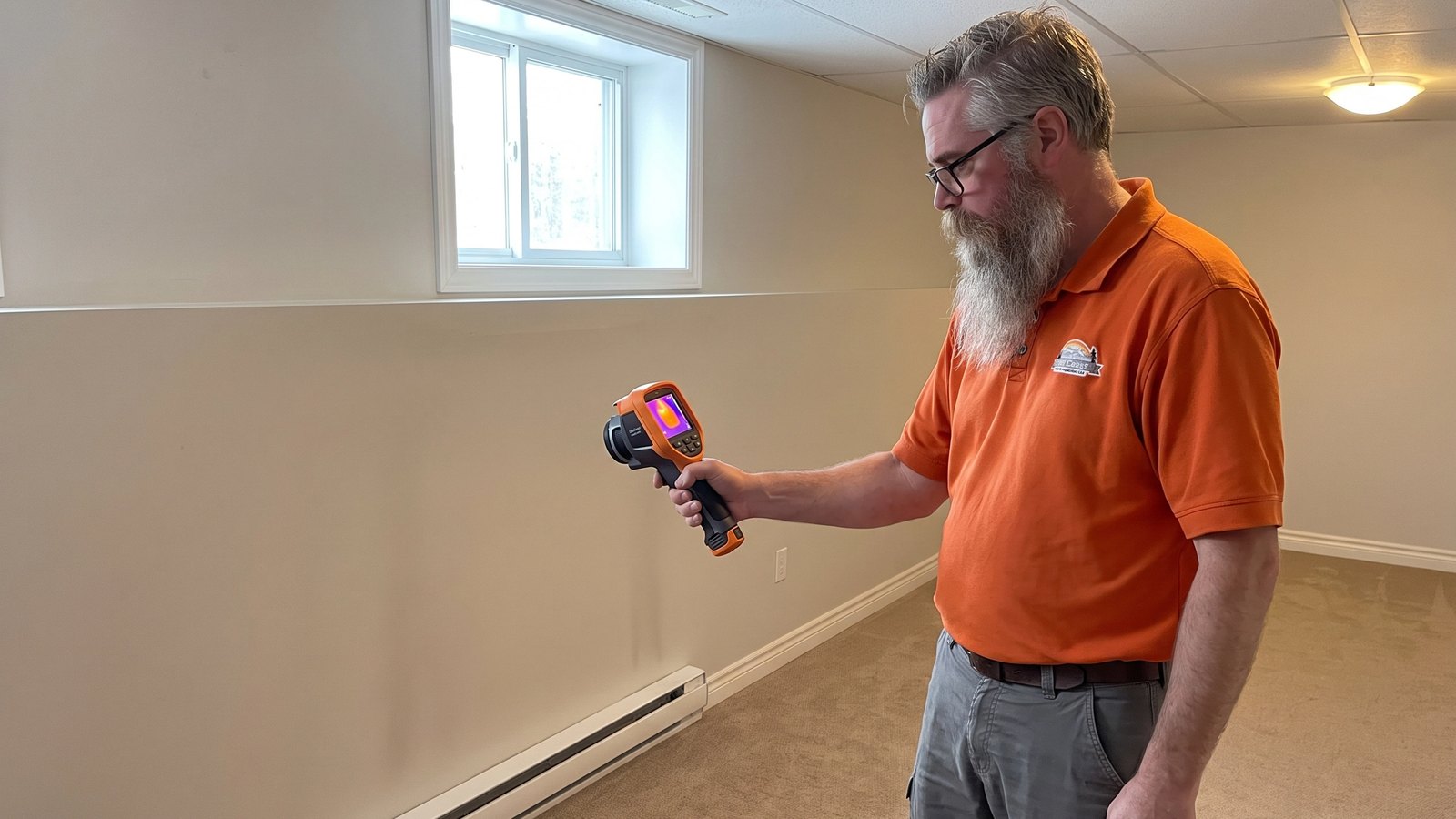
Point a thermal camera at a finished wall with the heat on and the first thing you usually see is stripes: warm bands with a cooler line every 16 inches or so. To someone seeing it for the first time, it can look like the insulation came in strips. Most of the time that picture is good news. The cool lines are the studs, and the warm bands between them are insulated wall cavities holding the heat in. The camera never looked inside that wall. It read the temperature of the surface, and the pattern told me what was behind it.
Quick Answer
A thermal camera reads surface temperature. It does not see through walls, ceilings or floors. Evenly spaced lines are normal framing, while an irregular cool patch that ignores the framing points to an air leak, missing insulation or moisture, and I check possible moisture with a separate moisture meter. It works in any season with the heat or air conditioning running. Every home inspection I do includes a quick thermal scan, and High Tide includes a complete one. Add thermal imaging and you get every thermal image and a separate thermal report. It is $185 with a home inspection or $350 on its own.
What thermal imaging actually reads in a home
Warmer surfaces show up yellow and orange on a thermal camera, and cooler ones go purple. That is all it measures. When something behind the drywall changes how heat moves through it, such as a stud, a gap in the insulation, a draft or a damp patch, it shows up as a pattern on the surface. My job is to read that pattern alongside everything else I see in the house.
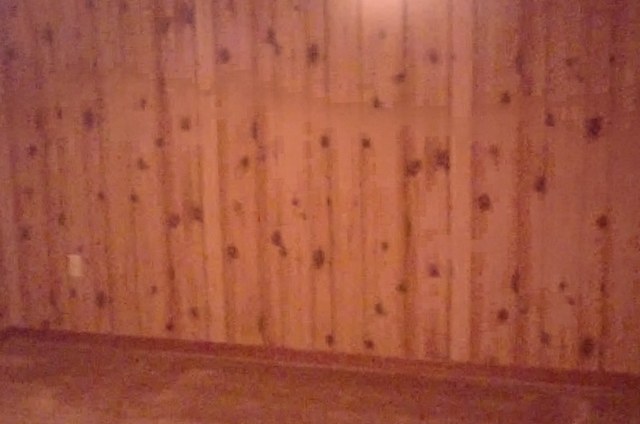
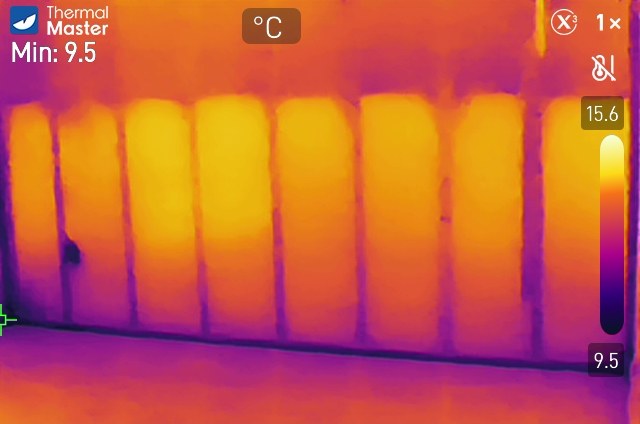 Thermal Visible
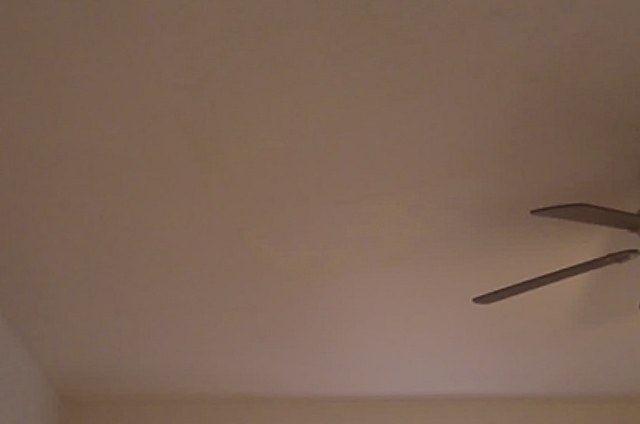
 Thermal Visible
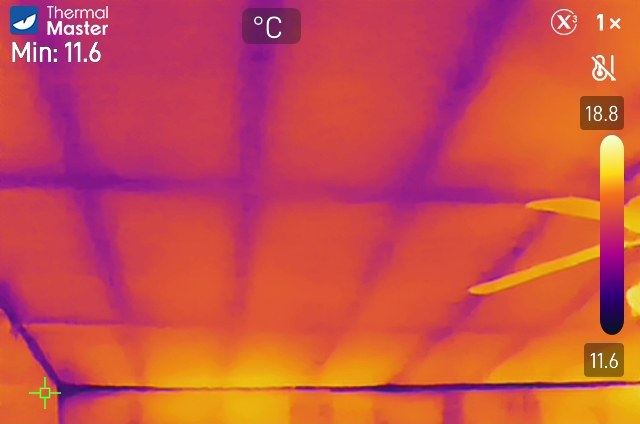
Drag the sliders. The first pair is a 1970s basement in Roachville: knotty pine panelling to the eye, a row of warm bands to the camera. The second is a ceiling in an older Saint John home, where the framing shows up as a grid of cooler lines. Wood carries heat out of the house a little faster than the insulation beside it, so with the heat on, each stud and joist reads slightly cooler from the inside. Even patterns like these mean every cavity is holding heat about the same way.
The camera does need a temperature difference between inside and outside. The Infraspection Institute standard that many thermographers work from calls for about 10 °C, held for a few hours. In a Southern New Brunswick winter the heat makes that easy, which is why winter shows insulation and air leaks with the strongest contrast. In summer a heat pump or air conditioner does the same job in reverse. Electrical panels and heating systems give off their own heat, so I can scan them in any month.
Normal, minor, or worth a closer look
Most of what I photograph on a thermal evaluation is the house doing what it should. Of the last five thermal reports I wrote, three had nothing that needed fixing. I still put those images in the report, because a buyer who knows the walls are fine can spend their attention somewhere else.
Each pattern gets one of four ratings in my reports: Significant, Moderate, Minor or Informational. Here is how the common ones sort:
| What the camera shows | What it usually means | Rating and next step |
|---|---|---|
| Evenly spaced lines on a wall or ceiling | Normal framing | Informational. No action needed |
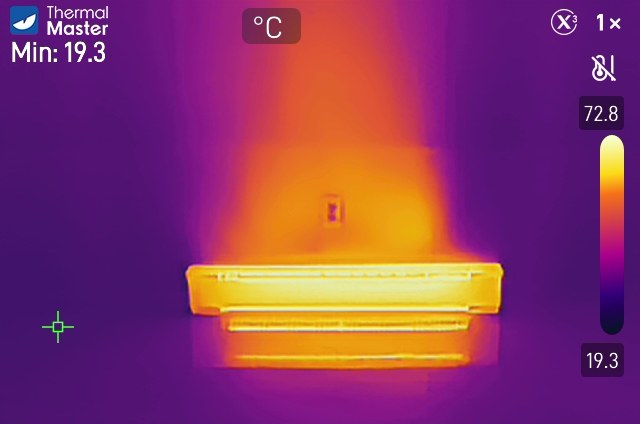
| A heater warm along its whole length | Heating working as it should | Informational. No action needed |
| Cool streaks around a door or window frame | Air leaking at the frame | Minor. Weatherstripping and caulking |
| One wall cavity cooler than the rest | Insulation missing from that cavity | Moderate. Insulation repaired or added |
| An irregular cool area that ignores the framing | An air leak, missing insulation or moisture | Moderate. Evaluation by a qualified specialist |
| One fuse or breaker much warmer than similar ones on a similar load | A possible loose or overloaded connection | Significant. Evaluation by a licensed electrician |
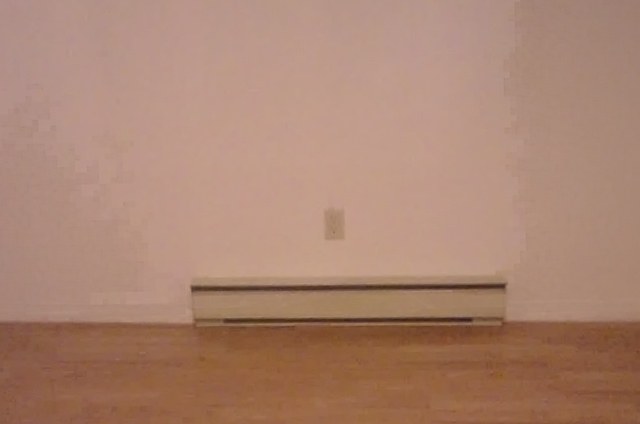
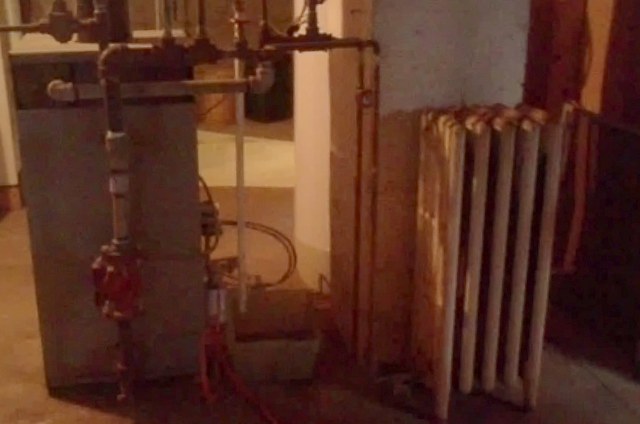
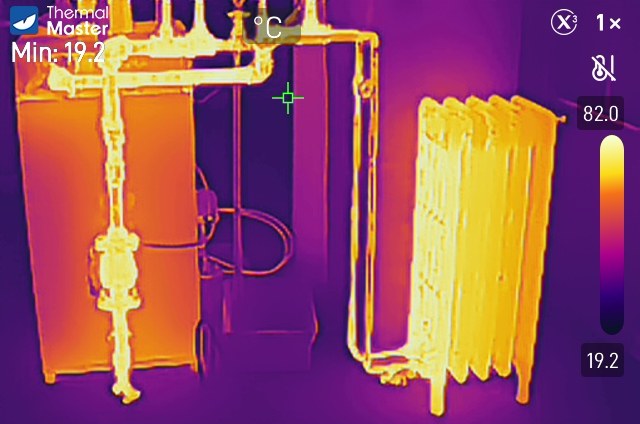
Here is what Informational looks like in a report: a baseboard heater in Roachville warming evenly along its whole length, and a boiler and cast iron radiator in an older Saint John home, hot along every pipe and through every section of the radiator.
 Thermal Visible
 Thermal Visible
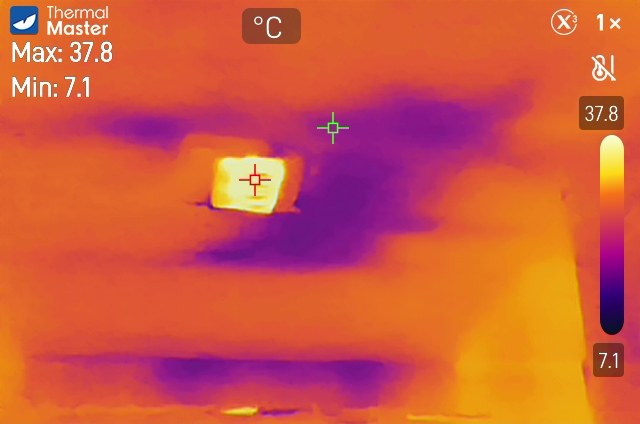
A cool spot on its own does not mean water. The camera reads temperature only, and it is not a moisture meter. When a pattern could be moisture, I check it with a separate moisture meter.
 Thermal Visible
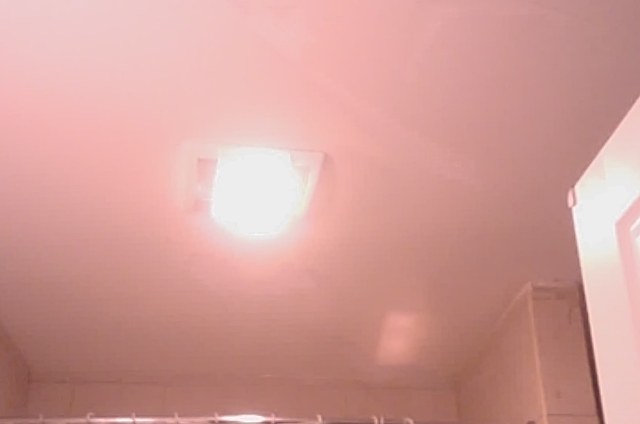
Here is why that order matters. The National Building Code, which New Brunswick has adopted, does not allow an exhaust duct to empty into an enclosed space like an attic, and the federal Keeping the Heat In guide says bathroom fans should always discharge outside. Damp air in a Maritime attic in January turns to frost under the roof, and heat leaking through the ceiling can feed ice dams. Repairing the ceiling first would only hide the cause. If the duct does turn out to end short of the outside, the fix is ordinary work: carry it outside, seal around the fan and replace the insulation.
Drafts at doors and windows, and what they cost now
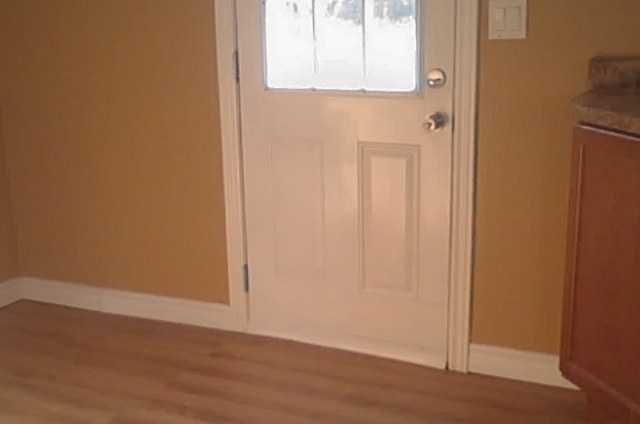
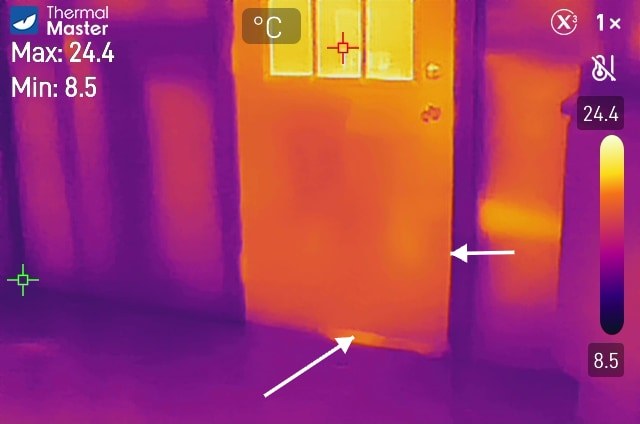
A week later, in another Saint John home, the camera showed cool air coming in along the bottom and the handle side of the back kitchen door. Anyone standing there in socks in February would feel that draft, and the image shows exactly where it starts. I rated it Minor: weatherstripping and caulking, and a check that the vapour barrier is intact behind the trim.
 Thermal Visible
A drafty door is no reason to pass on a house, and it is the cheapest heat loss to fix. It is still worth knowing about: NB Power has applied for a 5.5% increase in each of the next three years, starting April 2027. For bigger jobs, SaveEnergyNB’s Total Home Energy Savings Program still offers rebates for insulation and air sealing, starting with a $99 (plus HST) home energy evaluation that includes a blower door test. Households with an income under $70,000 may qualify for upgrades at no cost through the Enhanced Energy Savings Program. I want every buyer to know those programs exist before they price the work themselves.
What the camera shows at the electrical panel
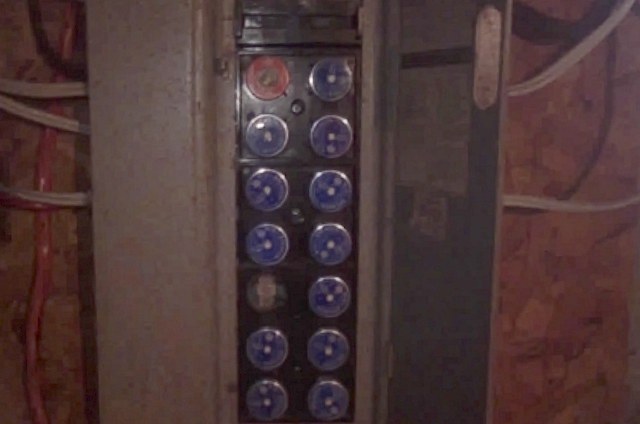
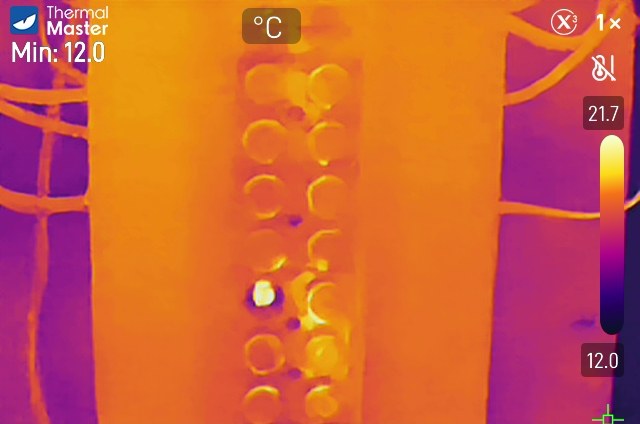
In early November I scanned an older fuse panel in a Saint John home. What I look for is one fuse, breaker or connection much warmer than the ones beside it carrying a similar load. That can point to a loose or overloaded connection, which InterNACHI lists among the most common causes of electrical fires.
 Thermal Visible
One thing helps when you look at any thermal image: the colours are relative. The camera spreads its colour scale between the coolest and warmest spots in the frame, so something always shows up bright. On this panel the warmest point read about 22 °C, close to room temperature, and it went in the report as Informational.
When to add thermal imaging
Every home inspection I do starts with a quick thermal scan. It is a quick look, with no thermal photos and no separate report. Rising Tide adds thermal images of the key areas to your inspection report. High Tide includes a complete scan, and anything I find goes in your report. If you want every thermal image and a separate thermal report, add thermal imaging to any package for $185, or book it on its own for $350. You can compare the packages side by side.
I suggest it most for older homes where nobody knows what insulation is in the walls, finished basements, homes with a history of ice dams or roof leaks, and houses where past renovations may have disturbed the insulation. Book it in any month. Winter gives the sharpest picture of heat loss, but a warm breaker or a drafty door shows up in July too.
Want to know what the walls of your next home are telling you?
A quick thermal scan is part of every inspection I do. For the complete picture, add thermal imaging and get every image in its own report, any month of the year.
View Thermal ImagingFrequently Asked Questions
Can a thermal camera see through walls?
No. It reads the temperature of the surface. What is behind the wall changes how heat moves through it, and that shows up as a pattern on the paint or drywall. Reading that pattern in the context of the house is the inspection.
Can thermal imaging be done in summer?
Yes. The camera needs a temperature difference between inside and outside, about 10 °C for walls and ceilings. In summer a heat pump or air conditioner provides it, and in winter the heat does. On a mild day with neither running, walls and ceilings have less to show, but electrical panels and heating systems can be scanned in any season.
Can thermal imaging find mould?
Not directly. It shows temperature patterns, and some of those can point to the cool, damp conditions mould needs. When a pattern could be moisture, I check it with a separate moisture meter and recommend evaluation by a qualified specialist to find and correct the source.
What does thermal imaging cost?
Adding thermal imaging to a home inspection is $185, and on its own it is $350. High Tide includes a complete thermal scan, with anything I find in your report. The add-on gives you every image and a separate thermal report.
Most of the time, the stripes on a thermal image are good news, and the patches that ignore them are the ones worth a closer look. If you are buying a home in Southern New Brunswick and want to know what its walls are telling you, book your inspection at theinspectors.ca or call or text (506) 651-9461.